An expert, scholar and advocate of girls & women in sport, youth sport, and coach & sport parent education. Currently I teach sport psychology and sociology in the School of Kinesiology at the University of Minnesota where I am also the Director of the Tucker Center for Research on Girls & Women in Sport. This blog reflects my critical perspective and voice on all things sport.
With March Madness and basketball on the minds of many, I thought I’d provide a “by the numbers” analysis of coaches of women’s basketball. In previous blogs I have outlined, in part, the many barriers female coaches face in entering and staying in coaching at all levels (to read click here and here). Two writers for espnW, Fagan and Cyphers, published an in depth story on this topic titled “The Glass Wall: Women continue to shatter stereotypes as athletes. So how come they can’t catch a break as coaches?” that is worth a read.
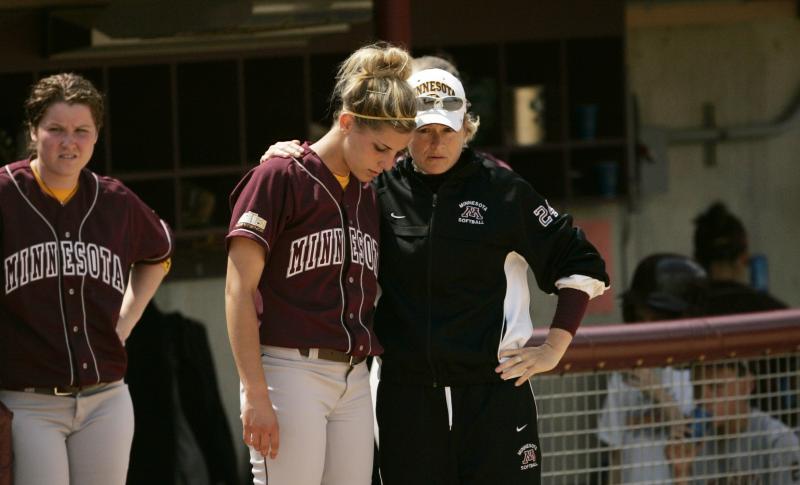
At the collegiate level some interesting patterns also arise. According to Acosta & Carpenter’s 2012 Women in Intercollegiate Sport Report, basketball is the sport most commonly offered on college campuses and 6 of 10 (60%) of women’s basketball teams are coached by females. This is interesting because only 42.9% of female college athletes in all sports are coached by a female. At the most elite level, the percentage of female head basketball coaches is even higher.
In the Women’s NCAA I basketball tournament, in the Elite 6 of 8 (75%) teams were coached by a female head coach. In the Final Four 3 of 4 (75%) teams were coached by a female head coach. In the championship game both teams (100%) will be coached by a female head coach-Muffet McGraw of Notre Dame, and Kim Mulkey of Baylor.
Is this proof that females are ultimately more successful coaching females when given the opportunity? Is this a sign of the times that the percentage of female head coaches in women’s sport is on the rise? Or is it just a unusual year that makes it seem like the glass ceiling/wall is cracking when it really hasn’t?
Regardless of how you may answer these questions, having McGraw and Mulkey coaching against each other in the NCAA Championship game provides visible role models for young girls and women who aspire to coach, communicates that females can be successful at the highest levels of women’s sport, and helps change gender stereotypes that females are not as competent as their male counterparts.
NOTE: Read a NYT article about pay disparity between head coaches of men’s and women’s basketball. It states “For Division I basketball, the median salary for coaches of a men’s team in 2010 was $329,300, nearly twice that of coaches for women’s teams, who had a median of $171,600. Over the past four years, the median pay of men’s head coaches increased by 40 percent compared with 28 percent for women’s coaches.” To read full story click here.
Last night Notre Dame faced Maryland for a berth into the Final Four. The game was anticipated to be close and contested. It wasn’t. Notre Dame dominated the game, controlled the pace of play for the entire game and earned their second consecutive trip to the Final Four with a score of 80-49.
More specifically, Diggins dominated the game and earned her first triple-double in her career by scoring 22 points, 11 assists, 10 rebounds and five steals. Coach Muffet McGraw stated it was the best game she played all season. Diggins looked focused, had on her game face, her swagger was back, and she was running the floor and leading the offense. She looked like she was on a mission. ESPN color commentator Rebecca Lobo kept remarking that Diggins “came to play tonight.” Maryland All-American Alyssa Thomas stated, “She went off on us tonight and we really didn’t have an answer.”
Diggins started the game with the headband, and it never came off. This was the first time all season on televised games that the headband stayed on the whole game. Best game of the year. Triple Double. Dominating Play. Headband on. Coincidence?
I’m not suggesting Diggins read my blog or took my advice to heart, but what I am pointing out is that for Diggins the headband appears to be symbolic of playing well. Mentally tough athletes focus on what they can control and regardless of the situation or how they are playing, they figure out how to compete, persevere in the face of adversity, and give their best effort. In past games, if she wasn’t playing well, she took off the headband. Maybe taking it off was an easy out instead of bearing down, figuring it out and fighting.
Last night she didn’t and played consistently well and never looked back as her team punched their ticket to the Final Four in Denver.
I love March Madness. Normally I write a blog to critique sport media in terms of TV coverage amount and quality of between the men and women’s NCAA basketball tournaments. This year I am happy to report the ESPN coverage of the women’s games includes all rounds, full game coverage of all Sweet 16 games, great production quality, highly talented color and in studio commentators, all games in HD, cross brand promotion of espnW, and coverage that looks and feels nearly the same as coverage for the men. YAY.
Diggins sans headbandDiggins' with headband
In the absence of critiquing sport media, I want to discuss “the headband” of University of Notre Dame junior hoop star Skylar Diggins (@SkyDigg4) from a sport psychology perspective.
I’ve watched Notre Dame play on TV 6-8 times this season and have heard “the headband” discussed in every game by commentators. It is also the source of many fan tweets. At the start of the game, Diggins wears a wide white Adidas headband. If she is happy with her play, it stays on. If she is unhappy with her play, she takes it off. Usually it comes off at halftime, but recently she has taken it off as early as the 5th minute. As a fan of Notre Dame, when I see her take off the headband I groan. As someone trained in sport psychology I find it an interesting case study. Here is my analysis of “the headband” ritual using sport psychology research.(note: I have not talked directly to Diggins, about how and why she uses this ritual, nor have a talked to her coaches or teammates about how they perceive her ritual).
Having a competitive ritual helps increase the likelihood of optimal performance in many ways: Athlete’s who have developed and practice detailed. consistent, and controllable competitive rituals are more likely to optimally perform on command regardless of the situation.
THE GOOD: Doing the same thing in the same way helps reduce uncertainty which can lead to less anxiety, provides control for the athlete, focuses attention, focuses emotion, and focuses energy. Diggins has discussed her headband ritual with the public, therefore her opponents likely know of the practice, so it signals to the opponent that she is refocused and coming at them. It also tells her teammates and the public that she isn’t happy with her play, and she can do better. It might help her teammates feel confident (“We know when Diggins takes off the headband, she means business). From reading tweets, it seems that a majority of fans believe she gets more focused, serious and competitive when the head band comes off.
THE NOT SO GOOD: The problem with this competitive ritual is she is not consistent about WHEN the head band comes off. Her subjective assessment and mood state dictate when/if it comes off. A good competitive ritual is done the same way at the same time. (For example a free throw ritual, wearing the same socks, tapping your racket on the ground before returning a serve, addressing a golf ball). The downside of this ritual is that she is telegraphing to her opponent and teammates that she isn’t feeling confident and isn’t happy with her play. Taking off the headband may undermine her teammates’ confidence (“Diggins took off the headband, she isn’t feeling it. Here we go again. I better play well now”).
The second downside is she is spending energy with the headband that she could be using to focus on what she needs to do to play better. If starting the game WITH the headband gives her confidence, but it quickly dissipates and results in whipping it off whenever she can during play or at a whistle, I might advise her to rethink “the headband”. If it is her signature but she can’t keep it on the whole game, then maybe she should start the game without it. Just leave it off. Then if she is playing poorly, her teammates and opponents don’t have the benefit of knowing she is vulnerable. She would look the same regardless of how she is playing, and that gives her and her team the advantage. If I were a coach, I’d tell my team when they see Diggins take off the headband to go right at her and to feel confident that we have her rattled. She shouldn’t be giving her opponent so much information that can be used against she and her team.
Mentally tough athletes and those that perform consistently at the upper range of their competitive talent, use positive emotion, feel challenged by equally matched opponents/teams, and see competition as a fun and enjoyable opportunity. “The Headband” appears to be linked to negative emotion such as anger at herself and her play, and this is not a facilitative competitive ritual. Again, I don’t know what is going through her head, but I can see her body language at the times she takes it off and she appears irritated, angry, flustered, frustrated, and not confident. Often it shows in her play. If an athlete is mad at herself, then she is mad at the one person she NEEDS to compete well and is wasting energy. VERY FEW athletes can use anger effectively as a competitive ritual and tool.
Lastly, in all sports, some days competing and playing seems effortless and easy. All your shots drop, your legs feel lively, the hoop seems very large, you see plays unfold, and time seems to slow down. Other days it doesn’t. This cannot be controlled, it just is. What can be controlled is how an athlete reacts to this phenomenon. Athletes that start a game feeling they HAVE to or SHOULD play perfectly all the time, or at a certain level, are setting themselves up for frustration. Instead athletes should focus on what they can control-effort, mental focus (i.e., sticking with the game plan, taking the right shots), sportsmanship, emotion and behaviors.
When Diggins has her swagger going, she looks confident, her body language and facial expressions are very different, she takes control of the floor and leads her team. The Irish are much stronger as a team when she is in this mental frame. The team is good enough to compensate for Diggins when she isn’t, but to win a national championship the Irish need Diggins to play with confidence for the entire game, and I feel that is more possible if she leaves the headband in the locker room. When she takes the headband off, for her it signals she is playing poorly…which could also be a self-fulfilling prophecy and focus her attention on the fact she is playing poorly, rather than focusing on what she can do to play well.
However, at this point in the season it is probably unwise for her to start a new ritual but for her senior year, it may be worth reconsidering “the headband”.
Regardless of this analysis, Diggins is an amazing athlete. I have used “the headband” as an interesting case study to help illustrate how competitive rituals can be facilitative or not of optimal performance.
I was recently given the opportunity to travel to China for the inauguration of the American Cultural Center for Sport at Tianjin Sport University in Tianjin China. Having never been to China, I tried to learn about and make as many observations pertaining to physical activity, sport, health and well being as I could.
East Meets West, and not in a good way.I asked if obesity is a public health issue in China, and the answer was “yes it is a growing problem.” This response surprised me. I have observed but one overweight/obese Chinese person in 8 days in three of the biggest cities in China (Shanghai, Tianjin & Beijing).
The reason why obesity is on the rise in China I was told is due to lifestyle changes associated with economic development (i.e. more people can afford cars & scooters, and therefore engage in less active transport like walking or biking) and the introduction of Western fast food, which I captured in an “East meets West” photo. The current US population is 312 million, and according the CDC more than one-third of U.S. adults (35.7%) are obese. The current Chinese population is 1.35 billion, and I found an article that stated obesity rates in China are soaring and more than 25% of Chinese adults are overweight or obese. This data and my observations while here in China are not congruent, so I’ll have to do some investigating and learning on the nature of this discrepancy.
What I did observe is active Chinese across the lifespan.
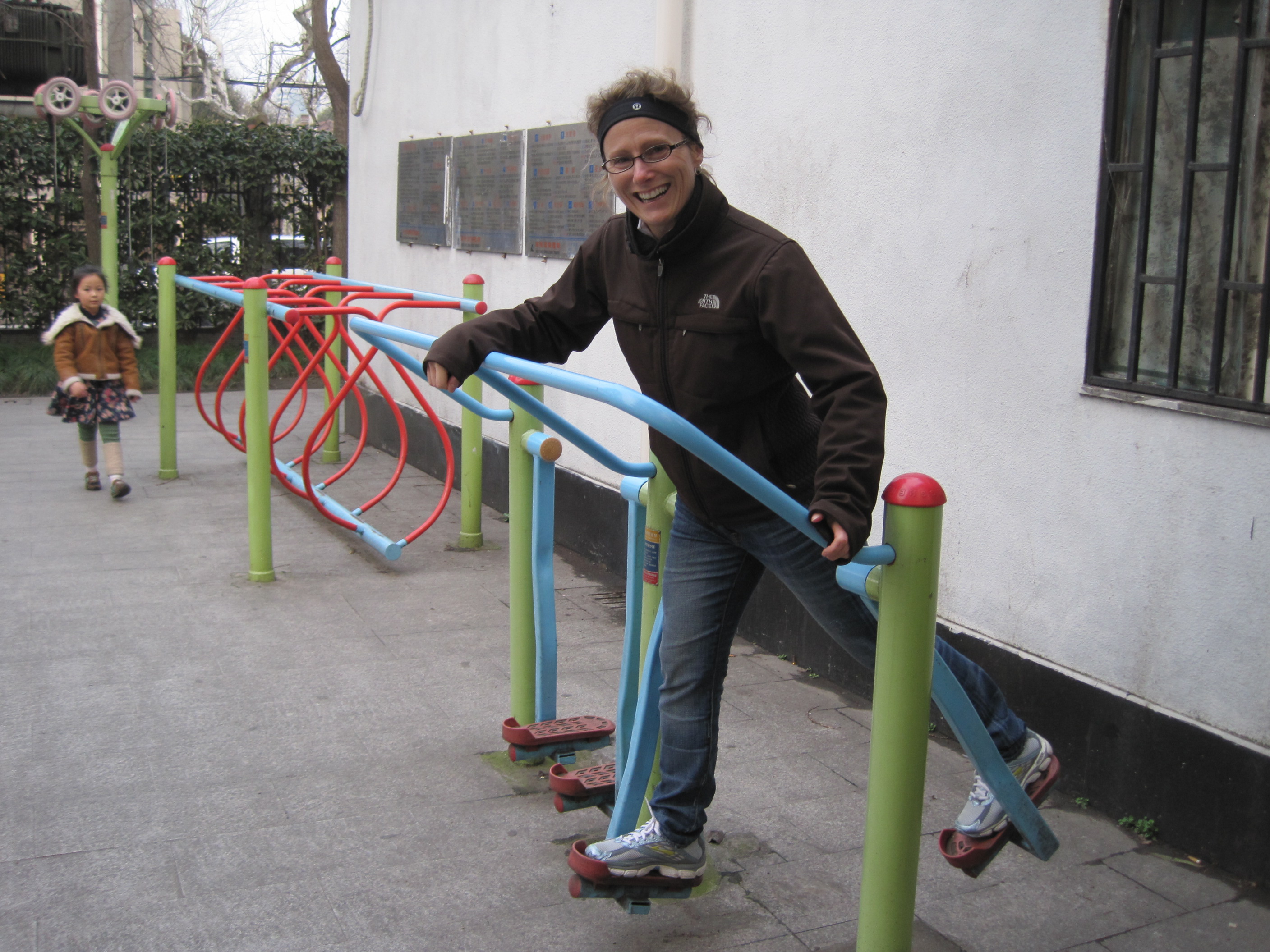
Tai Chi in the Temple of Heaven park at 7amPublic parks are used by older Chinese for many forms of physical activity, including walking, ballroom dance, tai chi, and many others. The outdoor circuit training stations equipment is really interesting and I haven’t seen anything like it in the US. The machines don’t provide any resistance, but are great for range of motion and keeping
An outdoor elliptical in a Chinese park.all body parts loose and working. To that end, I saw many older Chinese using various park fixtures to stretch, massage or promote circulation, like the two women pictured here.
Physical activity seems more playful, joyful and integrated into daily life for older Chinese. The park is a public place they go for spiritual, social and physical health. I saw nearly all the groups I watched, laugh and smile and genuinely interact with one another. I did not see ONE cell phone.
2 Chinese women stretching and massaging their legsOne game that I tried with some women, is Chinese Hacky Sack. I didn’t know what is was called, but with a quick use of The Google
Jianzi in the parkI discovered The Chinese Hacky Sack is called Jianzi. It is a special shuttlecock sport played with a colorful feathered article with a spring-loaded base that is kicked by feet with the goal of keeping it in the air for as long as possible. It was really fun, easier than hacky sack, and I worked up a sweat in 2-3 minutes.
The physical activities I saw appeared to be free and most had a peer leader/coach. Below right you can see a woman instructing another woman on how to do Taiji Rouliqiu move. This physical activity is a modern kind of internal martial art originating from China which follows the principles of Taijiquan in its philosophy and in the motion. The students I saw ranged in age, but most appeared to be middle age or older. Lesson: it is never too old to be physically active or learn a new physical skill. It left me wondering what children and adolescents do for physical activity and if they engage in the same forms.
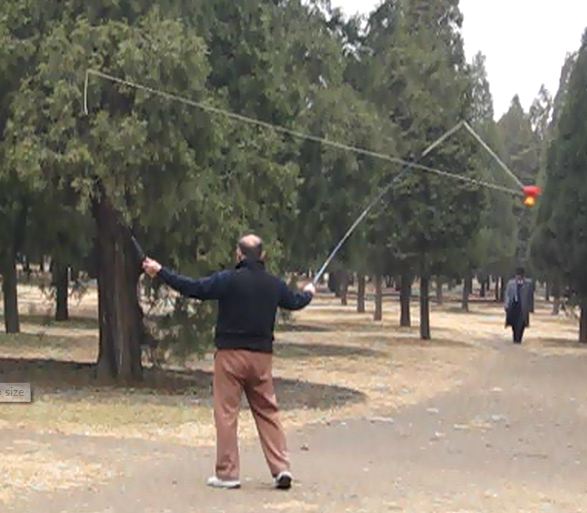
Peer Taiji Rouliqiu Coaching in the ParkIf you know the name of the physical activity this man is doing, please let me know. It looked very challenging but meditative, as the object he is spinning around on the rope makes a pleasant humming type noise. Thanks in advance!
I don't know what this is called but it looks fun!
In the US when I drive past parks, I rarely see ANYONE using them, let alone groups of older adults! With an aging US population, growing obesity rates, and unused green space, it seems to me market and opportunity exist for someone to seize.
When I tell coaches and parents that I believe all youth sports should have equal playing up until age 12, regardless of competitive level, it is not a popular idea. Especially when I say I really think the age should be 14! I thought of a few more facets of this complex and contested idea in youth sports that are worth discussing.
As adults who play recreational, but competitive sports, equal playing time is almost always the norm. If playing time isn’t equal, problems, resentments, and hard feelings arise. For example, I play on a recreational women’s ice hockey team. We have 10 skaters, which means 2 lines. We all pay the same fee to play. Everyone plays equal ice time. When one line takes a long shift and the other line gets shorted, people get upset because it is supposed to be equal. We don’t put special lines out on the power play or penaltly kill, whomever is up or feels like she has legs, they go. We all have different strengths and weaknesses, which we work with together. We try (and like to) to win, are competitive, and strive to win every game (which we don’t). We enjoy being active, doing something we love, battling to win, hanging with friends and enjoy camaraderie with other teams.
Do we think this is different for kids?
So why is it that as adults in our own sport endeavors we structure equal playing time, but when adults run and control youth sport recreational, competitive programs….we justify unequal playing time. (NOTE: recreational teams are just as competitive and want to win just as much as travel teams, the skill level is just different). As adults we don’t like sitting on the bench, we want to play, think unequal time is unfair, unjust and annoying, makes us feel poorly about ourselves, and is not fun or enjoyable.
Do we think this is different for kids? What is the rational for unequal playing time in youth sports before age 12? I’d like to hear it…seriously…I want to hear from you. I think this conversation is worth having.
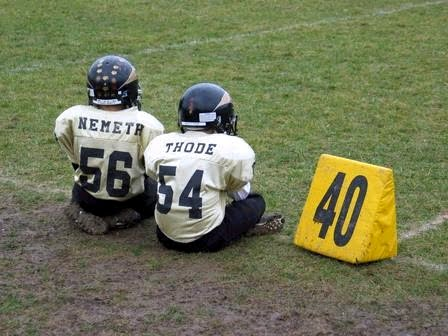
I say equal playing time at ALL competitive levels because if you have a kid on a team where he/she doesn’t play much, if at all, then he/she shouldn’t be ON that team. Move that kid down a team so they DO play and have the opportunity to play, learn, and develop skills in competitive contexts. No kid should be on an elite travel team, pay high fees to play and then not play equally…that seems wrong. As adults we’d NEVER put up with that policy would we? (I understand parents and kids “choose” to be on that team, I also understand that some kids want to play with their friends even if it means not playing, but those are different blogs on the broken system of youth sports).
If equal playing time is what we prefer and what we like and enjoy as adults why should it be different for kids?
This year is the 40th anniversary of the passing of Title IX, landmark federal legislation which dramatically increased sport participation opportunities for females in educational contexts. We have many reasons to celebrate this day, and part of that celebration is learning from the pioneering women who have been instrumental in fighting for implementation and preservation of this important law. I want to share with you some of their wisdom.
Merrily Dean Baker, former Athletic Director at the University of Minnesota & Michigan State who also sat on the original committee that helped write guidelines for Title IX in 1972, told us this morning at a NGWSD celebration breakfast about her first foray into marketing women’s sport in the late ’70’s (there was no marketing and promotion of women’s sport at that time). She went to a marketing firm and got them to a campaign pro-Bono, and the theme of their campaign was “Not All Jocks Wear Them.” For obvious reasons, Baker told them that wasn’t quite the right tone.
Kane & Baker’s words highlight the progress that has been made, but gender equality in sports is still not a reality. Drs. Vivian Acosta and Jean Carpenter just released their 35 year update of the Women in Intercollegiate Sport report, in which they detailed that although 100 more female coaches of womenʼs teams are employed than in 2010, the total % of women coaching female athletes barely increased as is currently at 42.9% (in 2010 is was 42.6%).
Female boxers are fighting The International Amateur Boxing Association officials who are discussing whether women fighters should be urged to wear skirts in the ring at the 2012 Games. Many high level organizations around the globe rallied to write a position statement denouncing this rule. It reads:
Today we should join together to celebrate advancements, but remain committed to fighting for social justice and gender equality for girls and women in sport around the globe.The winds of change prevail, but the direction it blows is largely up to us.
Gloria Steinem in a recent lecture for the Clayman Institute of Gender Research at Stanford invited everyone in the audience to do something outrageous for the cause of social justice. My invitation and challenge to you is to do ONE THING in the next calendar year that creates change for girls and women in sport contexts. Steinem closed her lecture by stating: “We must not hold our fingers to the wind. We must be the wind”
To read all the blogs in the 2012 National Women’s Law Center #NGWSD blog carnival, click HERE.
 With March Madness and basketball on the minds of many, I thought I’d provide a “by the numbers” analysis of coaches of women’s basketball. In previous blogs I have outlined, in part, the many barriers female coaches face in entering and staying in coaching at all levels (to read click here and here). Two writers for espnW, Fagan and Cyphers, published an in depth story on this topic titled “The Glass Wall: Women continue to shatter stereotypes as athletes. So how come they can’t catch a break as coaches?” that is worth a read.
 NOTE: Read a NYT article about pay disparity between head coaches of men’s and women’s basketball. It states “For Division I basketball, the median salary for coaches of a men’s team in 2010 was $329,300, nearly twice that of coaches for women’s teams, who had a median of $171,600. Over the past four years, the median pay of men’s head coaches increased by 40 percent compared with 28 percent for women’s coaches.” To read full story click here.













 One Sport Voice