
 See my post for the Women in Coaching blog on female coaches experiences with (mostly male) referees.
Women in Sport Leadership Lecture
 To see my monthly blog post for the Women in Coaching blog pertaining to the Tucker Center for Research on Girls and Women in Sport Fall Distinguished Lecture click here.
Hazing By Coaches
This case is an exemplar of one of the many things wrong with the current structure of youth sport—win at all costs, early specialization at increasingly younger ages, intense parental involvement, no standard training for coaches, and uncritical acceptance of teaching boys to be men through a one-dimensional view of masculinity that is characterized as power-over others, emotional and physical toughness, and a disregard for the true meaning of competition (e.g., striving together, not against and treating opponents and each other with respect).
 This case I am about to lay out gets to the heart of a key question: What is the purpose of youth sport? I like to use a triad approach from sport psychology colleague Robin Vealey. Within the The Inner Edge Model in equal parts athletes 1) strive to win and achieve optimal performance, 2) develop skills-psychological , physical, social, emotional and moral, and 3) enjoy and have fun playing sport.
This case is about hazing. Hazing of 10 year old boys by their coaches. At a year-end banquet youth hockey banquet in a unnamed city, it has been a ‘tradition’ to make the youngest boys sit on stage in front of the older peers and all their parents, and wear a diaper on their heads while sucking a pacifier. One boy, nervous and fearful of this impending ritual, asked his coach if he could sit out. The coach said no.The child was visibly upset and embarrassed on stage.
Given this private hockey club is community-based and not school-based, laws like Title XII and Title IX or state-based anti-hazing laws don’t apply. The coaches were asked by the parents to stop the ritual in the future. The coaches said no. When anti-hazing coach education was suggested by the governing body, the coaches said no thanks.
Let me be clear—making young boys wear diapers on their heads is HAZING. Hazing is any action that intentionally causes embarrassment, and risks emotional and/or physical safety, regardless of willingness to participate or not. Hazing is done to a person or group of people in order to gain entrance or acceptance into a club, organization, or team. One key question on HazingPrevention.org that characterizes hazing: Is it causing emotional distress or stress of any kind to myself or others? If the answer is yes, it is hazing.
Do we want youth sport coaches to haze young athletes in front of their peers and parents? Is that what we want youth sport to be about? Is that how coaches should inspire a team to optimal performance? Does it help those boys become better hockey players? Does it enhance the boys’ fun and enjoyment of their hockey experience? Does it build admiration for and trust in the coach? I say no.
Female Olympians By the Numbers #London2012
 A great deal of discussion exists about the historic fact that Team USA female athletes outnumber their male counterparts in the 2012 London Summer Olympics …269 women and 261 men to be exact.
Given 2012 marks the 40th Anniversary of Title IX, this is ironic for a few reasons.
1. As Founder of Women Talk Sports Network, Jane Schonberger points out, media coverage of female athletes in the Olympics has lagged behind participation. If media coverage were to reflect and be in proportion to the % of female athletes, than ~50% of the coverage would given to women’s teams. Perhaps this year coverage will be equal, but based on previous data I am not overly optimistic.
2. While female athletes outnumber males, female head coaches of USA Olympic Teams are a minority. Based on the research of my summer interns (thanks Alyssa & Emma!) and the information available (some of which is unclear, unavailable or can’t be found), the USA Olympic Team has 9 female Head Coaches total (Tennis, T & F, Synchro Swim, Swimming, Soccer, Pairs Rowing, 4’s Rowing, and Table Tennis). All nine are head coaches of female athletes. Based on this data, less than 30% of the women’s teams and 0% of men’s teams are coached by women. If this data is incorrect please let us know.
The Scarcity of Female Coaches-Part III
 This week marks the 40th anniversary of Title IX. Currently I’m out in Denver for the NCAA Women Coaches Academy (run by the Alliance of Women Coaches) and in the next room is the NCAA/NACWAA Institute for Administrative Advancement where in both rooms the current and future generation of coaches and athletic administrators are being empowered.
 Seeing this group of women is inspiring and motivates me to continue the work I do to help them in part to succeed and stay in sport careers. Unfortunately they need a lot of support to do so.
As I was getting ready this morning I caught part of the ESPN Outside the Lines piece on “Coaching Conundrum” as to why there is a scarcity of female coaches. The ESPN crew had been out in Atlanta filming at the Alliance of Women Coaches annual Huddle in last May. While the ESPN piece is great for raising awareness about the scarcity of female coaches, it only scratched the surface of this complex question. An espnW piece on “The Glass Wall” is a much more in depth treatment female coaches.
I have written previously about this issue (Part 2 here and Part 1 here), but I want to elaborate a bit more on the eve of the Title IX anniversary.
The barriers for female coaches reside at four levels.
1. Individual (perception of lack of competence or confidence, choose not to coach, perception of time commitment to fulfill role)
2. Interpersonal (family & domestic commitments, lack of support from administration, negative recruiting from colleagues)
3. Organizational (lack of opportunity for professional development, lack of family-friendly policies, limited opportunities for advancement, lack of female role models in positions of power)
4. Societal-Cultural. This is the level that rarely gets discussed, is the hardest to change, and has to do with stereotypes of women, gender and leadership. The traits of effective leadership we mostly highly value in US society align with a male/masculine leadership style. If women don’t adopt or conform to this style (firm, authoritarian, assertive, loud, in control, competitive) they are perceived to be incompetent and weak. If they do adopt this style, the are often labeled a bitch because she is not conforming to a stereotypical female leadership style (caring, quiet, nurturing, passive, collaborative). The key here is that the association with gender and leadership is constructed and arbitrary, but has a dramatic effect on the careers of female coaches. If those in positions of power are mostly men (and they are!) and they are not aware of their own uncritical acceptance of leadership beliefs, and largely believe that male coaches are more competent than females…this will result in most likely a male being hired into the position. The result?–The current structure of sport and male power does not get challenged and females remain marginalized and in the minority, and because men continue to dominant the sport landscape and occupy the most important positions, society at large continues to believe that men are inherently more competent to coach.
Effective leadership is not gendered. Being competent, knowledgeable, facilitating optimal performance, treating people with care and respect, being organized, communicating well, are not inherent to males or females.
Female coaches need a voice in the sport landscape that is dominated by men. Be part of the critical mass and join the Alliance of Women Coaches.
Look for a full length article I wrote with a graduate student on this topic coming out in July 2012 in the inaugural issue of Sports Coaching Review titled “Barriers and support for female coaches: An ecological model.”
Gender Differences in Coaching
Good coaching is good coaching, regardless of athlete gender.
 Male and female athletes are much more similar than they are different. There is just as much variability within females and within males, than between males and females. Despite the popular Mars/Venus perspective that females and males are vastly and inherently different, psychological research has not proven this true (see APA keynote from Janet Hyde titled “The Gender Similarity Hypothesis”). Similarly, despite widespread opinions, anecdotes, quotes from famous coaches (i.e. Anson Dorrance), and popular press “coaching girls” books that are not evidence-based, research in coaching science and sport psychology does not support the idea that coaching males and females is different.
The only statistically significant difference, but has a very small effect size, is that female athletes prefer more democratic leadership styles from their coaches.
The Self Determination Theory states ALL human beings have 3 inherent needs-belongingness, competence and autonomy (I call them The 3C’s = care, competence and choice). Similarity.
Here are some common stereotypes I hear about coaching girls: more emotional, take criticism personally, too sensitive, hold grudges, need to talk and socialize, value relationships more, less competitive, need a cohesive team, lack killer instinct, and are better listeners. I would argue, yes this is true for SOME girls, but it is also true for SOME boys.
 A Mars/Venus “difference” approach to coaching exaggerates, promotes, and reinforces outdated and dangerous gender stereotypes that are potentially harmful to BOTH males and females.
For example, if a coach believes or uncritically accepts that boys are inherently more aggressive and competitive, the coach may have different expectations and ways of structuring practices, interacting, communicating, motivating and leading girls. Similarly, if coaches believe boys don’t value connections and friendships, this too erases boys’ need for feeling a sense of belongingness. Coaching based on opinions, beliefs and popular press coaching books of inherent difference is dangerous and can limit the experiences of athletes, regardless of gender.
Coaching science researchers have demonstrated that good coaching is good coaching.
NOTE: If you would like to read a more in depth critique of this topic, please consult: LaVoi, N.M., Becker, E., & Maxwell, H.D. (2007). “Coaching Girls”: A content analysis of best-selling popular press books. Women in Sport & Physical Activity Journal, 15(4), 8-20.
Broken Systems: Sport, Education & Health Care
The health care debate over the Affordable Care Act (ACA) has got me thinking about systems. Like many Americans I didn’t know much about the ACA, only that it is hotly contested. Unlike many Americans I have recently taken some time to get educated about the complex facets of the new law so I can be informed. I encourage everyone to do the same as health care affects EVERYONE…including you.
 Two other systems that affect a majority of Americans are education and sports.
What do all these important social institutions have in common? They are all broken and dysfunctional. At the heart of dysfunction is how those in positions of power are rewarded and how the “client”(i.e., student, athlete, patient) is treated.
Currently, in our health care system doctors are paid/rewarded by treating sick patients (i.e., visit clinic, have tests run, buy drugs), not for how healthy their patients are, preventative care or keeping patients well. The quality of patient care is not at the heart of our current health care system, money is. The ACA is trying to change that by rewarding doctors for keeping health care costs LOW and patients healthy.
In the American education system, teachers are paid/rewarded regardless if their students learn, earn degrees, or receive a quality education. In some states (like MN) middle and high school teachers receive tenure, so even if their teaching is of poor quality, firing them is difficult. The same is true of colleges and universities. If students fail to achieve the standardized testing metrics of No Child Left Behind, a school is punished but not the teachers directly (to my knowledge). I teach at a university, and I get paid regardless if my students learn or earn degrees. The quality of student education is not at the heart of our education system, because there isn’t enough money allocated to fund public education.
However I know one person who will get a very LARGE bonus (a bonus larger than most faculty members earn in three years!!) if the students in his care do perform well in the classroom, and he isn’t a professor. New Ohio State Head Football Coach Urban Meyer will get “Bonuses of up to $300,000 a year if players meet certain academic progress and graduation standards.” The subtext reads: You should care about and keep your players academically eligible to play, so you are more likely to win, which brings in money to the university (i.e. TV revenue, conference revenue sharing, bowl appearances). I’m not saying Meyer shouldn’t care about his athlete’s academic performance, he should, but that is not his job. His job is to win football games. The quality of athlete experience and education is not the focus of the current “big time” (what Murray Sperber calls ‘Beer & Circus’) college sport system, money is.
If the primary structure and goal of college sports is to win, and coaches are rewarded for winning (i.e., bonuses, bigger salaries, better jobs, job security) the system is ultimately broken and in need of reform.
Winning is important and I’m not saying it isn’t or that teams/athletes/coaches shouldn’t strive to win. The point I’m making is when the primary structure of sport is set up around winning (and winning = money), exploitation of athletes, corruption, cheating the system, and scandal becomes more likely.
The problem in all three systems? The WRONG people are being rewarded with money in the wrong ways and the quality of athletic/education/medical experiences of the “client” is often secondary.
The proof? You don’t have to search very hard for recent headlines involving scandals in sports, education or medicine.
Push-ups for Punishment in Youth Sport = Bad Idea
 At an American Development Model USA Hockey Symposium I recently attended, Bob Mancini (ADM Regional Manager) said:
“Push-ups for missing the net is the worst thing we’ve ever done for hockey”
I have written previously on why punishment in youth sport is a terrible idea based on sport psychology evidence. Two of the reasons included were punishing kids for not completing a skill correctly can make them fear failure and the punishment doesn’t help them learn improve the skill they are being punished for misexecution.
Making mistakes is how we learn. No one executes a skill perfectly every time. We make attempts, hopefully get constructive feedback, learn from errors, make adjustments and try again.
When Bob made his statement, I agreed with him. I asked him why he felt that way and he replied because kids today don’t know how to shoot because many coaches use the “push-ups for punishment” for not shooting on net. Instead of aiming for holes or upper corners (more difficult and likely to result in a shot high or wide and not putting the puck on net, but more likely to result in a goal!), kids will shoot the puck safely “on net” right at the goalie to avoid push-ups. The result is “successful” shots on net but no long term shooting skill development….and probably less goal scoring during competition.
Many coaches reproduce this practice without thinking about why. In coach education workshops I ask coaches to think about “the why” in everything they do. Does this help my kids develop the skills they need to 1. optimally perform, 2. develop skills, or 3. have fun and enjoy their sport? If the answer is “NO” to all three things, then it shouldn’t be done.
 When I suggest coaches not use physical activities for punishment I often get push-back (pun intended). The question is: What do I do instead? In the case we are talking about here, instead of push-ups for shots not on net I would simply pull the kid aside, give him/her constructive feedback to help them get the shot on net in the future, and let them get back in the drill to make another attempt.
Last point on physical activity as punishment: If we want kids to value and enjoy physical activity for a lifetime, we shouldn’t teach them that physical activity is a punishment.
Explaining the Scarcity of Female Coaches: Barriers Part 2
 On the first Monday of every month, I write for the Women in Coaching blog.
You can see my latest post in this series “Explaining the Scarcity of Female Coaches: Barriers Part 2” if you CLICK HERE.
To read Part 1 CLICK HERE.
Why is unequal playing time the norm in youth sport?
 I have written previously about my thoughts on playing time, click here to read them (scroll down to see them all).
When I tell coaches and parents that I believe all youth sports should have equal playing up until age 12, regardless of competitive level, it is not a popular idea. Especially when I say I really think the age should be 14! I thought of a few more facets of this complex and contested idea in youth sports that are worth discussing.
As adults who play recreational, but competitive sports, equal playing time is almost always the norm. If playing time isn’t equal, problems, resentments, and hard feelings arise. For example, I play on a recreational women’s ice hockey team. We have 10 skaters, which means 2 lines. We all pay the same fee to play. Everyone plays equal ice time. When one line takes a long shift and the other line gets shorted, people get upset because it is supposed to be equal. We don’t put special lines out on the power play or penaltly kill, whomever is up or feels like she has legs, they go. We all have different strengths and weaknesses, which we work with together. We try (and like to) to win, are competitive, and strive to win every game (which we don’t). We enjoy being active, doing something we love, battling to win, hanging with friends and enjoy camaraderie with other teams.
Do we think this is different for kids?
So why is it that as adults in our own sport endeavors we structure equal playing time, but when adults run and control youth sport recreational, competitive programs….we justify unequal playing time. (NOTE: recreational teams are just as competitive and want to win just as much as travel teams, the skill level is just different). As adults we don’t like sitting on the bench, we want to play, think unequal time is unfair, unjust and annoying, makes us feel poorly about ourselves, and is not fun or enjoyable.
Do we think this is different for kids? What is the rational for unequal playing time in youth sports before age 12? I’d like to hear it…seriously…I want to hear from you. I think this conversation is worth having.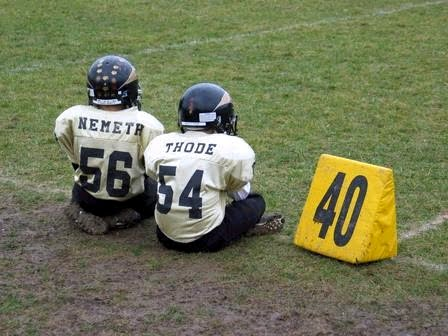
I say equal playing time at ALL competitive levels because if you have a kid on a team where he/she doesn’t play much, if at all, then he/she shouldn’t be ON that team. Move that kid down a team so they DO play and have the opportunity to play, learn, and develop skills in competitive contexts. No kid should be on an elite travel team, pay high fees to play and then not play equally…that seems wrong. As adults we’d NEVER put up with that policy would we? (I understand parents and kids “choose” to be on that team, I also understand that some kids want to play with their friends even if it means not playing, but those are different blogs on the broken system of youth sports).
If equal playing time is what we prefer and what we like and enjoy as adults why should it be different for kids?
 One Sport Voice