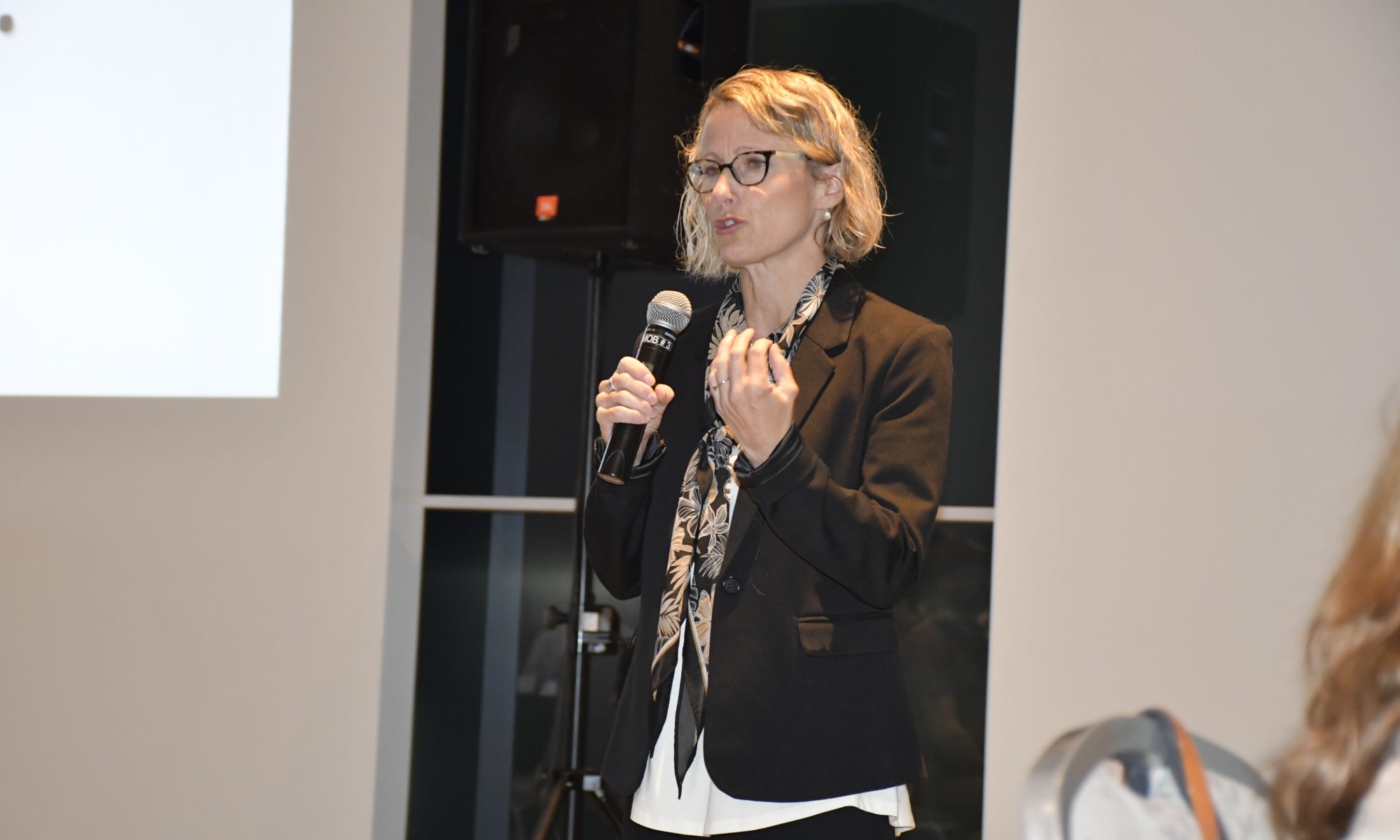
“Not Everything is Found on the Y-Chromosome”

The 5th IWG World Conference on Women in Sport in Sydney has now drawn to a close. The 6th World Conference will be held in Helsinki, Finland in 2014. It was edifying and energizing to meet so many great women, and men, who care deeply about girls and women in sport and to learn about how they are all making a difference in their own ways. One person really can make a difference. The legacy of the conference is the Sydney Scoreboard, which will track the percentage of women in positions of power in sport leadership across the globe (national sport organizations, presidents, CEOs). One message was clear throughout the conference, women are under represented in all position of power in all sports in all countries–we have much work yet to do. This conference helped me to think more deeply and clearly about how the empowerment of women and striving for women in positions of power is a human rights issue. When women help lead a nation or organization, everyone benefits.

Ms. Rachel Mayanja

The International Working Group on Women in Sport (IWG) has begun to build a relationship with the United Nations (UN), to help forward the IWG mission and agenda. The United Nations has a number of groups, resources, and initiatives that have great synergy with the IWG including, The UN Division for the Advancement of Women (DAW), United Nations Development Fund for Women (UNIFEM), United Nations International Research and Training Institute for the Advancement of Women (INSTRAW), and WomenWatch (information and resources about gender equality and the empowerment of women). The UN also has a Commission on the Status of Women which is a functional commission of the United Nations Economic and Social Council (ECOSOC).

Rachel Mayanja (Uganda), UN Assistant Secretary-General and Special Adviser on Gender Issues and Advancement of Women (OSAGI), delivered the opening keynote of the IWG Congress. In her speech she stated: Women’s and girls’ access to and participation in sport is not a privilege. It is a right. The right to participate in sport and physical activity is enshrined in Article 1 of the UNESCO International Charter of Physical Education and Sport, for example, which states that ‘The practice of physical education and sport is a fundamental right for all’.

From this picture, it is clear that MORE can potentially be found on the X-chromosome!

The conference ended with a keynote by The Hon Michael Kirby, former Justice of the High Court of Australia, which was fantastic. He told of how as a boy in 1949 he’d read a the Universal Declaration of Human Rights which shaped his life trajectory. He told us that document existed due to the leadership of Eleanor Roosevelt who chaired the committee which drafted the original document that was later adopted by the UN. He stated this is an example that if you want important work to be done, a woman has to be in charge. Kirby also said his colleague Mary Gordon used to tell him, “that not all is found on the Y-chromosome”.

This is a great statement, and until everyone believes and acts in ways that reflect this statement we have work to be done. I am re-energized and committed to continue my work on increasing the number of female coaches in youth sport so that children and youth see women in a position of power in a context they care deeply about. I believe if we are to change attitudes about gender stereotypes and women and leadership we need to have equal numbers (50%) of women as head coaches. To that end and taking up the idea of the Sydney Scoreboard, upon my return I will begin to work with youth sport boards and youth sport organizations to implement policy that requires/mandates that 50% of all coaches are female (currently according to data I have collected in youth soccer, only about 17% of all head coaches are female), and that at least 40% of all board positions are occupied by females.

World Congress on Women in Sport

I’m attending and presenting at the 5th World Conference on Women and Sport which will be held from May 20-23, 2010 in Sydney, Australia, so my blogs will be limited in the next two weeks. I’m sure I will have much to share once I return. I’m looking forward to seeing colleagues and friends, and learn about the issues women and girls face outside the U.S. So stay tuned for good stuff to come! If you are attending, please track me down. Best, NML

Latest “Women in Intercollegiate Sport” Report Now Available

The most recent version of Acosta & Carpenter’s longitudinal (33 years!) research on Women in Intercollegiate Sport is now available on their website. Some good news highlights:

  • 42.6% of women’s teams are coached by a female head coach, a number that has remained stable over the last four years
  • HIGHEST EVER number of paid assistant coaches of women’s teams, 57.6% which are female
  • HIGHEST EVER number (n= 12,702) of females employed in intercollegiate athletics

Given that basketball is the most popular collegiate sport acording to Acosta & Carpenter, and it is March Madness, you can also download the most recent Academic Progress/Graduation Success Rate Study of Division I NCAA Women’s and Men’s Basketball Tournament Teams

Director of The Institute of Diversity and Ethics in Sport (TIDES), Richard Lapchick states in the report, “Nineteen women’s tournament teams had a 100 percent graduation rate for their teams. Women do much better academically than men. Furthermore, the academic success gap between African‐American and white women’s basketball student‐athletes is smaller, although still significant, than between African‐American and white men’s basketball student‐athletes.”

Keeping it real with some data during March Madness…

A Female Head High School Football Coach!

Yeah! Natalie Randolph was named the head high school football coach for the Coolidge High School in Northwest Washington DC. Randolph comes to the position as an accomplished athlete with a great deal of “athletic capital”. She was a sprinter at the University of Virginia, and went on to play for the Divas of the Independent Women’s Professional League from 2004 to 2008.

This appointment is historic! While it would be hard to track down the exact statistics on the number of female head football coaches over time, I’m fairly sure the number would be very small. The data we do have shows that females comprise about 2% of coaches for boys’ teams, and when women do coach boys they are most often coaches of “non-revenue” sports such as swimming, track & field, or tennis.  Additionally, when women coach boys must possess a high degree of athletic capital. While men are assumed to be competent coaches even if they have never really played the sport, female coaches must continually prove themselves competent. A woman who never played football would never be hired to coach, but there are many men who have been hired to coach a sport they never played or didn’t play at a high level.

So helmets off to Natalie Randolph! I would love to see more and more women play and coach football. Many women love the game just as much as men, but given they aren’t allowed to play when they want to, the pathway to coaching the game they love is blocked with insurmountable barriers. Congrats to Randolph for breaking some tackles and clearing the running route a little bit for those women who desire to coach football.

The “Best” of 2009 and the State of Girls & Women in Sports

As 2009 comes to an end, there are some trends for those who care about sports–particularly sports for females–that you should keep an eye on in the months to come. Many groups and organizations that have been cornerstones of advocacy, programming, outreach and research for girls and women in sports are in trouble or on the rumored brink of existing no more.  Yes, girls and women in sports have made major advances in participation in the last 35+ years, but gender equity has yet to be achieved, we now have fewer females in positions of power in sport leadership, and sportswomen are constantly under attack. Some stories from the past year put the fact that fighting for gender equity in participation, leadership, and media coverage, to name a few, are not issues of the past.

Under what criteria do organizations decide to shut down or “put out” important programs that make a difference in the lives of sporting girls and women? Who decides what is “out” and what is included?  Who is left out, and who continues to play, lead, and enjoy the benefits of sports, and be portrayed in what ways by the media?  What constitutes “A Real Life Out Clause?” This is real life and the consequences of the decisions of those in positions of power will continue to shape the future of sport for females in 2010 and beyond.

Consider the following, some of these topics I’ve written about in previous blogs, some I have not:

The Melpomene Institute for Women’s Health Research is struggling to survive in this economy.

The National Association for Girls and Women in Sport (NAGWS) “strives to be one of the premiere organizations dedicated to advocacy, education and the promotion of girls and women in sport”. There were rumors this year that AAHPERD, the parent organization of NAGWS, was discussing whether or not to keep or disband NAGWS. So far it appears it has survived.

It Takes a Team (ITAT) is being discontinued as a programming and outreach arm of the Women’s Sport Foundation. ITAT’s purpose was to “address LGBT issues in high school and college athletics… and make sport teams safe and respectful for all athletes regardless of their sexual orientation or gender identity”. To read more about  ITAT ‘s “outing” go to former ITAT Director Pat Griffin’s blog post. Be sure the program is not being eliminated because homophobia in sports has been eliminated and is no longer an issue. Homophobia still exists and affects all athletes, coaches, administrators and those involved in sports.

The International Olympic Committee voted not to allow and include ski jumping for females, and endures as a sexist organization.

ESPN sports journalist Erin Andrews, one of the few in the profession, endured a terrible event where she was stalked and sexually harassed. Sportswomen also continue to be sexualized or erased in all types of media-print, broadcast and social.

In 2009 major “newsworthy” stories in women’s sport included “girls behaving badly” such as “extraneous and loud grunting” by one WTA player, a verbal attack on a line judge by another, and”overly aggressive” play by a collegiate soccer player, and the drunk driving of a WNBA MVP …not reports of stellar athleticism. Lest we not forget the obsession of the sex verification of runner Caster Semenya…which only came about because she was FAST, really fast.

Early last spring, when Tennesee Head Women’s Basketball Coach Pat Summitt won her 1,000th game, and Auriemma’s UConn Huskies won another national championship many speculated if they should coach men…the obvious pinnacle of any coach’s career. Interestingly, but perhaps not surprising, Summitt did NOT appear in Sports Illustrated “Coaches of the Decade“, but Auriemma did.

The WNBA lost a team, the Sacramento Monarchs, and another very successful team the Detroit Shock moved to Tulsa. I fear the WNBA is teetering on the brink of collapse in 2010, I hope I’m wrong. The WNBA now has 10 teams.

With 10 teams, The Lingerie Football League debuted its inaugural season in 2009 in cities across the US. According to the LFL website, the mission of the LFL includes: “the LFL will offer the ultimate fan experience providing unyielding access to players, teams and game action.” I fear the LFL will thrive and survive, I hope I’m wrong.

Women’s collegiate sports will never achieve gender equity unless real reform occurs unilaterally at the highest administrative level of institutions of higher learning. This was a clear message of the Knight Commission Report on Intercollegiate Athletics released in late 2009.

Earlier this year I critiqued a piece on ESPN.com titled The State of Uncertainty of Women’s Sports. I’m not certain if there is stability or uncertainty or both pertaining to women’s sports. What I do know, and these stories above (and many others not included here) provide evidence, that the work for those who care about sports for females is never done. We must work together to ensure girls and women in sports are not left out, or pushed out.

Stay tuned in 2010 for more information, and certainly more critiques, of these important issues. I’d also encourage you to visit the Women Talk Sports Network and read blogs by colleagues who also write about these issues here, here, here, here, here, and here.

Other WomenTalkSports posts of “Best of ’09”:

Benchmarking Women’s Leadership

Since it is finals and I don’t have much brain power left after grading to come up with clever original blog material, I’m sharing links to information already out there you may not know about.

The White House Project, just released a new report title Benchmarking Women’s Leadership which can be downloaded for free by clicking here.

Related to women in sport leadership, a research topic of mine and which you can read more about within previous blog posts, see pages 101-112 of the report.

Smart Things by Smart People

There are many excellent nuggets by many smart people in Seth Godin’s new FREE ebook, titled What Matters. While it isn’t sport related in a direct way, the concepts within are applicable to all contexts of human performance and interactions.

For example, on p.24 you’ll find a page written by Daniel Pink (author of A Whole New Mind) in which he talks about autonomy…one of my favorite motivational constructs. He writes,“If we want engagement, and the mediocrity busting results it produces, we have to make sure people have autonomy over the four most important aspects of their work:

Task – What they do
Time – When they do it
Technique – How they do it
Team – Whom they do it with

This book is worth the download.

A Tribute to a One-of-a Kind Servant-Coach

Me with Steve "Wilk" Wilkinson

Last night I attended a tribute to my mentor, friend and tennis coach, Steve Wilkinson. I’ve written about Wilk in previous blogs recounting his accomplishments and 3 Crown Philosophy. I was honored to be able to say a few words about Wilk on behalf of the Gustavus women’s tennis program. I’m sharing those words with you in this blog. There are not many opportunities in life to be in a room with so many people who are such an important part of your life. I was surrounded by many of my tennis mentors and closest friends–friends I made through sport.  As I sat there and listened to the words and song of others, I felt truly blessed and even more committed to pursuing my life’s work–making a difference in the lives of others, especially girls and women, through sport.

A Tribute to Steve “Wilk” Wilkinson

December 12, 2009, Nicole M. LaVoi

Good evening. I was invited to say a few words on behalf of the women’s tennis team, an opportunity for which I am grateful, humbled and honored. In preparation for tonight I solicited stories and thoughts from my teammates about how Wilk influenced their lives, so I’ll be speaking from their perspectives, as well as my own.

In reminiscing and in reading their comments, perhaps it is not astonishing the similarities between the lessons we have learned from Wilk, both on and off the court, and how we have integrated those teachings into our adult lives. I would guess much of what I say tonight will resonate with many of you.

Although Wilk was not by title my official coach or the coach of the women’s team—many of us saw him as our coach. He was responsible for my recruiting class in the interim between Dave Pettengill and Scott Novak.  Some might argue that Wilk played a large part in crafting the only national championship team of the women’s program—as the senior leadership of that team were all recruited by Wilk. I clearly remember the day during my senior year, I was intent on attending St. Ben’s, when Wilk called and invited me down to visit Gustavus just to “check it out.” Truth be told, I agreed because I could get out of a day of school!  Little did I know that call would shape the trajectory of the rest of my life.

It has been a very rewarding experience to think about Wilk’s influence on my own life and to discuss it with teammates. We are not given many moments, nor do we make the time, to reflect in meaningful ways on the people and events we hold so dear. I know that I would not be the person I am today, nor be striving to make a difference in the lives of children, their families and communities through sport, if it weren’t for Wilk.

Wilk has the ability to see the best and the full potential in all people. I would like to think that someday I might become the woman that Wilk saw within the immature, win at all cost, feisty competitive 18 year old whom he was patiently trying to teach how to volley on a cold April day in St. Cloud over 20 years ago. One of my most vivid memories of  Wilk was a 10 second exchange my freshman year. We were loading into the tennis van for an away match, and I was carrying a pillow with a pillow case that said “Love means nothing to a tennis player.”

For me it represented annihilating an opponent 6-0, 6-0, something at that time I took great pleasure in. Wilk saw the pillowcase and had that disappointed look on his face…you all know that look…and said, “I wish you wouldn’t ever use that again or bring it on tennis trips”. Of course at the time, it made me want to bring it all the more. That exchange always bothered me but it wasn’t until years later that I finally got it…love means everything to not only a tennis player, but human beings. I’m sure many of us, much later have finally “got” the lessons Wilk was so patiently trying to teach us in our youth.

Wilk is grace personified. Mary Sutherland Ryerse shared that a former pastor defined grace as “undeserved kindness”… which Wilk has consistently shown and modeled for us all. My teammates all offered examples of Wilk consistently going out of his way to help, teach, offer support or listen…win or lose, whether you were sportsmanly or not, were in the starting line up or not, got an “A” or failed a class, or if you got the job or not.

Linnea Carlson shared a story I think is an exemplar: She writes, “Our senior year we had finally beat Kenyon in the Midwest Regional final, 5-4, which was expected.  When Kendall Larson and I ran into Wilk at the bubble the next day and told him the news, he got a huge grin on his face and hugged us both…twice.  When I retold this story to a member of the men’s team, the player said, “If you had lost, he would have hugged you three times.”

Certainly our days with Gustavus Tennis were filled with goodness, great memories, gratitude, giving of self, giving full effort, goals with a focus on what can be controlled, and gifts of friendship and community….and of course, much grace.  I know in my own life a day does not go by without the Serenity Prayer—which I learned from Wilk. Whatever situation I’m in, the Serenity Prayer always applies. I joke with my students that all you need to know about the entire field of sport psychology can be summarized by the Serenity Prayer.

Wilk, you taught me that having a positive attitude and seeing the glass as always half full is not only a choice, but a skill that can be learned. Your unwavering commitment to doing the right thing for the right reason and keeping a positive outlook, even in the most difficult of circumstances, has shaped our character in a world that rewards achievement at the expense of others, short cuts, and instant gratification. I suppose this is why when Wilk asks you to do something, and we all end of saying “yes”…it is because we know it’s the right thing to do!

John Gardner, an American activist, reformer, educator and leader…a man much like Wilk, said “There are men and women who make the world better just by being the kind of people they are” and Wilk you are certainly one of those people. You have taught us that is it us alone who can put the unique ingredients of our lives together in a way that leads to dignity, integrity and meaning…and more importantly if we accomplish this feat, then the particular balance of success or failure is of less account.

Wilk, your impact surely echoes, and spreads exponentially in immeasurable ways. To give a visual (like this rock engraved with the word Serenity which I keep in my office next to my computer) I would describe you as a rock, our rock… cast into a calm lake and your impact as the concentric circles that emanate from your core and reverberate infinitely outward to places unknown.  It is my wish, and the wish of many of us from the women’s team, that for you this celebration gives you at least a glimpse of what you have meant, and will continue to mean to so many, myself included. Thank you.

Some Thoughts on Personal Renewal

I just read “Personal Renewal” by John Gardner. To learn more about John Gardner, click here.

I found so many parts of his speech enlightening. I hope you will take the time to read it. To give you a sense of what it encompasses, I’ve included a few of my favorite quotes below:

  • It’s what you learn after you know it all that counts.
  • You come to understand that most people are neither for you nor against you, they are thinking about themselves.
  • There are some things you can’t learn from others. You have to pass through the fire.
  • At the end of every road you meet yourself.
  • We want to believe that there is a point at which we can feel that we have arrived. We want a scoring system that tells us when we’ve piled up enough points to count ourselves successful.
  • The nature of one’s personal commitments is a powerful element in renewal.
  • You have to build meaning into your life, and you build it through your commitments.
  • People of every age need commitments beyond the self, need the meaning that commitments provide. Self-preoccupation is a prison, as every self-absorbed person finally knows. Commitments to larger purposes can get you out of prison.
  • Failure is simply a reason to strengthen resolve.
  • Meaning is not something you stumble across, like the answer to a riddle or the prize in a treasure hunt. Meaning is something you build into your life.

I find this piece applicable to every context, whether it be personal renewal, striving for optimal sport performance, or career transitions. What is your favorite quote and what does it mean to you?

Picture from here.

Differences Between Coaching Girls and Boys

Ok, I need your help. I’d really like to hear your opinion.I know many of you coach or have coached. Are there differences in coaching boys and girls?If so, what are they? Please respond by voting in the poll and making a comment to this blog. If you’d rather not make a public comment, email me at nmlavoi@gmail.com    I’ll be sure to share your responses in a future blog.