Ok, I need your help. I’d really like to hear your opinion.I know many of you coach or have coached. Are there differences in coaching boys and girls?If so, what are they? Please respond by voting in the poll and making a comment to this blog. If you’d rather not make a public comment, email me at nmlavoi@gmail.com I’ll be sure to share your responses in a future blog.
LaVoi’s 3C’s of Effective Coaching
If there is one theoretical framework that can easily be applied to helping coaches be more effective, it is the motivational framework of the Self-Determination Theory (SDT). SDT posits that human beings have 3 essential needs: the need for relatedness, the need to feel competence, and the need for autonomy.
I like to call these needs “The 3C’s“–care, competence, & choice–as talking “theory” is usually not met with interest and enthusiasm! When the three needs are not being met, well-being, optimal health, functioning, performance, and development are less likely to occur. Coaches play a unique role in meeting the needs of their athletes. If you’re interested in increasing your effectiveness as coach, parent, manager or any task that involves social interactions with other human beings, I’d encourage you to learn more about SDT.
Where are the Photographs of Female Coaches?
As part of my research and outreach I’m always trying to track down pictures of female coaches, specifically at the youth level, that don’t look “staged”. I’ve looked in most all the photo websites like IStock Photo, and when you type in “female coaches”…well just try it and see for yourself. The choices are really pathetic—similar to the image you see here (not from IStock).  In fact, if you only looked at the pictures you can find on these type of sites– or anywhere for that matter— you’d wonder if legitimate female coaches exist at youth or interscholastic levels.
I’ve had my colleagues and graduate students look as well, in case I was missing something or not searching correctly or in the right spots. Same result. When I needed images for the website of my new initiative to increase the number of female coaches, We Coach: Educating & Empowering Through Sport, I had to email female coaching friends for images of themselves.
This blog was inspired when I got notice today from WordPress.com that I could have access to pictures on PicApp.com, a site I had not previously been aware of. I immediately went to their site and typed in “coaches” and 3,829 images on 64 pages came up. Here is an example of what you will see–male coaches in action, in uniform, on the field looking competent and in charge. [picapp src=”e/5/7/a/Georgia_Southern_v_69ab.jpg?adImageId=5443390&imageId=6769230″ width=”234″ height=”150″ /] [picapp src=”6/1/2/f/Pistons_vs_Hawks_f5db.JPG?adImageId=5556926&imageId=6783389″ width=”234″ height=”159″ /]What you will not see are pictures of female coaches. I gave up looking for a female coach after the 5th page of images (sigh). (NOTE: I wrote this blog last night, and when I went in today the first images are from the Women’s Sport Foundation Annual Salute to Women’s Sport, including a few of Pat Summitt, the most winning-est coach in collegiate basketball. However, the images of Summitt are not in action, on the court, or in coaching attire, which sends a very different message about coaching competence compared to the images of the male coaches on the page)
Next I typed in “female coaches” resulting in 475 images on 8 pages. The first image is picture of Nadal signing autographs—not sure what this picture has to do with female coaches? The second image is this woman, who in my opinion doesn’t exactly look like a coach.
[picapp src=”c/f/b/e/Rafael_Nadal_Pre_41d7.jpg?adImageId=5557660&imageId=5606384″ width=”234″ height=”316″ /] [picapp src=”9/0/3/e/PicImg_Sarah_Gronert_in_f773.JPG?adImageId=5558108&imageId=4527814″ width=”234″ height=”332″ /]
The ironic part is the search for “female coaches” elicited more pictures of male coaches than female coaches, but when you search for “coaches” only pictures of real male coaches in action show up. (Note: the pics of Summitt mentioned previously do NOT appear on the “female coaches” page)
If you have the skills, passion, and time…please take some high resolution, pictures of female coaches in uniform, and “in action”. When I say “in action” I mean in action while coaching. Take pictures of what it looks like to coach in a REAL game, match, meet, or practice. When you do, make them available somewhere and let me know where to find them! Or if you know of a site with good images of female coaches not at the collegiate level, please enlighten me.
The scarcity of images that portray athletic competence of female athletes is well documented and I’ve written about it previously, but the same portrayal pattern exists for female coaches. A lack of legitimate images virtually and literally erases female coaches which is not good for anyone. Where are the pictures of female coaches?
Happy Sport Parents?
While most media attention focuses on the negative and angry behaviors of sport parents on youth sport sidelines–not all sport parents are angry and yelling. I have an ongoing research line on the emotional experiences of youth sport parents with some colleagues and students. Last summer we looked at what made sport parents happy; it was a nice change of pace from examining background anger in youth sports.
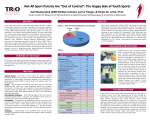
Kelli Blankenship, a member of the University of Minnesota Women’s Hockey Team and 2009 McNair Scholar, helped us analyze the happy parent data. You can see a nice story about her on the U of MN website. We found that child-athlete performances and experiences more frequently made sport parents happy, than did athlete development. You can see the full results of our poster by clicking on it. We’ll be analyzing the full data set soon, but this will give you a taste of what is to come.
Physical Activity, Organized Youth Sport & Youth Obesity
 Some and colleagues and I are working on research pertaining to what is known (and mostly not known) about the role of youth sports in obesity prevention. Last week Toben Nelson, University of Minnesota’s School of Public Health, presented some of our work at the monthly Tucker Table. You can view his PowerPoint and see a small video clip. This work has made me think critically about how youth sports may not be the healthiest places for some children–including the ubiquitous presence of unhealthy snacks which I wrote about in an earlier blog. While physical activity and active living may help prevent childhood obesity, healthy eating is the other half of the equation. To highlight the relationship between physical activity and the presence of unhealthy food, this Village Voice post and picture showing how NYC playgrounds house soda machines says it all (via AN).
Relational Expertise for Coaches
Relational expertise for coaches is the capacity to create meaningful, close connections with others that leads to mutual growth and development. My work in this area has been greatly influenced by the Relational-Cultural Theory (RCT) developed by Jean Baker Miller and colleagues at the Wellesley Centers for Women (WCW) at Wellesley College. I was introduced to WCW and RCT when I has the head tennis coach at Wellesley from 1994-1998.
 Relational-Cultural Theory (RCT) suggests that growth-fostering relationships are a central human necessity and disconnections are the source of psychological problems. According to RCT a close relationship is defined by four qualities: (a) authenticity (the process of acquiring knowledge of self and the other, feeling free to be genuine in the context of the relationship in an ongoing effort to represent one’s true self while assessing one’s own risk and gauging the impact of certain truths on the other and respecting the needs of the relationship), (b) engagement (perceived involvement, commitment, responsiveness and emotional availability), (c) empowerment/zest (the experience of feeling personally strengthened, encouraged and inspired to take action through connection in a relationship), and, (d) the ability to deal with difference and conflict (the process of expressing, working through and accepting differences in background, perspective and feeling leading to enlargement of the relationship, rather than disconnection)
We rarely and explicitly train coaches to become relational experts.
I wrote a guest column this month for the Minnesota Women’s Press LeaderVoice on my experiences and thoughts on the Relational Coach. I also have a published article in the International Journal of Sports Science & Coaching titled Expanding the Interpersonal Dimension: Closeness in the Coach-Athlete Relationship
picture from the401kconnection.com
World Record Set for Female Skydiving Formation
 This morning I heard on the news that a group of 181 female skydivers from 31 countries set a world record for the largest all-female skydiving formation. Proceeds raised by the divers (>$900,000) were donated to cancer research.
picture from http://www.worldrecordsacademy.org
Weekend Gender Observations
 This past weekend I traveled back to Notre Dame (ND) for the Michigan State football game. I go back every other year to catch a game and see former colleagues. While I was there I observed a few things I had to share related to how females are marginalized and gender is (re)produced in subtle and not to subtle ways. Here are the Top 5:
1. On Friday morning I played golf at the beautiful links style ND Warren Golf Course. When I worked at ND I would decide to golf after work and show up at the course and be assigned a tee time with a group that had room for one more. Mostly I played with all men. As we stood on the tee box, I would invariable get “advice” from one or more of the men on how to play, how to hit a drive etc….They would tee off first, and then we’d go up to the “Ladies Tees” where I would hit. When I play frequnetly I can hit a 200 yard drive which often surpasses some of the mens’ drives. After that I didn’t get any more advice. I wondered, do men give other men advice on the first tee? Why do men feel compelled to give females paternalistic advice on how to play golf when they have no idea how skilled she may or may not be?
2. One of the traditions of ND football is the Friday night pep rally. While at the pep rally, a distinguished alum and former NFL player was challenging the crowd to cheer loudly for the Irish. He said he was told to keep it “PC”. He told the crowd they should stand the whole game to show support. He then told the players to be tough and not let Michigan State control the game in “their house.” He said if the players wanted to be weak and soft he told them, “You should go to school across the street” (meaning attend the all-women’s sister school St. Mary’s College). To my surprise, a few people in the crowd booed him.
3. While wandering around campus I came across the 2008-09 ND men’s & women’s basketball schedule posters (see picture).  Given the research on portrayals of female athletes we have conducted in the Tucker Center, I noticed immediately that ALL the male athletes were in uniform, in action, and on the court. Some of the female athletes were in uniform, in action, and on the court but the dominant image was the “team shot.” These two posters convey very different messages about athletic competence.
4. On my way home I was checking Facebook and email on my phone when I saw a Facebook post that read: “Eagirls v. New Orleans“…meaning the Eagles were playing the New Orleans Saints. This person felt the Eagles were not playing well, which meant they were playing like girls.
5. Last but not least and related to #1 above…I wandered into an airport book store to find a new book to read on the way home. I came across a book written by man titled, Act Like a Lady, Think Like a Man. I was curious so I picked it up. I’d encourage you to take a look at the table of contents, depending on your perspective you’ll find it infuriating, entertaining or informative.
I think these example speak for themselves. Comments?
One Sport Voice Concluding Summer Thoughts About Sport
Where did summer go? As a new school year begins tomorrow, I’d like to share a few things I’ve been thinking about over the summer.
1. After giving parent and coach workshops this summer, I’m more convinced that ALL coaches and ALL parents should attend research-based educational workshops that help them create a positive climate for youth athletes. Schools, athletic associations and club teams have to mandate attendance, otherwise the folks who show up are predominately the choir. Anything less than a mandatory attendance policy is not effective in creating the kind of change needed to ensure that sport is done right.
 2. More research is needed on the issues that arise in sport for rural communities. Nearly all of our youth sport research includes suburban or urban communities. Very few researchers have focused on issues particular to rural communities and sport participation. I can only think of the Women’s Sport Foundation report Go Out And Play: Youth Sports in America by Sabo & Veliz (October, 2008) that includes data about rural kids and sports. After giving workshops in a small Minnesota community—with NO stoplights—I learned small rural communities have many of the same issues as their city counterparts, but I think unique issues exist. I talked with parents and coaches, many of whom approached me with stories of sport gone wrong and told me their stories with misty eyes, pain, frustration, and helplessness.
3. While in an antique store this summer I found James Michener’s book Sports in America written in 1976. He details the state of female, youth, collegiate and pro sport in the US (among other topics) just a few years after the passage of Title IX. It was a very interesting read and my take away was–The more things change, the more they stay the same, and some of the issues we think are “new”—such as the professionalization of youth sport—have been problematic for over 30 years.
So as I start the new school year, the focus of my work is ever sharper. Stay tuned for many new blogs that incorporate additional summer musings!
Part II: Clarifying the Myth About Exercise
If you didn’t read the TIME magazine cover article which stated that exercise is basically a waste of time and doesn’t help people lose weight, my blog critique of the article, or the very insightful comments of blog readers (particularly Jenny Evans, Performance Coach & Human Catalyst), here is your second chance.
To add to this critique is another piece, Why Time Magazine is Wrong About Working Out, written by David Zinczenko, the editor-in-chief of Men’s Health magazine and the editorial director of Women’s Health magazine.
Sensationalistic journalism about health, weight loss, and exercise abounds, which distorts and misinterprets research and further confuses consumers, which is why I decided to add a Part II.
 One Sport Voice