
In a session at NASSS, colleague Jim Denison (University of Alberta) made an interesting comment I’ve been thinking about ever since. He asserted that some coaches ask athletes to do all kinds of things that are bad for their health– and much less healthy than a supervised doping program. He also raised the issue that some problems and knowledge get silenced, while other forms are given power. What do you think?
The LFL Sells Sex, Not Sport
During the recent sport sociology conference (NASSS) I heard inspired critiques of sport and had many great conversations about sport media and female athletes. Ironically, I returned home today to this tweet by the Lingerie Football League.
RT @MyLFL: “THE LINGERIE FOOTBALL LEAGUE’S OFFICIAL WEBSITE WWW.LFLUS.COM IS OFFICIALLY ONE OF THE FASTEST GROWING WEBSITES… http://bit.ly/2YQYvj”
As you know, I’ve written previously about the LFL and I’ve been keeping an eye on what is happening with the league. At the NASSS conference I heard some great audience reception research on why sex does not sell women’s sport, sex sells sex. More specifically, sexy images and sexy female athletes sell sex to young male consumers ages 18-35. I would be really interested to see the market research—who are the consumers and fans of the LFL? (any guesses?)
The LFL is a perfect example of how sex can and does sell sex. The numbers prove it. Arguably, the LFL is not sport it is a dramatic spectacle aimed at entertainment and consumption of the female body. No where in any of the promotional materials is the athletic competence of LFL “athletes” highlighted or portrayed in any serious way. The sexualization of the LFL women is overt and aimed at appealing to male sexual fantasy. In fact their website promotes the LFL as “True Fantasy Football” which merges two primary desires and interests of many (not all) US men— football and sex.
If you watch the many videos of LFL games posted on the website, you will see continuous images of women tackling each other, acting violent, and slamming each other to the ground. Yet one women (New Mexico soccer player Elizabeth Lambert) acts aggressive and pulls a ponytail and we have a national outcry (see the video and read examples of indicative responses on Perez Hilton’s blog). Male athletes act aggressively and unsportsmanlike all the time (remember Zidane’s head butt in the World Cup? or Florida football team member Brandon Spikes fingers through the face mask? , both of which were similarly caught on national TV). Yet, the sanctions for Lambert were severe and quick (permanent dismissal from the team), while Zindane and Spikes punishments were much less in scope and severity.
What is our take home? Females can act aggressively as long as they are sexy, but if a real female athlete acts outside of the rules in real sport, she will be met with quick and severe sanctions…not only within her sport but will be berated by the public…while male athletes can “act like men” with comparatively less fanfare.
What is most interesting to me is the societal discussion and the media’s construction of Lambert’s transgression, rather then the event itself.
Differences Between Coaching Girls and Boys
Ok, I need your help. I’d really like to hear your opinion.I know many of you coach or have coached. Are there differences in coaching boys and girls?If so, what are they? Please respond by voting in the poll and making a comment to this blog. If you’d rather not make a public comment, email me at nmlavoi@gmail.com I’ll be sure to share your responses in a future blog.
What do Online College Coach Biographies Tell Us About Inclusivity?
See a guest column I wrote with graduate student Austin Stair Calhoun for the Women’s Sports Foundation, It Takes a Team newsletter titled: What Can Online Intercollegiate Coach Biographies Tell Us About Inclusivity and Tolerance of Diverse Sexual Orientations?
In a previous blog I posted our pilot study poster and results about this project. We’re currently finishing the data collection and analysis (with undergraduate Alicia Johnson, Minnesota State) for a full-scale national study which replicates the pilot. Stay tuned!
Where are the Photographs of Female Coaches?
As part of my research and outreach I’m always trying to track down pictures of female coaches, specifically at the youth level, that don’t look “staged”. I’ve looked in most all the photo websites like IStock Photo, and when you type in “female coaches”…well just try it and see for yourself. The choices are really pathetic—similar to the image you see here (not from IStock).  In fact, if you only looked at the pictures you can find on these type of sites– or anywhere for that matter— you’d wonder if legitimate female coaches exist at youth or interscholastic levels.
I’ve had my colleagues and graduate students look as well, in case I was missing something or not searching correctly or in the right spots. Same result. When I needed images for the website of my new initiative to increase the number of female coaches, We Coach: Educating & Empowering Through Sport, I had to email female coaching friends for images of themselves.
This blog was inspired when I got notice today from WordPress.com that I could have access to pictures on PicApp.com, a site I had not previously been aware of. I immediately went to their site and typed in “coaches” and 3,829 images on 64 pages came up. Here is an example of what you will see–male coaches in action, in uniform, on the field looking competent and in charge. [picapp src=”e/5/7/a/Georgia_Southern_v_69ab.jpg?adImageId=5443390&imageId=6769230″ width=”234″ height=”150″ /] [picapp src=”6/1/2/f/Pistons_vs_Hawks_f5db.JPG?adImageId=5556926&imageId=6783389″ width=”234″ height=”159″ /]What you will not see are pictures of female coaches. I gave up looking for a female coach after the 5th page of images (sigh). (NOTE: I wrote this blog last night, and when I went in today the first images are from the Women’s Sport Foundation Annual Salute to Women’s Sport, including a few of Pat Summitt, the most winning-est coach in collegiate basketball. However, the images of Summitt are not in action, on the court, or in coaching attire, which sends a very different message about coaching competence compared to the images of the male coaches on the page)
Next I typed in “female coaches” resulting in 475 images on 8 pages. The first image is picture of Nadal signing autographs—not sure what this picture has to do with female coaches? The second image is this woman, who in my opinion doesn’t exactly look like a coach.
[picapp src=”c/f/b/e/Rafael_Nadal_Pre_41d7.jpg?adImageId=5557660&imageId=5606384″ width=”234″ height=”316″ /] [picapp src=”9/0/3/e/PicImg_Sarah_Gronert_in_f773.JPG?adImageId=5558108&imageId=4527814″ width=”234″ height=”332″ /]
The ironic part is the search for “female coaches” elicited more pictures of male coaches than female coaches, but when you search for “coaches” only pictures of real male coaches in action show up. (Note: the pics of Summitt mentioned previously do NOT appear on the “female coaches” page)
If you have the skills, passion, and time…please take some high resolution, pictures of female coaches in uniform, and “in action”. When I say “in action” I mean in action while coaching. Take pictures of what it looks like to coach in a REAL game, match, meet, or practice. When you do, make them available somewhere and let me know where to find them! Or if you know of a site with good images of female coaches not at the collegiate level, please enlighten me.
The scarcity of images that portray athletic competence of female athletes is well documented and I’ve written about it previously, but the same portrayal pattern exists for female coaches. A lack of legitimate images virtually and literally erases female coaches which is not good for anyone. Where are the pictures of female coaches?
Happy Sport Parents?
While most media attention focuses on the negative and angry behaviors of sport parents on youth sport sidelines–not all sport parents are angry and yelling. I have an ongoing research line on the emotional experiences of youth sport parents with some colleagues and students. Last summer we looked at what made sport parents happy; it was a nice change of pace from examining background anger in youth sports.
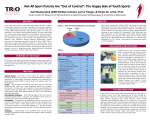
Kelli Blankenship, a member of the University of Minnesota Women’s Hockey Team and 2009 McNair Scholar, helped us analyze the happy parent data. You can see a nice story about her on the U of MN website. We found that child-athlete performances and experiences more frequently made sport parents happy, than did athlete development. You can see the full results of our poster by clicking on it. We’ll be analyzing the full data set soon, but this will give you a taste of what is to come.
Who Knew Tampons Could Be So Funny?
About a month ago I was watching TV and saw a strange commercial for Always, a feminine pad hygiene product, with the tag line “Have a happy period” with a woman dressed in white pulling a pristine pad out of a box, like as in a magic trick. I couldn’t find that ad but did find a French counterpart in which…well just watch it.

The themes in the Always ad campaign connote freshness, cleanliness, and relaxation. All words that women think of while menstruating (not).According to a New York Times piece women who use pads versus tampons have a different attitude about their periods. Which leads me to….
Yesterday I was alerted by @mhueter to a TV ad for Tampax in which Serena Williams takes on Mother Nature in a tennis match. When I first saw it, I wasn’t sure if it was hysterically funny and clever or super sexist. After watching it a few times, I’m going with the former. I love this ad! I love it because it uses humor to connect with women, rather than try to sell the idea of sanitary freshness regarding the process of menstruation (a rather mythical idea).
The Tampax ad uses strength, athleticism, physical activity, trash talking, and female athletes to promote a very different message to girls and women, than do the Always ads. The Always ad closely mirrors outdated gender stereotypes which were packaged and sold to women in the 1950’s, while the Tampax ad is a contemporary re-brand that females can do anything…and are not slowed down or marginalized by menstruation. I’m sure others out there find the video offensive, or as one colleague said “insipid”, but I’m sticking with funny. Sometimes one must put her critical lens aside and lighten up. Excuse me while I go watch it again. Game, Set and Match to Tampax 6-0, 6-0.
Brains & Beauty: The Dallas Cowboys Cheerleaders
 Blog reader S.C. sent me a story about the Dallas Cowboy Cheerleaders (DCC’s). Evidently the DCC’s have to take and pass a 100-question test in order be on the squad. Questions include “everything from the governor of Texas to a country that borders Iraq.” Rick Reilly, the author of the story for ESPN.com, poses a great critical question: If the Cowboys football players had to take the same quiz to make the team, how many would pass? To see some of the questions, which have nothing to do with football, see Reilly’s piece. After reading the GQ story on brain trauma of NFL players, it might be less likely that players would fare well on the exam.
Kelli Finglass, the DCC Leader says, “We want our cheerleaders to be knowledgeable and well-spoken in interviews…If they’re not, it’s a deal breaker.” To follow Reilly’s line: Is a non-literate or ill-spoken football player a “deal breaker” for the Cowboys? Who is more likely to be in the media spotlight and give interviews on national television (or any television for that matter!), cheerleaders or football players?
The bigger question may be, why are the DCC’s held to a different standard than the players? Share your thoughts with me.
The Case of the Pink Hockey Gloves
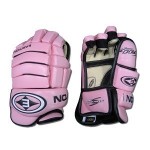 A couple years ago a student in my Psychology of Coaching class told me a story of a local youth hockey coach. This coach wanted to make his team of U12 boys “tougher.” To accomplish this goal, he decided to give the least tough skater on his team (in his opinion) a pair of pink gloves to wear for the next practice. He named this honor “the pussy gloves.” A majority of the time, the pink gloves were awarded to the same boy. I wish I were making this up.
There are so many reasons why this motivational tactic is the farthest thing from motivational, aside from the fact it is sexist and homophobic. Unfortunately this type of coaching behavior is not uncommon and often goes unchallenged as the status quo.
Weekend Gender Observations
 This past weekend I traveled back to Notre Dame (ND) for the Michigan State football game. I go back every other year to catch a game and see former colleagues. While I was there I observed a few things I had to share related to how females are marginalized and gender is (re)produced in subtle and not to subtle ways. Here are the Top 5:
1. On Friday morning I played golf at the beautiful links style ND Warren Golf Course. When I worked at ND I would decide to golf after work and show up at the course and be assigned a tee time with a group that had room for one more. Mostly I played with all men. As we stood on the tee box, I would invariable get “advice” from one or more of the men on how to play, how to hit a drive etc….They would tee off first, and then we’d go up to the “Ladies Tees” where I would hit. When I play frequnetly I can hit a 200 yard drive which often surpasses some of the mens’ drives. After that I didn’t get any more advice. I wondered, do men give other men advice on the first tee? Why do men feel compelled to give females paternalistic advice on how to play golf when they have no idea how skilled she may or may not be?
2. One of the traditions of ND football is the Friday night pep rally. While at the pep rally, a distinguished alum and former NFL player was challenging the crowd to cheer loudly for the Irish. He said he was told to keep it “PC”. He told the crowd they should stand the whole game to show support. He then told the players to be tough and not let Michigan State control the game in “their house.” He said if the players wanted to be weak and soft he told them, “You should go to school across the street” (meaning attend the all-women’s sister school St. Mary’s College). To my surprise, a few people in the crowd booed him.
3. While wandering around campus I came across the 2008-09 ND men’s & women’s basketball schedule posters (see picture).  Given the research on portrayals of female athletes we have conducted in the Tucker Center, I noticed immediately that ALL the male athletes were in uniform, in action, and on the court. Some of the female athletes were in uniform, in action, and on the court but the dominant image was the “team shot.” These two posters convey very different messages about athletic competence.
4. On my way home I was checking Facebook and email on my phone when I saw a Facebook post that read: “Eagirls v. New Orleans“…meaning the Eagles were playing the New Orleans Saints. This person felt the Eagles were not playing well, which meant they were playing like girls.
5. Last but not least and related to #1 above…I wandered into an airport book store to find a new book to read on the way home. I came across a book written by man titled, Act Like a Lady, Think Like a Man. I was curious so I picked it up. I’d encourage you to take a look at the table of contents, depending on your perspective you’ll find it infuriating, entertaining or informative.
I think these example speak for themselves. Comments?
 One Sport Voice