A Pattern Has Emerged

I’m not a big fan of ESPN The Magazine, as I’ve written about their cover photos and coverage of women’s sport in a previous blog….or should I say LACK of coverage that focuses on athleticism, rather than being feminine and sexy.

Serena ESPN mag_Oct 2009

Their latest series of 6 covers for the October 19, 2009  “The Body Issue” has Serena Williams posing naked (thanks for the head’s up EH). It seems to me a recent pattern has emerged.

Here is the pattern:

1) A Black female athlete performs well and dominates opponents,

2) During the course of competition she acts outside prescribed gender norms (i.e., looks like a man, yells and argues with a referee),

3) Subsequently she is grilled and sanctioned by the public and the media,

4) Therefore she has to recover by performing versions of the female athlete apologetic by literally apologizing like S. Williams, and/or highlighting heterosexy femininity on the cover of  magazines. I’m talking about first, Caster Semenya and now Serena Williams (see picture here).

Underlying sport media portrayals of highly talented Black female athletes are racism and sexism. I suppose my blog title should really read…A Pattern Has REemerged.

NOTE: If you want to see the making of The Body Issue and gain insight to the ‘issue’ (and see a whole lot naked) click here.

Ick.

nip & tuckI came across this ad for the TV show Nip & Tuck this weekend. It was so offensive I had to rip it out and share it with you. Although it has nothing to do with sport, it is related to other themes in this blog I frequently write about.

There is nothing good about this ad. Evidently this show has a history of offensive ads. Awesome! This is another example of the picture says it all. No commentary needed.

Happy Sport Parents?

While most media attention focuses on the negative and angry behaviors of sport parents on youth sport sidelines–not all sport parents are angry and yelling. I have an ongoing research line on the emotional experiences of youth sport parents with some colleagues and students. Last summer we looked at what made sport parents happy; it was a nice change of pace from examining background anger in youth sports.

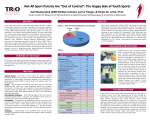
MCNAIR_Blankenship Poster_2009_Final

Kelli Blankenship, a member of the University of Minnesota Women’s Hockey Team and 2009 McNair Scholar, helped us  analyze the happy parent data. You can see a nice story about her on the U of MN website. We found that child-athlete performances and experiences more frequently made sport parents happy, than did athlete development.  You can see the full results of our poster by clicking on it. We’ll be analyzing the full data set soon, but this will give you a taste of what is to come.

Physical Activity, Organized Youth Sport & Youth Obesity

soda machineSome and colleagues and I are working on research pertaining to what is known (and mostly not known) about the role of youth sports in obesity prevention. Last week Toben Nelson, University of Minnesota’s School of Public Health, presented some of our work at the monthly Tucker Table. You can view his PowerPoint and see a small video clip. This work has made me think critically about how youth sports may not be the healthiest places for some children–including the ubiquitous presence of unhealthy snacks which I wrote about in an earlier blog. While physical activity and active living may help prevent childhood obesity, healthy eating is the other half of the equation. To highlight the relationship between physical activity and the presence of unhealthy food, this Village Voice post and picture showing how NYC playgrounds house soda machines says it all (via AN).

Women & Girls in Sport Mini-Quiz

Exam 2l I had to put together a little quiz on girls and women in sport, so I thought I’d post it here. Take this 5 questions quiz WITHOUT Googling and I’ll post the answers tomorrow.

Women & Girls Sport Quiz

1. In what year was the federal law Title IX passed that required gender equity in every educational program that receives federal funding?
2. Who is the greatest female golfer from Minnesota who co-founded and was the first president of the
LPGA?
3. Which governing body of college sport was the largest in the late 1970s?
4. She defeated Bobby Riggs (a former men’s Wimbledon champion) in a tennis match and founded the Women’s Sport Foundation.
5. Which female Olympian in the summer games has the most gold medals?

ANSWERS: 1) 1972, 2) Patty Berg, 3) AIAW has >100 more members than the NCAA, 4) Billie Jean King, 5) Jenny Thompson has 8 gold medals.

Relational Expertise for Coaches

Relational expertise for coaches is the capacity to create meaningful, close connections with others that leads to mutual growth and development. My work in this area has been greatly influenced by the Relational-Cultural Theory (RCT) developed by Jean Baker Miller and colleagues at the Wellesley Centers for Women (WCW) at Wellesley College. I was introduced to WCW and RCT when I has the head tennis coach at Wellesley from 1994-1998.

growthRelational-Cultural Theory (RCT) suggests that growth-fostering relationships are a central human necessity and disconnections are the source of psychological problems. According to RCT a close relationship is defined by four qualities: (a) authenticity (the process of acquiring knowledge of self and the other, feeling free to be genuine in the context of the relationship in an ongoing effort to represent one’s true self while assessing one’s own risk and gauging the impact of certain truths on the other and respecting the needs of the relationship), (b) engagement (perceived involvement, commitment, responsiveness and emotional availability), (c) empowerment/zest (the experience of feeling personally strengthened, encouraged and inspired to take action through connection in a relationship), and, (d) the ability to deal with difference and conflict (the process of expressing, working through and accepting differences in background, perspective and feeling leading to enlargement of the relationship, rather than disconnection)

We rarely and explicitly train coaches to become relational experts.

I wrote a guest column this month for the Minnesota Women’s Press LeaderVoice on my experiences and thoughts on the Relational Coach. I also have a published article in the International Journal of Sports Science & Coaching titled Expanding the Interpersonal Dimension: Closeness in the Coach-Athlete Relationship

picture from the401kconnection.com

Who Knew Tampons Could Be So Funny?

About a month ago I was watching TV and saw a strange commercial for Always, a feminine pad hygiene product, with the tag line “Have a happy period” with a woman dressed in white pulling a pristine pad out of a box, like as in a magic trick. I couldn’t find that ad but did find a French counterpart in which…well just watch it.

happy period
The themes in the Always ad campaign connote freshness, cleanliness, and relaxation. All words that women think of while menstruating (not).According to a New York Times piece women who use pads versus tampons have a different attitude about their periods. Which leads me to….

Yesterday I was alerted by @mhueter to a TV ad for Tampax in which Serena Williams takes on Mother Nature in a tennis match. When I first saw it, I wasn’t sure if it was hysterically funny and clever or super sexist. After watching it a few times, I’m going with the former. I love this ad! I love it because it uses humor to connect with women, rather than try to sell the idea of sanitary freshness regarding the process of menstruation (a rather mythical idea).

The Tampax ad uses strength, athleticism, physical activity, trash talking, and female athletes to promote a very different message to girls and women, than do the Always ads. The Always ad closely mirrors outdated gender stereotypes which were packaged and sold to women in the 1950’s, while the Tampax ad is a contemporary re-brand that females can do anything…and are not slowed down or marginalized by menstruation. I’m sure others out there find the video offensive, or as one colleague said “insipid”, but I’m sticking with funny. Sometimes one must put her critical lens aside and lighten up. Excuse me while I go watch it again. Game, Set and Match to Tampax 6-0, 6-0.

How NOT to use Social Media….

Since I still have social media on the brain this week, and have been reading the discussion about social media and its impact on women’s sport on The Tucker Center blog…Thanks to ASC, I came across this story on SportsAgentBlog.com about how not to use Twitter. This is precisely how social media can be detrimental to athletes. While this example involves a male college football player, it won’t be too long before we have an example of a female athlete getting into hot water over an inappropriate Tweet about her coach. Wait for it…..

Brains & Beauty: The Dallas Cowboys Cheerleaders

dallas_cowboys_diamondBlog reader S.C. sent me a story about the Dallas Cowboy Cheerleaders (DCC’s). Evidently the DCC’s have to take and pass a 100-question test in order be on the squad. Questions include “everything from the governor of Texas to a country that borders Iraq.” Rick Reilly, the author of the story for ESPN.com, poses a great critical question: If the Cowboys football players had to take the same quiz to make the team, how many would pass? To see some of the questions, which have nothing to do with football, see Reilly’s piece. After reading the GQ story on brain trauma of NFL players, it might be less likely that players would fare well on the exam.

Kelli Finglass, the DCC Leader says, “We want our cheerleaders to be knowledgeable and well-spoken in interviews…If they’re not, it’s a deal breaker.” To follow Reilly’s line: Is a non-literate or ill-spoken football player a “deal breaker” for the Cowboys? Who is more likely to be in the media spotlight and give interviews on national television (or any television for that matter!), cheerleaders or football players?

The bigger question may be, why are the DCC’s held to a different standard than the players? Share your thoughts with me.