Happy National Girls & Women in Sport Day 2013!

Celebrate the active and sporing females in your life today-or yourself-by trying a new physical activity.

Here are 3 things you can do today, or any day, to be more active. The most important thing is to MOVE…in any way you can! Did you know that being sedentary is the new smoking?

1. Set a timer to beep every 30-45mns and when it rings, get up and walk up and down a flight of stairs or down the hallway.

2. Go to a local boutique gym and take a new class…smaller, customized, friendly, local gyms are the new trend, so find one near you and venture out. Here is a list of the Top 10 new fitness trends for 2013.

3. Practice your balance. Balance is an important part of functional fitness, but we rarely think about it that way. Just get our of your chair and stand on one leg for up to one minute and switch legs. You can do it holding onto something or free standing.

Remember….just MOVE!

Advice to High School Students

Recently I was asked to speak to a student assembly at my high school alma mater, St. Cloud Technical High School in St. Cloud Minnesota. Go Tigers! Although I lecture to college students everyday, I suddenly was fearful I had nothing of worth to say to high school students. I decided to tell them what I wish I would of known in high school. So here are 5 things I came up with:

1. High school is not the “best time of your life”, this is a marketing gimmick used to sell class rings. High school for some can be a painful time of puberty, hazing, bullying, isolation, identity crisis, friendship and romantic relationship turmoil, mental health issues, and trying on new ideas to name a few. The best days of your life are ahead!

2. Follow your passion. Listen to yourself and follow your instincts to do what you love. Life is too short to do something, whether it be a sport, job, or relationship, you are not happy doing. Follow your positive energy. A book I’m excited to read over winter break is The Energy Bus. One idea in this book is to think about is be your own CEO–Chief Energy Officer. Think “I get to do…” rather than “I have to do.” Many things we do in our lives, it is a privilege, but we often start to feel negative or obligated. Reframe your thinking to “I get to” and see if it doesn’t make a difference in how you feel.

3. Learn from everyone you encounter. Take the best from that person and make it your own …or remember what you don’t like and promise never to do or be THAT person.

4. When things get tough,hard, sad, scary or frustrating–and they will–remember that this too shall pass.

5. Use your passion and energy to create change, do good and make a difference. One person CAN make a difference. Be THAT person.

What would you tell high school students?

Hazing By Coaches

This case is an exemplar of one of the many things wrong with the current structure of youth sport—win at all costs, early specialization at increasingly younger ages, intense parental involvement, no standard training for coaches, and uncritical acceptance of teaching boys to be men through a one-dimensional view of masculinity that is characterized as power-over others, emotional and physical toughness, and a disregard for the true meaning of competition (e.g., striving together, not against and treating opponents and each other with respect).

This case I am about to lay out gets to the heart of a key question: What is the purpose of youth sport? I like to use a triad approach from sport psychology colleague Robin Vealey. Within the The Inner Edge Model in equal parts athletes 1) strive to win and achieve optimal performance, 2) develop skills-psychological , physical, social, emotional and moral, and 3) enjoy and have fun playing sport.

This case is about hazing. Hazing of 10 year old boys by their coaches. At a year-end banquet youth hockey banquet in a unnamed city, it has been a ‘tradition’ to make the youngest boys sit on stage in front of the older peers and all their parents, and wear a diaper on their heads while sucking a pacifier. One boy, nervous and fearful of this impending ritual, asked his coach if he could sit out. The coach said no.The child was visibly upset and embarrassed on stage.

Given this private hockey club is community-based and not school-based, laws like Title XII and Title IX or state-based anti-hazing laws don’t apply. The coaches were asked by the parents to stop the ritual in the future. The coaches said no. When anti-hazing coach education was suggested by the governing body, the coaches said no thanks.

Let me be clear—making young boys wear diapers on their heads is HAZING. Hazing is any action that intentionally causes embarrassment, and risks emotional and/or physical safety, regardless of willingness to participate or not. Hazing is done to a person or group of people in order to gain entrance or acceptance into a club, organization, or team. One key question on HazingPrevention.org that characterizes hazing: Is it causing emotional distress or stress of any kind to myself or others? If the answer is yes, it is hazing.

Do we want youth sport coaches to haze young athletes in front of their peers and parents? Is that what we want youth sport to be about? Is that how coaches should inspire a team to optimal performance? Does it help those boys become better hockey players? Does it enhance the boys’ fun and enjoyment of their hockey experience? Does it build admiration for and trust in the coach?  I say no.

Sociological Perspectives on Sport Concussion

To read my, and other sport sociologists’ evocative Roundtable perspectives on “Concussions & Consequences” via The Society Pages, click here.

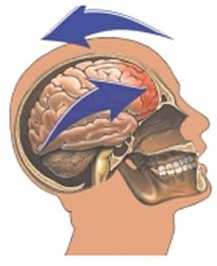
Also check out the new book on concussions and youth sport by Mary Hyman, titled Concussions and Our Kids.

If you haven’t watched the University of Minnesota, Tucker Center for Research on Girls & Women in Sport Emmy nominated documentary on Concussion and Female Athletes: the Untold Story, you can watch it here for free.

Can you identify this image?

I need some help from the blogosphere!

We have misplaced the original source of this image of female swimmers! Does anyone know who these women are, what team they swim for, or any information that would lead us to the source of this photo? ANY help is appreciated!

Please email me directly if you have any information nmlavoi@umn.edu

THANKS IN ADVANCE!

Gender & the Olympics: A Commentary

I wrote about three significant trends pertaining to females and the Olympics for Minnesota Public Radio. Namely I wrote 2012 has marked the 40th anniversary of title IX in the US, female Olympians outnumbers their male counterparts for the USOC, and women in predominately religiously conservative Muslim nations were allowed to compete for the first time in summer Olympic history. I also wrote about the lack of women in positions of power for the US Team (also see previous blog).

After I wrote that piece I’ve been thinking about other broken barriers, and in some cases have proven just how far girls and women in sport have yet to go. Other key occurrences include:

1. African American women winning gold in sports traditionally dominated by Whites–Serena Williams (tennis, becoming only the 2nd female to obtain the Golden Slam), Gabby Douglas (all-around gymnastics). However, both athletes competed in sports and trained in systems that are not under the jurisdiction of Title IX (i.e., private, non-school based). This is a key point because while Title IX as dramatically improved participation rates for females, girls and women of color have not benefited from this law to the same degree as their White peers.

2. On Friday, August 9, 2012, Shannon Eastin became the first female to referee an NFL game. This is key for many reasons–its provides proof females can be in other visible roles in football than cheering on the sidelines, it provides a role model for girls and young women to aspire to a career in refereeing at the highest level, and it provides evidence that women are capable of referring a sport that most don’t play (no one ever raises an eyebrow when men ump or coach softball!). Unfortunately due to enduring sexism and gender stereotypes about women in positions of power she will endure criticism that is not leveled at her male colleagues, and backlash in the blogosphere. However, her appearance is not without controversy due to the NFL ref picket line.

3. While US women have won 58% of the medals for Team USA (as of 8/10/12), female athletes in most all sports have been criticized and subject of derogatory remarks for not being feminine or attractive enough. There are a number a articles on this topic which details that “faces not feats” are predominately highlighted in Olympic coverage. I was encouraged by the fact some female athletes fought back and resisted those who tried to marginalize their amazing feats.

The reason why this matters is that just as many current Olympians (e.g., Alex Morgan, Gabby Douglas, Missy Franklin) talked about how their aspirations for gold began as they watched 12, 8 or 4 years ago, today’s girls are doing the same. Girls need to see active, athletic female role models rather than be subject to commentary about how female athletes should look and conform to society’s notions of femininity and beauty. Athletes are beautiful…in all shapes, sizes, sport types, ages (equestrian Karen O’Connor is the oldest Olympian competing for the US at age 54; swimmer Katie Ledecky is the youngest at 15).

For some female athletes they self-promote by relying on looks, and for those who have them…can we blame them?. According to Jere Longman, a NYT writer, “Lolo Jones has received far greater publicity than any other American track and field athlete competing in the London Games. This was based not on achievement but on her exotic beauty and on a sad and cynical marketing campaign.” As Jones took 4th place in the 100m hurdles by a tenth of a second, I wondered if all the attention and hype distracted Jones’ attention and energy from optimal performance. What is even MORE interesting is that Longman’s critical column of Jones garnered considerable criticisms of its own (here, here, here, here).

…primarily from blogs that are rarely interested in covering women’s sport!

So is the lesson from “low blows on LoLo” that one should not be mean spirited and critical of the Olympic “It Girl”? (I’m reminded of my blog where I criticized the SI cover portrayal of 2010 Winter Olympic It Girl Lindsey Vonn). That female athletes should be left alone to market and promote themselves as they see fit? That it is OK if girls and young women internalize consistent messages of “it is more important what you look like than what you can do athletically” that can, according the to American Psychological Association, lead to a host mental and physical disorders?

If remaining gender barriers are to be broken, how female athletes are portrayed, portray themselves, and critiqued by the media must be examined and changed.

Athleticism and talent of ALL female athletes, not just the ones who meet society’s standards of femininity and attractiveness, (of all the hours of NBC coverage I did not see any of female weightlifters or boxers) should be sufficient for coverage.

And when they perform well and give it all they had in the tank, we should celebrate— not compare them to men, call them “manly” or other gendered slurs, subject them to sex testing, or wonder if performance enhancing drugs are involved (e.g., Ye Shiwen, Caster Semenya).

College Sport Hypocrisy

‘‘Football will never again be placed ahead of educating, nurturing and protecting young people,’’ NCAA President Mark Emmert declared in announcing the Penn State penalties. As Dave Zirin reported in his column, Emmert also stated, “Programs and individuals must not overwhelm the values of higher education.”

If these statements are really going to be true, then college sport should be shut down and started from scratch.

The fact Emmert has the audacity utter these words is complete hypocrisy. The NCAA and its institutional policies and structure are primary reasons why football on many campuses is placed ahead of educating, nurturing and protecting young people. While the debate rages about NCAA sanctions against Penn State “for lack of institutional control”, very little of the debate has centered on how NCAA institutional control (i.e., monopoly) creates a breeding ground for sport scandals. Who or what organization has oversight of the NCAA?

There is a small window of opportunity to have real dialogue about college sport reform and the role of big time college athletics within institutions of higher education. Instead the institutional control of the NCAA just expanded outside its proper and legal limits, which means reform will certainly not follow and scandals will continue to occur.

(for more reading on this persepctive, Zirin writes a compelling column about how the NCAA sanctions are unprecedented and mark a new era of the NCAA, and not one that will lead to real and lasting reform. Zisner, a NYT writer adds her two cents about the lack of “real reform.”)

UPDATE: A few other good pieces on the role of the NCAA and football in the Penn State scandal have come out since I wrote this blog.

8/1/12 piece in The Chronicle of Higher Education titled “The NCAA Entrenches Itself as Part of the Problem”

8/1/12 piece by Bruce Svare, professor of psychology at the University at Albany titled ” Life isn’t just a football game”