Since it is finals and I don’t have much brain power left after grading to come up with clever original blog material, I’m sharing links to information already out there you may not know about.
Related to women in sport leadership, a research topic of mine and which you can read more about within previous blog posts, see pages 101-112 of the report.
Last night I attended a tribute to my mentor, friend and tennis coach, Steve Wilkinson. I’ve written about Wilk in previous blogs recounting his accomplishments and 3 Crown Philosophy. I was honored to be able to say a few words about Wilk on behalf of the Gustavus women’s tennis program. I’m sharing those words with you in this blog. There are not many opportunities in life to be in a room with so many people who are such an important part of your life. I was surrounded by many of my tennis mentors and closest friends–friends I made through sport. As I sat there and listened to the words and song of others, I felt truly blessed and even more committed to pursuing my life’s work–making a difference in the lives of others, especially girls and women, through sport.
A Tribute to Steve “Wilk” Wilkinson
December 12, 2009, Nicole M. LaVoi
Good evening. I was invited to say a few words on behalf of the women’s tennis team, an opportunity for which I am grateful, humbled and honored. In preparation for tonight I solicited stories and thoughts from my teammates about how Wilk influenced their lives, so I’ll be speaking from their perspectives, as well as my own.
In reminiscing and in reading their comments, perhaps it is not astonishing the similarities between the lessons we have learned from Wilk, both on and off the court, and how we have integrated those teachings into our adult lives. I would guess much of what I say tonight will resonate with many of you.
Although Wilk was not by title my official coach or the coach of the women’s team—many of us saw him as our coach. He was responsible for my recruiting class in the interim between Dave Pettengill and Scott Novak. Some might argue that Wilk played a large part in crafting the only national championship team of the women’s program—as the senior leadership of that team were all recruited by Wilk. I clearly remember the day during my senior year, I was intent on attending St. Ben’s, when Wilk called and invited me down to visit Gustavus just to “check it out.” Truth be told, I agreed because I could get out of a day of school! Little did I know that call would shape the trajectory of the rest of my life.
It has been a very rewarding experience to think about Wilk’s influence on my own life and to discuss it with teammates. We are not given many moments, nor do we make the time, to reflect in meaningful ways on the people and events we hold so dear. I know that I would not be the person I am today, nor be striving to make a difference in the lives of children, their families and communities through sport, if it weren’t for Wilk.
Wilk has the ability to see the best and the full potential in all people. I would like to think that someday I might become the woman that Wilk saw within the immature, win at all cost, feisty competitive 18 year old whom he was patiently trying to teach how to volley on a cold April day in St. Cloud over 20 years ago. One of my most vivid memories of Wilk was a 10 second exchange my freshman year. We were loading into the tennis van for an away match, and I was carrying a pillow with a pillow case that said “Love means nothing to a tennis player.”
For me it represented annihilating an opponent 6-0, 6-0, something at that time I took great pleasure in. Wilk saw the pillowcase and had that disappointed look on his face…you all know that look…and said, “I wish you wouldn’t ever use that again or bring it on tennis trips”. Of course at the time, it made me want to bring it all the more. That exchange always bothered me but it wasn’t until years later that I finally got it…love means everything to not only a tennis player, but human beings. I’m sure many of us, much later have finally “got” the lessons Wilk was so patiently trying to teach us in our youth.
Wilk is grace personified. Mary Sutherland Ryerse shared that a former pastor defined grace as “undeserved kindness”… which Wilk has consistently shown and modeled for us all. My teammates all offered examples of Wilk consistently going out of his way to help, teach, offer support or listen…win or lose, whether you were sportsmanly or not, were in the starting line up or not, got an “A” or failed a class, or if you got the job or not.
Linnea Carlson shared a story I think is an exemplar: She writes, “Our senior year we had finally beat Kenyon in the Midwest Regional final, 5-4, which was expected. When Kendall Larson and I ran into Wilk at the bubble the next day and told him the news, he got a huge grin on his face and hugged us both…twice. When I retold this story to a member of the men’s team, the player said, “If you had lost, he would have hugged you three times.”
Certainly our days with Gustavus Tennis were filled with goodness, great memories, gratitude, giving of self, giving full effort, goals with a focus on what can be controlled, and gifts of friendship and community….and of course, much grace. I know in my own life a day does not go by without the Serenity Prayer—which I learned from Wilk. Whatever situation I’m in, the Serenity Prayer always applies. I joke with my students that all you need to know about the entire field of sport psychology can be summarized by the Serenity Prayer.
Wilk, you taught me that having a positive attitude and seeing the glass as always half full is not only a choice, but a skill that can be learned. Your unwavering commitment to doing the right thing for the right reason and keeping a positive outlook, even in the most difficult of circumstances, has shaped our character in a world that rewards achievement at the expense of others, short cuts, and instant gratification. I suppose this is why when Wilk asks you to do something, and we all end of saying “yes”…it is because we know it’s the right thing to do!
John Gardner, an American activist, reformer, educator and leader…a man much like Wilk, said “There are men and women who make the world better just by being the kind of people they are” and Wilk you are certainly one of those people. You have taught us that is it us alone who can put the unique ingredients of our lives together in a way that leads to dignity, integrity and meaning…and more importantly if we accomplish this feat, then the particular balance of success or failure is of less account.
Wilk, your impact surely echoes, and spreads exponentially in immeasurable ways. To give a visual (like this rock engraved with the word Serenity which I keep in my office next to my computer) I would describe you as a rock, our rock… cast into a calm lake and your impact as the concentric circles that emanate from your core and reverberate infinitely outward to places unknown. It is my wish, and the wish of many of us from the women’s team, that for you this celebration gives you at least a glimpse of what you have meant, and will continue to mean to so many, myself included. Thank you.
In a session at NASSS, colleague Jim Denison (University of Alberta) made an interesting comment I’ve been thinking about ever since. He asserted that some coaches ask athletes to do all kinds of things that are bad for their health– and much less healthy than a supervised doping program. He also raised the issue that some problems and knowledge get silenced, while other forms are given power. What do you think?
In a previous blog I was lamenting about the scarcity of pictures of real female coaches, especially at the youth level. I’m pleased to report I found some! A photographer for the University of Minnesota’s College Education of Human Development ConnectMagazine shot some GREAT pictures of females coaches for a story they ran recently on some of our research. To read the story “The Sporting Life: Research Helps Families Adjust to an Increase in Youth Athletics” and see the pictures of two great female coaches in action, on the field, and in coaching attireclick here (and scroll down to the link below the picture that states “enlarge picture and launch slide show”).
Most remarkable is that in some of the pictures, Coach Kari Ornes is pictured coaching high school boys! Even though females coaching males at all levels of competition occurs about 2% of the time-you never see it. We need more pictures of this nature to be taken and portrayed in traditional and new media outlets. Both Kari and Julie are part of the We Coach advisory board and two exemplary female coaches!
Ok, I need your help. I’d really like to hear your opinion.I know many of you coach or have coached. Are there differences in coaching boys and girls?If so, what are they? Please respond by voting in the poll and making a comment to this blog. If you’d rather not make a public comment, email me at nmlavoi@gmail.com I’ll be sure to share your responses in a future blog.
My last blog post outlined the “3C’s” (as in Champion) of coaching, this blog is about the 3G’s (as in Great).
The 3G’s are not mine, but a creation of Steve Wilkinson, former men’s tennis coach of Gustavus Adolphus College in St. Peter, MN. Wilk has a unique philosophy which has allowed him to become the most winningest coach of collegiate tennis, whom I’ve written about in a previous blog. The ironic thing is that nothing in his philosophy has to do directly with winning. Wilk was inducted into the Gustavus Athletic Hall of Fame this weekend, along with my teammate Amy (McCrea) Morrell. In his speech Wilk talked about the 3G’s–gifts, grace, and gratitude.
The 3G’s are a great compliment to the 3C’s, as coaching is a gift for which we should be grateful, and one we are allowed to do by grace. This is by far a simple explanation for the eloquent words Wilk uses to describe his coaching career. I’m certain there will be more blogs on this topic in the future.
If there is one theoretical framework that can easily be applied to helping coaches be more effective, it is the motivational framework of the Self-Determination Theory (SDT). SDT posits that human beings have 3 essential needs: the need for relatedness, the need to feel competence, and the need for autonomy.
I like to call these needs “The 3C’s“–care, competence, & choice–as talking “theory” is usually not met with interest and enthusiasm! When the three needs are not being met, well-being, optimal health, functioning, performance, and development are less likely to occur. Coaches play a unique role in meeting the needs of their athletes. If you’re interested in increasing your effectiveness as coach, parent, manager or any task that involves social interactions with other human beings, I’d encourage you to learn more about SDT.
In a previous blog I posted our pilot study poster and results about this project. We’re currently finishing the data collection and analysis (with undergraduate Alicia Johnson, Minnesota State) for a full-scale national study which replicates the pilot. Stay tuned!
As part of my research and outreach I’m always trying to track down pictures of female coaches, specifically at the youth level, that don’t look “staged”. I’ve looked in most all the photo websites like IStock Photo, and when you type in “female coaches”…well just try it and see for yourself. The choices are really pathetic—similar to the image you see here (not from IStock). In fact, if you only looked at the pictures you can find on these type of sites– or anywhere for that matter— you’d wonder if legitimate female coaches exist at youth or interscholastic levels.
I’ve had my colleagues and graduate students look as well, in case I was missing something or not searching correctly or in the right spots. Same result. When I needed images for the website of my new initiative to increase the number of female coaches, We Coach: Educating & Empowering Through Sport, I had to email female coaching friends for images of themselves.
This blog was inspired when I got notice today from WordPress.com that I could have access to pictures on PicApp.com, a site I had not previously been aware of. I immediately went to their site and typed in “coaches” and 3,829 images on 64 pages came up. Here is an example of what you will see–male coaches in action, in uniform, on the field looking competent and in charge. [picapp src=”e/5/7/a/Georgia_Southern_v_69ab.jpg?adImageId=5443390&imageId=6769230″ width=”234″ height=”150″ /] [picapp src=”6/1/2/f/Pistons_vs_Hawks_f5db.JPG?adImageId=5556926&imageId=6783389″ width=”234″ height=”159″ /]What you will not see are pictures of female coaches. I gave up looking for a female coach after the 5th page of images (sigh). (NOTE: I wrote this blog last night, and when I went in today the first images are from the Women’s Sport Foundation Annual Salute to Women’s Sport, including a few of Pat Summitt, the most winning-est coach in collegiate basketball. However, the images of Summitt are not in action, on the court, or in coaching attire, which sends a very different message about coaching competence compared to the images of the male coaches on the page)
Next I typed in “female coaches” resulting in 475 images on 8 pages. The first image is picture of Nadal signing autographs—not sure what this picture has to do with female coaches? The second image is this woman, who in my opinion doesn’t exactly look like a coach.
[picapp src=”c/f/b/e/Rafael_Nadal_Pre_41d7.jpg?adImageId=5557660&imageId=5606384″ width=”234″ height=”316″ /] [picapp src=”9/0/3/e/PicImg_Sarah_Gronert_in_f773.JPG?adImageId=5558108&imageId=4527814″ width=”234″ height=”332″ /]
The ironic part is the search for “female coaches” elicited more pictures of male coaches than female coaches, but when you search for “coaches” only pictures of real male coaches in action show up. (Note: the pics of Summitt mentioned previously do NOT appear on the “female coaches” page)
If you have the skills, passion, and time…please take some high resolution, pictures of female coaches in uniform, and “in action”. When I say “in action” I mean in action while coaching. Take pictures of what it looks like to coach in a REAL game, match, meet, or practice. When you do, make them available somewhere and let me know where to find them! Or if you know of a site with good images of female coaches not at the collegiate level, please enlighten me.
The scarcity of images that portray athletic competence of female athletes is well documented and I’ve written about it previously, but the same portrayal pattern exists for female coaches. A lack of legitimate images virtually and literally erases female coaches which is not good for anyone. Where are the pictures of female coaches?
While most media attention focuses on the negative and angry behaviors of sport parents on youth sport sidelines–not all sport parents are angry and yelling. I have an ongoing research line on the emotional experiences of youth sport parents with some colleagues and students. Last summer we looked at what made sport parents happy; it was a nice change of pace from examining background anger in youth sports.
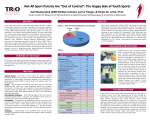
Kelli Blankenship, a member of the University of Minnesota Women’s Hockey Team and 2009 McNair Scholar, helped us analyze the happy parent data. You can see a nice story about her on the U of MN website. We found that child-athlete performances and experiences more frequently made sport parents happy, than did athlete development. You can see the full results of our poster by clicking on it. We’ll be analyzing the full data set soon, but this will give you a taste of what is to come.




 One Sport Voice