
Why is unequal playing time the norm in youth sport?

I have written previously about my thoughts on playing time, click here to read them (scroll down to see them all).

When I tell coaches and parents that I believe all youth sports should have equal playing up until age 12, regardless of competitive level, it is not a popular idea. Especially when I say I really think the age should be 14! I thought  of a few more facets of this complex and contested idea in youth sports that are worth discussing.

As adults who play recreational, but competitive sports, equal playing time is almost always the norm. If playing time isn’t equal, problems, resentments, and hard feelings arise. For example, I play on a recreational women’s ice hockey team. We have 10 skaters, which means 2 lines. We all pay the same fee to play. Everyone plays equal ice  time. When one line takes a long shift and the other line gets shorted, people get upset because it is supposed to be equal. We don’t put special lines out on the power play or penaltly kill, whomever is up or feels like she has legs, they go. We all have different strengths and weaknesses, which we work with together. We try (and like to) to win, are competitive, and strive to win every game (which we don’t). We enjoy being active, doing something we love, battling to win, hanging with friends and enjoy camaraderie with other teams.

Do we think this is different for kids?

So why is it that as adults in our own sport endeavors we structure equal playing time, but when adults run and control youth sport recreational, competitive programs….we justify unequal playing time. (NOTE: recreational teams are just as competitive and want to win just as much as travel teams, the skill level is just different). As adults we don’t like sitting on the bench, we want to play, think unequal time is unfair, unjust and annoying, makes us feel poorly about ourselves, and is not fun or enjoyable.

Do we think this is different for kids? What is the rational for unequal playing time in youth sports before age 12? I’d like to hear it…seriously…I want to hear from you. I think this conversation is worth having.
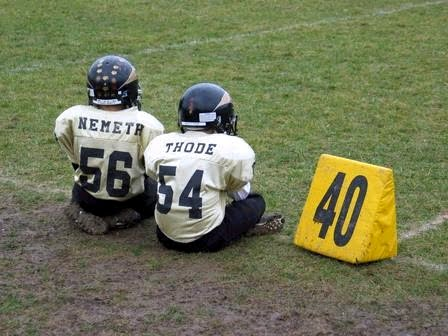
I say equal playing time at ALL competitive levels because if you have a kid on a team where he/she doesn’t play much, if at all, then he/she shouldn’t be ON that team. Move that kid down a team so they DO play and have the opportunity to play, learn, and develop skills in competitive contexts. No kid should be on an elite travel team, pay high fees to play and then not play equally…that seems wrong. As adults we’d NEVER put up with that policy would we? (I understand parents and kids “choose” to be on that team, I also understand that some kids want to play with their friends even if it means not playing, but those are different blogs on the broken system of youth sports).

If equal playing time is what we prefer and what we like and enjoy as adults why should it be different for kids?

Sport Parent Education: Creating a Tipping Point

As part of my work, I do quite a few sport parent workshops (read my previous blogs about sport parents here). The purpose of the workshops is to share evidence-based information with sport parents, so a positive climate for youth athletes is more likely to be created.

I also conduct research on the topic of sport parents. One of our lines of research is examining the causes of what makes sports parents angry, and how the toxic climate and background anger created on youth sport sidelines affects children.

Almost a year ago in early 2010, I wrote and was interviewed about and  a local Minnesota sport parent who  assaulted a youth basketball commissioner following an in-house game played by sixth graders.

Unfortunately less than a year later, two more episodes of egregious sport parent behavior have again occurred in Minnesota. In the first, a father of a middle school boy punched his son after poor play in a basketball game. In the second, another father made terroristic threats and put a youth hockey coach in a choke hold after a disagreement with the coach following his 12 year old son’s hockey practice. (allegedly his son got into a fight with an opposing player, and used his hockey stick as a baseball bat, so the coach broke the fight up and scolded both players, of which the father took offense). Interestingly and related to this story is based on research, when children witness or hear their parents being violent or abusive, the children are more likely to act in similar ways.

In a series of studies I did with colleagues while at Notre Dame working in the Center for Sport and Character, we found that kids who perceived a high rate of background anger (parents yelling and screaming frequently at refs, coaches, other parents, and players), were more likely to report acting in unsportsmanlike ways on the field. Tree…Apple.  We can do better.

If we want youth sports to be a place where all kids can have the opportunity to have fun, learn skills, develop, make friends and learn life lessons while striving to win, the adults have to get it right. Sport parent education is a great step in creating a tipping point, and making positive change happen. It may not prevent the three egregious type events reported above, but it might. Educational efforts will certainly help a critical mass of sport parents, most of who want to do the right thing but have no clue what that looks like and why it matters for their children, get closer to getting it right. Once parents see youth sport from the perspective of their kids coupled with evidence, rather than their own lens…change is possible, and evidence-based educational programs accomplish this goal.

Youth athletic associations, clubs, school systems have to commit the time and resources to educational efforts or else real change will not occur. The tipping point will not occur without it. No Code of Conduct, banner, sign, Public Service Announcement, parent meeting, rule or policy will affect real change until the culture of youth sport and norms of sport parent behavior changes…and that does not happen without education.

What is more important, investing in: a) educational programming that helps create a positive climate for kids while striving to win, and gets parents on the same page in that goal, or b) doing damage control, prosecuting or defending lawsuits as a result of bad parent behavior? If your answer is “B” you will also have to invest and deal with the traumatic aftermath of children who are targets of, or are witness to, egregious sport parent behavior.

Investment of time and money reflects personal and organizational values. What does your organization value? Can you do better? Do you feel responsible for making it better for all kids?

How to Change to Culture of Youth Sport?

This week I talked with a local writer, Meagan Frank, who is writing a book about youth sport. She asked some great questions and as a sport parent she sees the toxic climate that permeates some youth sport contexts, and wants to do something about it. She read my blog about my thoughts on how the professionalized model of youth sport won’t change unless college sport is reformed. I think that until athletic scholarships aren’t the means to an end for sport participation for some (most?) kids and their parents, that the professionalization of youth sport will continue (i.e., year round training, early sport specialization, travel teams that cut kids at younger and younger ages).

What would youth sport look like if millions of families weren’t pursuing a college athletic scholarship? Would more athletes play only for the love of the game? Would they have more fun? Would they enjoy their experience more? Would they worry less about what team and at what level they play? Would the parents yell and scream less on the sidelines? Would fewer kids get burned out or chronically injured? Would fewer kids drop out of sport?

Meagan asked me one question that has stuck in my mind: If you could pick one thing to change about youth sports that would make a difference, what would it be? I had to pause a moment because there are so MANY things to change. I wanted to pick the the least common denominator, the one policy that I think would effect the greatest change.

My answer: Mandate equal playing time for all kids up until the age of 14.

In a previous blog post on playing time in youth sport I specified a model of “Playing Time Considerations” which included the many factors that go into making decisions about playing time. In that blog I included a quote by a colleague, “playing time is not a reward for displaying virtue, it is a means for developing virtue.”   Playing time is also a means for developing skill and mental toughness. You cannot improve if you sit on the bench. You also don’t develop if you quit because you never play, or you are cut because the coach doesn’t think you are good enough to play…and you haven’t hit puberty yet. Equal playing time is crucial up until puberty so that early and late developers get an equal chance to DEVELOP, play and have fun.

By creating an equal playing time policy in all sports, at all levels of play (i.e., developmental leagues, rec, in house, elite travel teams), it would change the culture of youth sport. The culture would be more about developing skill for ALL kids. Even on elite travel teams where all the kids are highly skilled and talented, some kids still play more than others (although they pay the same very high fees to play on the team). This does not seem right or fair or good for psychological, social, physical or moral development. All teams would strive to win, but at least all the kids would have an equal role in the outcome.

What do you think?

Sport Scandals, Sexy Babes & Social Responsibility

As I posted previously, I’ve had the opportunity to participate in a host of stimulating conferences and conversations in the past eight weeks related to girls and women in sport. I’m still musing about many things, but here are three I’m ready to share.

1. As a wrote about in my last blog post, the current model of “sport” (i.e., meaning the male model of win at all costs, big business, professionalization) is broken. If you believe this statement to be true and you also believe in a “growing sense of crisis in college sports“, then who is responsible for changing the current model or changing the course of big time, revenue pursuant, entertainment style college sport? Why hasn’t the The Knight Commission, whose mission is to advocate for a “reform agenda that emphasizes academic values in an arena where commercialization of college sports often overshadowed the underlying goals of higher education” and The Drake Group whose mission is to “is to help faculty and staff defend academic integrity in the face of the burgeoning college sport industry” been more vocal or got more traction lately in the wake of some major scandals?

Relatedly, given the historically abysmal patterns of media coverage for female athletes, who is responsible for creating socially responsible images of college female athletes? (Colleagues Sally Ross at Memphis and Vikki Krane at Bowling Green are thinking & writing about this concept). Shouldn’t athletic departments be held to a higher standard of marketing female athletes? Why does a “sex sells” narrative and images still persist (see image) in college athletics where the purpose is about education, not highlighting the physical appearance or making female athletic bodies into “sexy babe” objects? Doesn’t a university have an obligation and responsibility to ensure the health, well-being, integrity and respect of female athletes, just as it also has an obligation and responsibility to put the well-being of children ahead of potential scandal and shaming high profile men’s programs and their coaches?

2. Head Coach for the WNBA Championship Minnesota Lynx, Cheryl Reeve, stated in her keynote at the Alliance of Women’s Coaches workshop held at Macalester College, that sometimes a team gains, by subtracting players in what she calls “addition by subtraction”. I think this is what college athletics needs…take football and men’s basketball out of D-I and II college athletics altogether and a great deal can be gained. However, despite recent dialogue by NCAA President Mark Emmert that radical reform is needed, yet some argue real reform for  football and men’s basketball is not possible. Think of many of the issues currently facing college athletics administrators and university presidents would go away, be diminished, or never occur if football and men’s basketball were removed from institutions of higher education. The Arms Race, rule violations, academic fraud, eligibility problems, booster and recruitment violations, pay for play, the $2K stipend, discussions of athlete unions and revenue sharing with athletes, athlete exploitation, and cover-ups of egregious coach and player behavior might be reduced. Those sports could be affiliated with a school, but athletes would not be required to attend class, but given the opportunity to earn their degree for free once the player retired from sports or desired to focus on academics. To hear colleague and Professor Allen Sack discuss these issues in depth, click here. I’m not sure college sport can or ever will be truly reformed…

Given that much of my work focuses on the youth level, where I feel I might be able to make a real difference somehow, I have come to believe the problems in college sport are related to problems at the youth sport level.

3. The current youth sport model emulates Big Time College Sport and Pro Sport…specialization, year round training, pay to play, transferring based on playing time and winning, athletes as commodities to help a franchise win, children training away from their families at elite sport academies, kids viewed as “return on investments”, development and experience are downplayed as winning and performance are center stage, team loyalty and playing with friends are sacrificed to play on elite travel teams focused on securing college scholarships, a great deal of money is spent on ensuring the right equipment and experiences, highly specialized training (e.g., strength and conditioning, agility, sport psychology) to increase the likelihood of optimal performance, and the growing number of chronic and acute injuries due to overuse and over training. The youth sport model is never going to change unless college sport is reformed. If athletics were taken out of institutions of higher education and full ride scholarships were not the “end all, be all” goal of athletes and their parents, youth sport would look a LOT different. Youth sport might just start to resemble something better…where athlete development, fun, enjoyment, positive relationships, learning, skill development, and being active and competing are fun in and of itself, rather than being a means to an end. Imagine it.

While reform in college sports may be unlikely, don’t we have a social responsibility to help ensure youth sport retains some semblance of being athlete-centered?

Concussions and Female Athletes Documentary Available Online

Concussions and their devastating consequences affect athletes in all sports and at all levels. However, while sport-related concussions have ignited a national conversation and public debate about this serious brain injury, the majority of attention has focused on male athletes. Critical issues surrounding the impact of concussion on female athletes have been largely ignored. Through the personal stories and experiences of coaches, athletes and their families, as well as in-depth interviews with nationally recognized scholars and medical experts, this documentary examines the causes underlying concussion and offers practical solutions to help prevent and treat sports-related concussion injuries in female athletes.

In collaboration with the University of Minnesota’s Tucker Center for Research on Girls and Women in Sport, Twin Cities Public Television (TPT) has produced a ground-breaking, one-hour documentary on the untold story of female athletes and concussion.

You can watch the full length documentary for free by clicking this web link.

Mother-Coaches in Youth Sport

A colleague and I, Dr. Sarah Leberman from Massey University in New Zealand, now have an article in press in the Journal of Sport Management titled “Juggling Balls and Roles, Working Mother-Coaches in Youth Sport: Beyond the Dualistic Worker-Mother Identity.”

Focusing on the mother-worker duality is limiting and provides an incomplete picture of women‘s social roles, therefore we used a role triad framework of the worker-mother-coach which draws attention to the existence of a “third shift” for some women.

The abstract for this piece is below:

ABSTRACT: Despite the ubiquitous presence of mothers in sport contexts, mothers‘ voices are often absent in the sport literature, particularly at the youth sport level. A phenomenological approach was used to explore the experiences of working mother volunteer youth sport coaches. A role-triad model based on the work-family enrichment and role enhancement literature provided the theoretical framework. The purpose was to understand how and why working mother-coaches mange this role triad and to identify mother-worker skills which may transfer to youth coaching and vice versa. Semi-structured interviews were conducted with eight working mother-coaches and analyzed for themes. Findings suggest that notions of being a good mother and reasons for coaching are very similar, including spending time together, developing life skills and role modeling. Participants negotiated multiple roles using cognitive tools, such as reframing and separation of roles. The reciprocal benefits of motherhood, working and coaching for themselves and others were highlighted.

Dr. Leberman and I completed this research when she was a visiting Fulbright Senior Scholar in the Tucker Center for Research on Girls & Women in Sport.

Girls Competing Against Boys: Part II

I’ve been thinking more about 12 year-old MN female Ingrid Neel who will play on the High School boy’s tennis team this spring. I can see both sides of this issue. I’ve gotten some interesting emails offline and my students this morning had some thoughts as well. Here is a rough summary of those opinions and thoughts:

Why it might be good idea to let her play: the team will mirror the gender composition of the workplace in which she will largely compete against males, helps her develop life skills and “toughness” in competition, her tennis skills will improve, increased recognition which may help with recruiting, helps the boys learn to appreciate athletic talent of girls, has the potential to change outdated gender stereotypes of female athletes as “lesser”, separation of boys and girls in sport is arbitrary anyway so why not let them play together?, challenges the gender binary that all males are better than all female athletes and provides proof that many females CAN outperform or perform with males.

Why it might be a bad idea to let her play: the boys might not want her on team and it will destroy team cohesion, it might reinforce outdated gender stereotypes and ways of thinking about female athletes (the best athletes are male), her experiences will depend greatly on how the coach and the boys’ parents handle her presence on the team, Is it appropriate or should a 12 year old girl be around 17 year old males?; it takes her away from her female peers during a critical developmental window, Is it fair or healthy to ask a teen age boy to play (and possibly lose!) a younger girl…isn’t that emotional abuse?, it might open the floodgate of boys wanting to play on the girls’ team.

There are many facets of this issue to consider, which have been discussed and debated previously. To help us all think through the complexities and know the facts, I would guide the reader to Issues Related to Girls and Boys Competing With and Against Each Other in Sports and Physical Activity Settings: A Women’s Sports Foundation Position. The WSF piece is a nice summary and includes the legality of co-ed sport participation and opportunities to play under Title IX.

Related to the Ingrid Neel case, a colleague (thanks LW!) sent me a story about an Iowa wrestler who defaulted his state tournament match, rather than face a female wrestler (Cassy Herkelman).

One thought I want to share is that I think that most boys can greatly benefit from having to compete against girls. It has the potential (and I say that cautiously) to be a great opportunity for both competitors. Isn’t that the true meaning of competition…to strive together and bring out the best in each other? (NOTE: for a good book on this topic, read True Competition by David Shields & Brenda Light Bredemeier, former colleagues of mine at Notre Dame) However, the opportunity will be lost if the adults in the lives of both competitors mess it up. By that I mean if the coach or parents tease or allow teasing of the boy if he loses, which reinforces that boys should naturally be better than girls. It also tells the boy he isn’t “a real man” if he can’t beat a GIRL and therefore should be ashamed. Comments, teasing, hazing, and bullying directed towards the female competitor should also not be allowed or tolerated.

Some colleagues and I (Fink, LaVoi & Newhall, 2015)  did a study of male practice players of NCAA D-I women’s basketball teams. These researchers found the men in their study respected and appreciated the female athletes, and perspectives about female athletes and women in general did change. Overall the men described it as a very positive and transformative experience, therefore providing evidence that co-ed  competition can work and lead to positive development and growth.

If it can be done at one one the highest levels of competition, surely co-ed competition can be successfully achieved at the youth and interscholastic level. Let the kids play and hopefully if the adults get it right, it will be a positive and teachable moment for all involved.

I’d love to hear your additional thoughts.

Youth Sport Parent Perceptions: Interference with Family Time

This week I and graduate student Alyssa Norris released a first-of-its-kind, evidence-based report titled Youth Sport Report: Parent Perceptions How Frequently Youth Sport Interferes With Family Time (LaVoi & Norris, 2011).

Youth sports informed by sport science and “done right” can provide a positive, meaningful context for youth development and family engagement. Yet for some families, concerns about the professionalization of youth sport are intensifying due to overuse injuries, early specialization, pressure to achieve, and increased commitment and time demands, which place the health and well-being of children and youth at risk. However, little is known about parents’ perceptions of how youth sport interferes with family functioning. The data in this report aims to fill that gap.

Based on the data herein and contrary to some scholarly and media reports of “overscheduling” problems—namely maladaptive child outcomes, and interference with family meals, vacations, and attendance of religious services—due to participation in youth sports, parents in this sample perceived youth sport minimally interferes with family functioning. Explanations for this occurrence are offered.

To download the full report click here.

Mini vs. Mature Pros: Physical Activity Across the Lifespan

Ironically two New York Times articles showed up in my inbox today from different colleagues (thanks ED & ALN) about physical activity on different ends of the age spectrum. I find this ying-yang juxtaposition interesting.

pic by Ann Johansson for The New York Times

One is an article by sports journalist and author Mark Hyman titled “Sports Training Has Begun for Babies and Toddlers”. Hyman knows this topic well as he’s written a book called Until It Hurts: America’s Obsession With Youth Sports and How it Harms our Kids, which I think is one of the best books about youth sport. I have many concerns about the products and programs Hyman details.

First, the target market is not the little ones, but their parents who will do anything to help their child get ahead, “keep up with the Joneses” and do right by their children.  I’d even go a step further and argue the target market is White, middle- to upper-class parents who are highly educated. Some call this demographic of parents “helicopter” parents. Someone told me recently that the youngest members of our society are now being called the Super Millennials and they will be more savvy, entitled, pampered and demanding than Millennials (also known as Gen Y, born between 1981-2000). One of the best books I’ve read about the Millennials is Bruce Tulgan’s “Not Everyone Gets a Trophy: How to Manage Generation Y.” These sports training programs (Gymtrixx, Baby Goes Pro, athleticbaby, The Little Gym) for Super Millennials and their parents are a perfect example how sports can go wrong and why and how youth sports is becoming increasingly professionalized. I mean the little guys in Hyman’s story have on uniforms!

Kotelko picture by Patrik Giardino for The New York Times

The second article is by Bruce Grierson titled “The Incredible Flying Nonagenarian” about Olga Kotelko. Kotelko is a 91 year old Masters Track & Field athlete who started competing at age 77 and in that time holds 23 world records and has won over 600 gold medals. She is considered one of the world’s greatest athletes. WOW! In the NYT piece if you scroll down a bit, there is a video of her talking about competing and some footage of her in action. Amazing! Tangentially, last spring The Tucker Center for Research on Girls & Women in Sport invited Mariah Burton Nelson to give a Distinguished Lecture on Are Women Aging Successfully? New Thinking and Research about Gender and Physical Activity. You can watch the full length video here.

The reason why I put these two articles together is important. As I stated earlier, youth sport is increasingly professionalized and children are being “trained” at higher levels like “mini pros” at younger and younger ages. While a longitudinal study on the effects of early training, sport specialization, and  year round training without rest periods on children and youth has yet to be done, based on data that does exist in pediatric sports medicine, child development, sports psychology and sports sociology I feel I can safely claim that “sports training” for babies is NOT a good idea.

Here are a few reasons why–early sports training can lead to a host of negative and detrimental psychosocial and physical outcomes like burnout, anxiety and eating disorders due to pressure to perform, lack of lifelong enjoyment of physical activity, chronic and overuse injuries, and drop out of sport altogether. Don’t get me wrong, I’m an advocate of kids being active and encouraging free play with children that develops motor and life skills and love of physical activity, but I think there is a fine line between this approach and some of the companies/products Hyman writes about.

Grieger in his piece about Kotelko nails the important link when he writes, “While most younger masters athletes were jocks in college if not before, many competitors in the higher brackets — say, older than age 70 — have come to the game late. They weren’t athletes earlier in life because of the demands of career and their own growing families. Only after their duties cleared could they tend that other fire.”

Olga Kotelko wasn’t enrolled in “baby sports training” but despite a lack of exposure to this ‘opportunity’, she is a professional athlete. More importantly I’d argue, is that she is an exemplary cautionary tale for eager parents bent on early sport specialization. In the big picture of why parents want their children to participate in sport, what is more important: a) nurturing a lifelong ability and love to participate in physical activity, or b) creating a mini pro that might burn out or not be able to compete in college (let alone later in life) due to over use injuries?