A colleague forwarded me an e-news from sports-media.org that contained an article titled Cash For Goals in Youth Soccer: Adults Gone Wild. When I give parent education clinics as part of a research-based educational program I helped develop called Parents Learning About Youth Sports (PLAYS), I always include a brief section about paying children for performing.
Why is it brief?
Because the take home message for sport parents is this: NEVER pay your child for scoring goals, winning matches, or accomplishing some performance standard…NEVER. Just don’t do it.
The sports-media.org piece gets at some of reasons why this is not a good practice, but I’d like to elaborate.
Researchers have demonstrated that giving extrinsic rewards (like $$) for an activity that is already inherently fun and enjoyable (like sports), can undermine intrinsic motivation. We want kids to play sports and be physically active because they love it, its fun, they meet friends, learn new skills, enjoy competition and thrive on striving to be the best they can be. If adults offer monetary rewards for scoring goals, the primary focus is on scoring goals and success is defined in terms of scoring goals…not because sport is fun and enjoyable. The classic studies around this phenomena involve collegiate athletes who obtain an athletic scholarship. Many collegiate athletes are good at their sport because they love it, but some play only in hopes of obtaining a full-ride. For some of the very few who actually do obtain an athletic scholarship (and the odds are VERY low according to the NCAA), they often face diminishing intrinsic motivation. They’ve worked so long and hard to get the scholarship, and that is how success was defined, that once they get the scholarship, sport has no meaning and is no longer is enjoyable. I’ve seen this far too often with collegiate athletes in my classes.
When intrinsic motivation doesn’t exist or is undermined by adults, athletes will more likely to experience anxiety, burnout and dropout, and will also experience less enjoyment, satisfaction, well-being and optimal performance, and positive development.
If you want to read on your own about the self-determination theory, and learn about the complexities pertaining to why paying youth athletes is a terrible idea, I encourage you to go here.
What should parents do to foster intrinsic motivation, instead of paying their child-athlete?
Based on the evidence, I suggest a few simple things as a starting point:
attend the event and look like you are engaged (i.e., don’t read the paper or talk on your cell phone)
cheer only when someone does something good & cheer for everyone’s children, not just your own
refrain from yelling instructions or “coaching” from the sidelines
offer unconditional care, regardless of the outcome or the performance
Recently one of my hockey teammates asked me advice on how to handle a situation with her 14 year old teenage son. The son is a high level gymnast who has potential for a collegiate scholarship. He must travel out state to attend meets at his level, and often misses out on social events with friends. One of the biggest meets is occurring next month in his home state, a meet that would give him exposure to college coaches.
The dilemma: he was asked for the first time to attend a Sadie Hawkins dance (where the girl asks the boy). He was elated but it conflicted with the important meet in his own backyard. His absence from the meet, since he is an in-state standout, would raise eyebrows from the coaching community. His parents feel he should attend the meet but he is so excited to be asked out by a girl for the first time that he really wants to attend the dance.
My advice: Talk with him openly and ask him to identify the pro/cons of attending or not attending the gymnastics meet. Let him come up with both sides, rather than telling him what you (the parents) think. Tell him the decision is his and there is no wrong/right decision, only the one he makes. Tell him that whatever he decides, you will support his decision and love him unconditionally. The skill of making hard decisions, being able to weigh both sides, be comfortable with the decision, and live with the outcome is a life skill. Allowing for and teaching the child-athlete some autonomy in decision making is important for optimal development. If he does indeed attain a college scholarship, the ability to make the “right” decision and deal with conflicts between social engagements, training and competition will inevitably occur, so teaching him decision making skills as an adolescent will serve him well later. I also stressed to the parents that one meet will likely not make or break his scholarship opportunities.
What should he do? What should the parents do? How would you handle this situation?
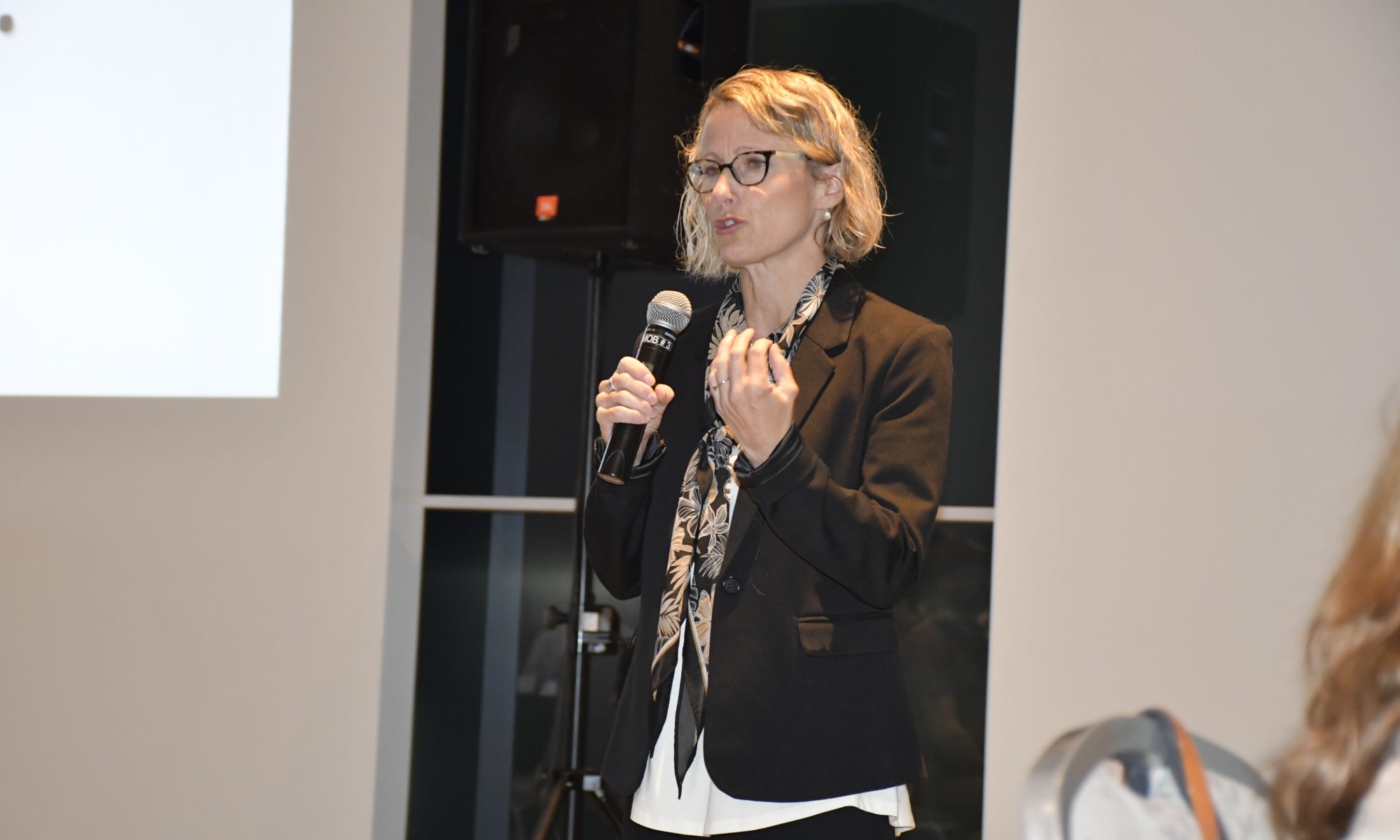
Last night I attended a tribute to my mentor, friend and tennis coach, Steve Wilkinson. I’ve written about Wilk in previous blogs recounting his accomplishments and 3 Crown Philosophy. I was honored to be able to say a few words about Wilk on behalf of the Gustavus women’s tennis program. I’m sharing those words with you in this blog. There are not many opportunities in life to be in a room with so many people who are such an important part of your life. I was surrounded by many of my tennis mentors and closest friends–friends I made through sport. As I sat there and listened to the words and song of others, I felt truly blessed and even more committed to pursuing my life’s work–making a difference in the lives of others, especially girls and women, through sport.
A Tribute to Steve “Wilk” Wilkinson
December 12, 2009, Nicole M. LaVoi
Good evening. I was invited to say a few words on behalf of the women’s tennis team, an opportunity for which I am grateful, humbled and honored. In preparation for tonight I solicited stories and thoughts from my teammates about how Wilk influenced their lives, so I’ll be speaking from their perspectives, as well as my own.
In reminiscing and in reading their comments, perhaps it is not astonishing the similarities between the lessons we have learned from Wilk, both on and off the court, and how we have integrated those teachings into our adult lives. I would guess much of what I say tonight will resonate with many of you.
Although Wilk was not by title my official coach or the coach of the women’s team—many of us saw him as our coach. He was responsible for my recruiting class in the interim between Dave Pettengill and Scott Novak. Some might argue that Wilk played a large part in crafting the only national championship team of the women’s program—as the senior leadership of that team were all recruited by Wilk. I clearly remember the day during my senior year, I was intent on attending St. Ben’s, when Wilk called and invited me down to visit Gustavus just to “check it out.” Truth be told, I agreed because I could get out of a day of school! Little did I know that call would shape the trajectory of the rest of my life.
It has been a very rewarding experience to think about Wilk’s influence on my own life and to discuss it with teammates. We are not given many moments, nor do we make the time, to reflect in meaningful ways on the people and events we hold so dear. I know that I would not be the person I am today, nor be striving to make a difference in the lives of children, their families and communities through sport, if it weren’t for Wilk.
Wilk has the ability to see the best and the full potential in all people. I would like to think that someday I might become the woman that Wilk saw within the immature, win at all cost, feisty competitive 18 year old whom he was patiently trying to teach how to volley on a cold April day in St. Cloud over 20 years ago. One of my most vivid memories of Wilk was a 10 second exchange my freshman year. We were loading into the tennis van for an away match, and I was carrying a pillow with a pillow case that said “Love means nothing to a tennis player.”
For me it represented annihilating an opponent 6-0, 6-0, something at that time I took great pleasure in. Wilk saw the pillowcase and had that disappointed look on his face…you all know that look…and said, “I wish you wouldn’t ever use that again or bring it on tennis trips”. Of course at the time, it made me want to bring it all the more. That exchange always bothered me but it wasn’t until years later that I finally got it…love means everything to not only a tennis player, but human beings. I’m sure many of us, much later have finally “got” the lessons Wilk was so patiently trying to teach us in our youth.
Wilk is grace personified. Mary Sutherland Ryerse shared that a former pastor defined grace as “undeserved kindness”… which Wilk has consistently shown and modeled for us all. My teammates all offered examples of Wilk consistently going out of his way to help, teach, offer support or listen…win or lose, whether you were sportsmanly or not, were in the starting line up or not, got an “A” or failed a class, or if you got the job or not.
Linnea Carlson shared a story I think is an exemplar: She writes, “Our senior year we had finally beat Kenyon in the Midwest Regional final, 5-4, which was expected. When Kendall Larson and I ran into Wilk at the bubble the next day and told him the news, he got a huge grin on his face and hugged us both…twice. When I retold this story to a member of the men’s team, the player said, “If you had lost, he would have hugged you three times.”
Certainly our days with Gustavus Tennis were filled with goodness, great memories, gratitude, giving of self, giving full effort, goals with a focus on what can be controlled, and gifts of friendship and community….and of course, much grace. I know in my own life a day does not go by without the Serenity Prayer—which I learned from Wilk. Whatever situation I’m in, the Serenity Prayer always applies. I joke with my students that all you need to know about the entire field of sport psychology can be summarized by the Serenity Prayer.
Wilk, you taught me that having a positive attitude and seeing the glass as always half full is not only a choice, but a skill that can be learned. Your unwavering commitment to doing the right thing for the right reason and keeping a positive outlook, even in the most difficult of circumstances, has shaped our character in a world that rewards achievement at the expense of others, short cuts, and instant gratification. I suppose this is why when Wilk asks you to do something, and we all end of saying “yes”…it is because we know it’s the right thing to do!
John Gardner, an American activist, reformer, educator and leader…a man much like Wilk, said “There are men and women who make the world better just by being the kind of people they are” and Wilk you are certainly one of those people. You have taught us that is it us alone who can put the unique ingredients of our lives together in a way that leads to dignity, integrity and meaning…and more importantly if we accomplish this feat, then the particular balance of success or failure is of less account.
Wilk, your impact surely echoes, and spreads exponentially in immeasurable ways. To give a visual (like this rock engraved with the word Serenity which I keep in my office next to my computer) I would describe you as a rock, our rock… cast into a calm lake and your impact as the concentric circles that emanate from your core and reverberate infinitely outward to places unknown. It is my wish, and the wish of many of us from the women’s team, that for you this celebration gives you at least a glimpse of what you have meant, and will continue to mean to so many, myself included. Thank you.
In a previous blog I was lamenting about the scarcity of pictures of real female coaches, especially at the youth level. I’m pleased to report I found some! A photographer for the University of Minnesota’s College Education of Human Development ConnectMagazine shot some GREAT pictures of females coaches for a story they ran recently on some of our research. To read the story “The Sporting Life: Research Helps Families Adjust to an Increase in Youth Athletics” and see the pictures of two great female coaches in action, on the field, and in coaching attireclick here (and scroll down to the link below the picture that states “enlarge picture and launch slide show”).
Most remarkable is that in some of the pictures, Coach Kari Ornes is pictured coaching high school boys! Even though females coaching males at all levels of competition occurs about 2% of the time-you never see it. We need more pictures of this nature to be taken and portrayed in traditional and new media outlets. Both Kari and Julie are part of the We Coach advisory board and two exemplary female coaches!
Today I was preparing for a WeCoach workshop and was looking for some images on IStock.com. Pictured here is a classic example of how the (re)production of gender stereotypes starts early and in ways we might not even notice because they seem so innocuous. Ironically, shortly after I found these images I read the AAUW blog on Why Media Representation Matters which touched upon the newly released The Shriver Report-A Woman’s Nation.So far, I’ve read the Executive Summary of A Woman’s Nation, and in light of the Tucker Center’s Distinguished Lecture on the potential impact of social media on women’s sport and the story released today by the New York Post suggesting that ESPN encourages “sexual insensitivity”, I was struck by the assertion that outdated gender stereotypes will only change if women rise within the ranks and launch new media of their own. So what are we waiting for?
While most media attention focuses on the negative and angry behaviors of sport parents on youth sport sidelines–not all sport parents are angry and yelling. I have an ongoing research line on the emotional experiences of youth sport parents with some colleagues and students. Last summer we looked at what made sport parents happy; it was a nice change of pace from examining background anger in youth sports.
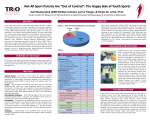
Kelli Blankenship, a member of the University of Minnesota Women’s Hockey Team and 2009 McNair Scholar, helped us analyze the happy parent data. You can see a nice story about her on the U of MN website. We found that child-athlete performances and experiences more frequently made sport parents happy, than did athlete development. You can see the full results of our poster by clicking on it. We’ll be analyzing the full data set soon, but this will give you a taste of what is to come.
Some and colleagues and I are working on research pertaining to what is known (and mostly not known) about the role of youth sports in obesity prevention. Last week Toben Nelson, University of Minnesota’s School of Public Health, presented some of our work at the monthly Tucker Table. You can view his PowerPoint and see a small video clip. This work has made me think critically about how youth sports may not be the healthiest places for some children–including the ubiquitous presence of unhealthy snacks which I wrote about in an earlier blog. While physical activity and active living may help prevent childhood obesity, healthy eating is the other half of the equation. To highlight the relationship between physical activity and the presence of unhealthy food, this Village Voice post and picture showing how NYC playgrounds house soda machines says it all (via AN).
A couple years ago a student in my Psychology of Coaching class told me a story of a local youth hockey coach. This coach wanted to make his team of U12 boys “tougher.” To accomplish this goal, he decided to give the least tough skater on his team (in his opinion) a pair of pink gloves to wear for the next practice. He named this honor “the pussy gloves.” A majority of the time, the pink gloves were awarded to the same boy. I wish I were making this up.
There are so many reasons why this motivational tactic is the farthest thing from motivational, aside from the fact it is sexist and homophobic. Unfortunately this type of coaching behavior is not uncommon and often goes unchallenged as the status quo.
Where did summer go? As a new school year begins tomorrow, I’d like to share a few things I’ve been thinking about over the summer.
1. After giving parent and coach workshops this summer, I’m more convinced that ALL coaches and ALL parents should attend research-based educational workshops that help them create a positive climate for youth athletes. Schools, athletic associations and club teams have to mandate attendance, otherwise the folks who show up are predominately the choir. Anything less than a mandatory attendance policy is not effective in creating the kind of change needed to ensure that sport is done right.
2. More research is needed on the issues that arise in sport for rural communities. Nearly all of our youth sport research includes suburban or urban communities. Very few researchers have focused on issues particular to rural communities and sport participation. I can only think of the Women’s Sport Foundation report Go Out And Play: Youth Sports in America by Sabo & Veliz (October, 2008) that includes data about rural kids and sports. After giving workshops in a small Minnesota community—with NO stoplights—I learned small rural communities have many of the same issues as their city counterparts, but I think unique issues exist. I talked with parents and coaches, many of whom approached me with stories of sport gone wrong and told me their stories with misty eyes, pain, frustration, and helplessness.
3. While in an antique store this summer I found James Michener’s book Sports in America written in 1976. He details the state of female, youth, collegiate and pro sport in the US (among other topics) just a few years after the passage of Title IX. It was a very interesting read and my take away was–The more things change, the more they stay the same, and some of the issues we think are “new”—such as the professionalization of youth sport—have been problematic for over 30 years.
So as I start the new school year, the focus of my work is ever sharper. Stay tuned for many new blogs that incorporate additional summer musings!
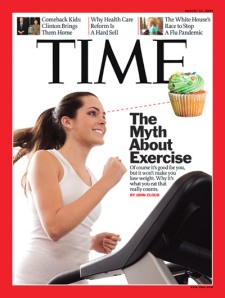
Every Saturday I look forward to the TIME magazine in my mail. I know I can read it all online, but there is something satisfying about print media. As someone trained in sport science (aka, Kinesiology) this week’s cover story by John Cloud “The Myth About Exercise” intrigued me. After reading it, I was more than surprised, a bit irritated, and wondered if this wasn’t just more sensationalistic journalism. The premise of the article was based on “some recent studies” that found exercise does not help one lose weight or isn’t as important as we’ve been led to believe.
What?! Have we been lied to all these years? A friend who regularly works out read the article and promptly said, “THAT was depressing and made me never want to work out again.” I wondered how many others were thinking similar thoughts.
The TIME article, based in part on the findings of ONE clinical trial, found that in a group of 464 overweight women assigned to four conditions—women who exercised did not lose significantly more weight than those who did not exercise…and some women in each of the four conditions gained weight.
Dr. Timothy Church, Chair of Health Wisdom at LSU and lead author of the clinical trial, outlines the process of exactly how exercise might psychologically work against us:
1. exercise stimulates hunger
2. when we exercise we often “reward” ourselves with food [see my blog post about this issue in youth sport]
…or both. My astute friend mentioned previously, pointed out this premise assumes that those who don’t exercise don’t reward themselves with food.
Cloud offers an additional explanation based on another study with UK children he’d written about earlier this year
3. One might be more sedentary during non-exercise times than if one didn’t exercise at all
At first read, these findings and the TIME article may be perceived as a green light to bolster couch potato status, and only pay attention to what you eat–and this is dangerous. Exercise matters…but more importantly researchers have demonstrated movement matters!
Weight management is a simple energy equation: energy in (food) < energy out (exercise + energy expended daily to move about, live, & breathe) = maintain or lose weight.
If you take in more than you expend, you gain weight. Given that our metabolism slows 10% every decade (i.e., meaning you burn 10% less calories/energy), even if you ate exactly the same as you did as a teenager…you’d gain weight. True, exercise is only HALF of the equation, but a still needed half.
TAKE HOME: The research cited in the TIME article is mostly one-sided, although it does raise some interesting questions. Many other researchers have found that exercise/movement IS important, can lead to a host of positive outcomes, and can provide a buffer to chronic diseases associated with obesity. This is a perfect example of why a critical perspective can be valuable….so…off the couch!
To promote healthy eating, and active living in a society in which obesity rates continue to grow, attention to both is critical. This well-placed article in a well known weekly magazine may do more fan the flame of weight loss mythology, than help.
p.s. The tired gendered cliché of “woman running for something sweet” on the cover did not escape notice
UPDATE 8/10/2009: To prove my point about sensationalist health journalism, today a University of Minnesota colleague Gary Schwitzer, a longtime health journalist “sounded the alarm this week after analyzing hundreds of medical news reports from the past three years” in an article in The New York Post.
 A colleague forwarded me an e-news from sports-media.org that contained an article titled Cash For Goals in Youth Soccer: Adults Gone Wild. When I give parent education clinics as part of a research-based educational program I helped develop called Parents Learning About Youth Sports (PLAYS), I always include a brief section about paying children for performing.





 One Sport Voice