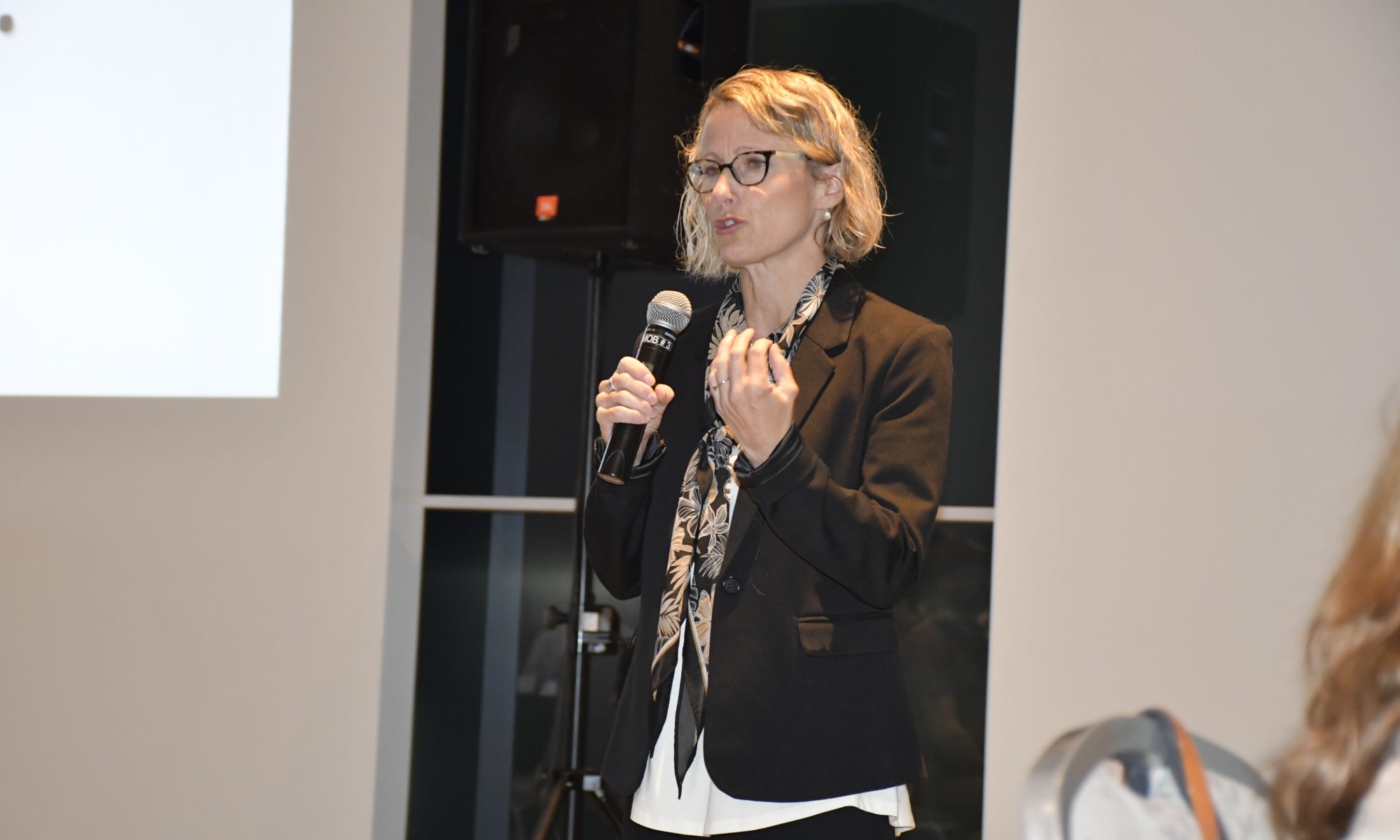
Advice to Females Seeking Careers in Sports

Yesterday I was invited to be part of a panel for the inaugural Minnesota Lynx Girls and Women in Sport Career Day (kudos to Carly Knox and her Lynx colleagues for putting on this event!)

Myself and 5 other women in the Twin Cities area spoke about our experiences, career pathway, advice for being successful in a male dominated profession and  “a-ha!” moments in our careers. On the panel with me: Cheryl Reeve, Head coach MN Lynx; Laura Day; VP of Business Development for the Twins; Britt Carlson, Director of Premium Seating at Minnesota Timberwolves & Target Center; Rachel Blount, StarTribune Sports Columnist; and rookie Lynx player Monica Wright.

I didn’t know what to expect but I learned a great deal from these accomplished women! There were many common themes, which I found fascinating because we wrote our comments independently. Here are some take homes and some reflections I’ve had since last night:

1. NETWORK!!! Get your foot in the door any way you can, and when you get the opportunity make the most of it. You only get one chance to make a first impression, so be ready and remember you are always interviewing for a job. Dress for the job you want, not the job you have. Seek out mentors and surround yourself with good people. I loved when Monica Wright told the audience, “Be loud and confident, and project yourself well”…which she was modeling!

2. Follow your passion. Don’t let anyone or anything stand in the way of your passion and goals. One young woman in the audience asked Coach Reeve if she thought more women would begin to coach men. I wanted to tell this young woman that statistically speaking her chances were very low, but on second thought…good for her! We need more females thinking coaching males is a viable career pathway and to strive to make inroads. If a young man had asked about coaching women, no one would of batted an eyelash. You Go Girl!….coach those males, and pursue your passion. Rachel Blount told a story about how a college football coach once told her to “go back to baking biscuits” rather than try to interview one of his players. She told me that not once in her 25 years as a sport reporter did she think of not doing what she loved, “I was born to do this!” she claimed emphatically….and I agree!

What was really interesting to me is that we were all asked to talk about our experiences in a male dominated profession. Only myself and Rachel Blount talked explicitly about sexism and how females are statistically the token minority in all sports careers. The other women said they’d never experienced sexism or any male-created obstacles–or perhaps didn’t want to talk about it if they had. I was really surprised by their admissions especially because I had I just ordered two books I cannot wait to read on this subject–Sexism in America: Alive, Well and Ruining Our Future (Berg, 2009), and Enlightened Sexism: The Seductive Message That Feminism’s Work is Done (Douglas, 2010). I think both books will help me reflect on these women’s claims of a lack of experienced sexism. I came upon these books when I found a new blog this week titled Equality Myth: Young Women, Sexism, and the Workplace which got me thinking about how these concepts apply to my work with female coaches.

One young woman asked the panel why none of us mentioned children and how having kids influenced our careers. All of us looked at each other and a silent awkward pause ensued….none of us had children! Was it coincidental that all 5 women (I’ll exclude Monica Wright, because she isn’t in the same place in her career as the rest of us) were successful yet had no children? I immediately had a sick feeling. What did this mean? What message did it send to the young women in the audience who wanted both a career and children?

I quickly thought of Arlie Hochschild’s work on “the second shift”, which still unfortunately still holds true for a majority of women. The second shift for working women, is the idea a “second shift” or job starts when she comes home and is largely responsible for domestic and child-rearing duties. From the work I’ve done with female coaches, many of them discuss how coaching is only possible for them because their husbands also coach and that is “just what our family does”. My message to the audience was–if you want to have a family and career (which is possible!), be sure to choose a partner that will be supportive of your passion  and is willing to be equally involved in child care and domestic duties. One problem in this model is that on average women still make 77 cents to every $1 made by men, so having 2 working parents isn’t always the best financial choice if the cost of child care, outweighs the second income (here is fact sheet written by the Institute for Women’s Policy Research on the gender pay gap). So which income goes? The one who earns the least…which is usually the female (if the couple is male-female).

I have a lot more thinking to do about these topics and what it means for my career, my research and teaching, and for the next generation of young women. The event was very empowering and energizing, but the reflections I’ve had since the event have been admittedly depressing. I like action items that lead to social change, but when the actions required are tackling gender stereotypes, male power, and work/family gender roles…it seems daunting! But I will take my own advice and not let anything get in the way of pursuing my passion, which is trying to make a difference in the lives of females in and through sport.

What are your thoughts?

More on Gender Difference and Coaching

I recently was called by a reporter who was writing a story on gender differences and coaching. I’m posting the link to his story here, as he did a nice job representing the current debate and ongoing discussion about coaching girls and coaching boys .

Stay tuned for more research-based information this topic coming soon!

Thoughts on Women, Aging and Physical Activity

This week The Tucker Center for Research on Girls & Women in Sport put on its Distinguished Lecture Series featuring author and speaker Mariah Burton Nelson (MBN). As the Associate Director of The Tucker Center, I get first hand exposure to the topic and speakers each fall and spring, which is a wonderful benefit of my position. I’d like to share my thoughts from the event and the breakfast panel this morning.

My work is focused mostly on the youth end of the developmental trajectory.  I am certainly aging, but I don’t study aging or aging populations, so this is a topic I know very little about. I learned a great deal and MBN challenged me to think about reclaiming and reframing aging in new ways. We are ALL aging. It is a process of life and something everyone has in common. Most would like to stay suspended in youthful animation and try many things to achieve that goal, but the fact remains we are aging. We can’t control that we are aging, but we can control how we think about aging and we can do certain things that will improve our quality of life while we age.

I laughed when MBN explained that being  “Grown Up” according to the AARP was anyone between age 40-65 years of age.  She challenged the audience to think about the language we use to talk about aging and how to reclaim and reframe aging. I didn’t know that peak cognitive functioning for women occurs in their 60’s! (for men, their 50’s).

When I turned 40, it was very strange that all of a sudden I was thinking of myself as “old”. Why?….40 isn’t old! Where did these thoughts come? I decided to claim being 40 and embrace getting “older”…what was the alternative anyway? So since my epiphany, every time I catch myself thinking about how “old” I am, I replace it with something resembling SNL’s Stuart Smalley affirmations…. “I’m young, healthy, active and I feel great!” In fact optimism and a positive attitude have been shown to improve quality of life as one ages, so perhaps I’m onto something. We will all die and MBN stated that older people (those 80+ years old) are not afraid do die, they are afraid of how they will die. An audience member reiterated that aging is about loss and that life is a series of losses. My take home: We can only control how we react to our losses and how we react in part, will affect our quality of life, including mental and physical health.

Another strategy for maintaining health and quality of life is MOVING!  MBN cited that researchers have found physical inactivity is a better predictor of death than smoking!! The take home message…MOVE! Move in any way you can and in any way you enjoy. Women over 50 did not have the benefit of Title IX (which thank goodness this week Obama has gotten rid of the survey method for proving “interest”) so some do not enjoy physical activity, didn’t have the opportunity to plays sports, or just don’t know how to move in ways that are enjoyable and subsequently their health suffers as they age. Did you know there are National Senior Games? It is never too late to learn how to move or new ways to move when the former ways aren’t feasible perhaps due to injury or impairments. In fact while I was sitting here I got a Facebook message from some women I know who are playing in a 50+ women’s hockey tournament!

Take home messages: move, stay positive, seek social support, and embrace whatever age you are!

Did You Know? Videos: Hot Topics in Coaching

I put together a few Did You Know? powerpoints and turned them into short videos (1:22-1:34 in length).

One is about the scarcity of female coaches in youth sport and the other is about gender differences & similarities in coaching.

I’d love your feedback as this is a bit a work in progress. Here is what I’d like feedback on:

  • Content
  • Length
  • How could these best be used?
  • What other topics would you like to see in a DYK?
  • Any other feedback you feel is relevant.

Thanks in advance. I look forward to hearing your thoughts.

(thanks to Austin Stair Calhoun for overlaying the cool music!)

The Power of Images

Today over my Facebook news feed I got a piece from TED. TED is a non-profit devoted to Ideas Worth Spreading. TED believes passionately in the power of ideas to change attitudes, lives and ultimately, the world. So TED is building a clearinghouse of knowledge and inspiration from the world’s most inspired thinkers, and also a community of curious souls to engage with ideas and each other.

Today’s piece was from Jonathan Klein, president of CNN, in which he discusses the power of images.

I have thought a great deal about this in the last year and a half, as a result of reading two good books Slide:ology and presentation zen. The authors of both books have challenged me to think about how I visually represent concepts when I give a lecture or workshop.

For example when I talk to coaches about writing a coaching philosophy, I use this image to portray that one’s philosophy is always changing and provides a road map for where you want to go as a coach and with one’s team.

Klein ends his TED presentation with showing  the one image he has hanging in his office. What would your image be?

picture from http://www.alltelleringet.com/

One Year of One Sport Voice in the Blogosphere

One Sport Voice is one year old!

Nearly one year ago at the urging a few tech saavy women around me, I decided to begin blogging. I wanted to, but needed a push. I desired to blog to create an outlet for sharing my thoughts and critical perspective on everyday things, hone my thinking and writing, and have a place to share with a wider audience some of the work I do that usually only shows up in academic journals. I felt I had a unique perspective about sports to share, and one not usually represented in many media outlets. I also wanted to answer Dave Zirin’s call he made in Contexts for academics, particularly sport sociologists, to “get off the bench.”

I am so glad for starting to blog for the following reasons, I have…

  • met and connected with an entire network of creative, smart, and sports-minded women I would have never had the opportunity to meet if I didn’t start blogging (Thanks in part to Women Talk Sports Network!).
  • sharpened how I make my arguments, including improving my ability to see and accept both sides of an issue.
  • learned how to accept criticism of my work and my perspective, and not take it personally.
  • learned that a critical perspective of sports is not a common one outside the ivory tower of academe.
  • passed on what I have learned to my students and used my blogs as teachable moments in the classroom. This has helped connect abstract concepts to real life material, which I find enhances learning and increases student engagement.
  • been invited to participate in blog panels and talk about my experiences in blogging.
  • learned that everything I write is public, for better or worse…misspelled words, bad grammar, incorrect information and all!
  • encouraged other women to make their voices heard in the blogosphere and claim what they know or think.
  • thought about how easily I can be “found” on the WWW and how that is both good (i.e., brand recognition, marketing, relevancy) and bad (i.e., stalking, safety, can’t filter who reads or follows) for me personally and professionally.
  • wondered who is reading my blog and the reasons behind what drives them to continue to visit.
  • felt elated, proud, attacked, silenced, hesitant, skeptical, surprised, edified, and everything in between!
  • (I hope) become a better writer, teacher, and researcher.
  • thought about how digital media can both empower and further oppress marginalized groups who get so little attention in mainstream print and digital media.
  • been honored and have enjoyed when blog readers send me stories they think I might turn into blog fodder or want to hear my “take” on a certain issue (keep sending me things!).
  • wondered if I will run out of things to say.

…and most of all I have felt compelled to continue to blog.  Thank you for reading this blog–One Sport Voice. I hope you will visit often, comment when you feel moved to do so, and encourage others to do the same.

Observations from the 2010 Women’s Final Four

As I’m watching the Men’s Final Four Final on TV, I have a few observations to share from my recent return from the Women’s Final Four in San Antonio. Both are related to Baylor’s Brittney Griner.

Play Like a Girl T-Shirt from SOOZN Design and Print

First, it was my week of meeting enterprising women that own their own companies. I was sitting on the Riverwalk before the semi-final games and fans of all the teams (Baylor, Stanford, UConn, OK) were filing by. There were even some lost Tennessee fans for some reason. Anyway, a couple women walked by with a great T-shirt that said “Play Like a Girl”. I had to get a picture of it, so I ran after them (see pic). The t-shirt is by SOOZN Design & Print. The shirt plays off of Griner’s ability to dunk. I asked the co-owner Susan Loftus (pictured on left with friend Jacky Howell) why make this shirt? She answered they were disgusted with the lack of t-shirts that pictured female athletes in action, that looked authentic and represented an accurate portrayal of athleticism. I thought to myself “Wow”…we need more women like this making sportswear. They were gracious enough to let me take their picture. This is a perfect example of many things: 1. women ARE sports fans, 2. many fans desperately want to see real representations of female athletes, and 3. female business owners can help create change by making products the giant sportswear makers don’t want to make, didn’t think to make, or don’t care enough to make.

The second occurrence happened while I was at the airport gate and overheard a conversation between two high school girls. These two were returning home after playing in the WBCA High School All-America Game. where one of them had met and talked to Brittney Griner. She talked for a good 20 minutes about her conversation with Griner in which she over and over again iterated how “nice” Griner was. She couldn’t believe Griner would care enough to talk to them for that long. It sounded like Griner genuinely took the time to answer her questions, and spend time with she and her teammates. It was obvious what an impression Griner made on this young woman, and I’m guessing on countless others. The girls asked Griner how she dealt with all the media attention and being accused of looking like, sounding like, and playing like a boy. Griner told them something to the affect of… “I can’t control what other people say. I just focus on myself and my basketball”. This also made quite an impression–What a great take away message! I do think Griner will help change and grow women’s basketball just as UConn has set the bar for what the future of women’s basketball will look like. Both are redefining what “Play Like a Girl” means and looks like…unapologetic athleticism.

Critique of 2010 March Madness Sports Illustrated Cover

Sports Illustrated 2010 March Madness Cover

I love March Madness. Every year I wait for the March Madness cover of Sports Illustrated. Every year I do a critique of the cover. Now that I have a blog, I can post the critique for the first time as I started this blog post March Madness in 2009 (April 5, 2009 to be exact). Here are the results of this year’s cover(s) [there are 4 versions of the March Madness cover this year]. The major point in this critique is to demonstrate that male power and dominance in sport is reproduced by the images portrayed and selected on this one cover. An equally important point is that women’s basketball, female coaches, female referees, and female sport fans are literally erased, marginalized and portrayed as secondary to team mascots.


RESULTS:

  • 1 giant male basketball player dunking a basketball (all 4 covers are of males dunking, despite the fact that Baylor’s Brittney Griner is well known for the fact she can dunk, thus it would of been feasible to feature a well known regional FEMALE player dunking)
  • 2 male referees
  • 3 cheerleaders (2 of which are discernibly female)
  • 4 fans (3 of which are male, the 4th is not discernible)
  • 5 coaches–ALL of whom are male, and I think they are all coaches of men’s teams. This is despite the fact UConn Head Coach Geno Auriemma’s team is on a very long winning streak (74 and counting as of 3/28/10) and is been touted as the BEST women’s basketball team ever.
  • ~9 female basketball players (2 of which are almost not discernible as one positioned under the giant dunking male’s player right foot who I think is UConn’s Maya Moore and one player from Texas(?) is under his gluteus maximus, otherwise known as one’s buttocks)
  • 16 Mascots
  • A LOT of male basketball player (roughly I counted ~77…~8 times the number of female athletes portrayed. I’m pretty sure the ratio of male to female basketball players in the NCAA is not 1:8. In fact, according to NCAA research the 2007-08 numbers are 15,307 women and 17,081 male basketball players)