Multiple Perspectives About “The Injury Epidemic” Facing Female Athletes

Given the continuing discussion about injuries of female athletes, particularly ACL tears, I decided to revisit a blog piece I wrote before One Sport Voice was born.

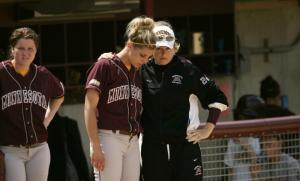
kneeinjuryIn 2008, a controversial book—Michael Sokolove’s Warrior Girls: Protecting Our Daughters Against the Injury Epidemic in Women’s Sport—was released, along with a companion article which appeared in the May 11 issue of the New York Times Magazine. The premise of the book asserts that “[the] immutable facts of anatomy and physiology? cause girls to incur significantly more sport injuries (e.g., ACL tears, concussions) than their male counterparts, resulting in what Sokolove terms a female “injury epidemic?

As a response to the underlying premise (and purported facts) of Warrior Girls, the Tucker Center for Research on Girls & Women in Sport felt it necessary to provide a scholarly critique from relevant academic disciplines. The TC invited internationally recognized scholars from the U of Minnesota in Public Health, Sports Medicine, Sport Psychology and Sociology to read the book and respond independently. You can read all the pieces, including Sokolove’s detailed responses and rebuttals here. The intellectual exchange is very interesting as it is from multiple persons perspectives, not all of whom agree. I’m going to post my sociological critique below, with some added updated information and thoughts.

A Sociological Perspective on Warrior Girls
Let me begin by stating that sport injuries and sport injury prevention are very real and important issues—for both girls and boys. I am aware of the data which states female athletes are 8 times as likely as male athletes to tear an ACL. However, framing the issue of sport injuries as an inevitable biological difference based on the sex of the athlete is sensationalistic and irresponsible. First, an argument based primarily on biology and physiology altogether ignores that sport performance (and therefore injury) is also shaped by social forces such as coaches’ and parents’ beliefs about what it means to be a “female athlete?” Second, this sort of deterministic approach assumes that males, by definition, are naturally (physically) superior to females. In this framework, male athletes are the norm to which females are constantly compared, and any gender differences are therefore constructed as inherent female deficiencies. The consequence of such biology-is-destiny arguments? Professor Cheryl Cooky, Purdue University, sums it up best: “Concerns regarding the supposed biological limitations of the female body to withstand rigorous athletic competition have historically served to justify restricting girls’ and women’s access to sport”.

Though Sokolove does indicate that we should also be concerned about sport injuries males sustain, rarely, if ever, are books published devoted to the negative consequences of sport participation on the health and well-being of boys and men. Interestingly, a search for a similar book or article on the “epidemic” of male sport injuries yielded nothing, despite published research which indicates that NFL players’ life expectancy is 15-20 years lower than the general American male population and that many suffer ill effects from playing professional football, including obesity, heart disease, chronic pain and crippling arthritis. I prefer Mark Hyman’s blog and book Until It Hurts: Americas Obsession With Youth Sports, as both provide a more gender-balanced approach to youth sport injuries-including much discussion about “Tommy John” syndrome in boys’ baseball.

The anatomy-is-destiny perspective also ignores the reality that some female athletes are stronger, have better motor skills, and are more coordinated than some male athletes, and that risk for injury runs along a continuum, rather than a sex-determined binary. In the final analysis, males and females are more similar than they are different—both compete in sports and both get injured in a variety of sports and physical activities. As a result, concerns relating to all the correlates of sport injury, social and psychological as well as biological and physiological, need to be given equal consideration.


A Coach Who Gets it Right

WilkIn the media we more often hear horror stories than positive stories regarding coaches. Fortunately many coaches do get it right and positively affect the lives of countless others.

A wonderful example of just such a coach is Steve “Wilk” Wilkinson, Ph.D., former Head Men’s Tennis Coach of Gustavus Adolphus College. Wilk just retired after 39 years of coaching at Gustavus and is the winningest men’s collegiate tennis coach at any level. His teams competed in the Minnesota Intercollegiate Athletic Conference (MIAC) and achieved a record of 334-1 (.997) in his tenure (you can read more about Wilk’s many accomplishments here, here, and here.)

While his record is impressive, it is his legacy of using tennis as a vehicle to holistically develop young people that is to be most admired. Wilk is a true exemplar whose definition of success has nothing to do with winning. To hear him explain his “Three Crowns” philosophy of positive attitude, full effort, and sportsmanship, listen to these short videos (here and here)-it is well worth your time.

His philosophy is a real life example of how a primary focus on things that can be controlled—rather than on winning—can lead to simultaneous positive development and positive experiences and increase the likelihood of optimal performance. If only there were more Wilks in the world of sport and the world in general, it would surely be a better place for everyone.

Family Meals on the Run: Is the mini-van the new dinner table for families involved in youth sports?

Did you know that researchers of the University of Minnesota have found that sitting down as a family at the dinner table appears to play an important role in promoting healthful eating in kids? Among children ages 11 to 18 who eat meals with their family consume less snack foods, higher amounts of fruits, vegetables, grains and nutrient-dense foods than those who eat separately. Additionally, family meals are related to healthy weight control (and less prevalence of eating disorders for girls. More on the girl-specific findings here), better academic achievement (GPA), and less substance abuse in children.

mini van dinner tableHowever, sitting down at the family dinner table is not a reality for many families involved in youth sports (especially with multiple children!). This week my college tennis teammates got together with our families for a picnic. One of my friends with 3 children in youth sports all under age 10 said, “I don’t even know what sitting down at the table together looks like anymore! This is our dinner table (pointing to her “cooler” that looked much like a giant padded purse).” So it got me thinking—

Do the benefits of family meals ONLY accrue when families sit down together at the dinner table? From some data I’ve been collecting, 15% of youth sport parents report youth sports “never” interfere with family meal time, and 7% report it “frequently” interferes—leaving a majority of parents to claim it “somewhat” interferes. Is the mini-van the new dinner table for families involved in youth sports? I feel a future research project brewing…

Silent Sidelines: A Band Aid Approach To Controlling Youth Sport Parents

sideline parents arm around_iStock_000002126386XSmallMany strategies are commonly discussed to help change parental behavior on youth sport sidelines. Such strategies include: developing and enforcing a code of conduct; appointing a volunteer sideline monitor; leveling fines for inappropriate spectator behaviors; restricting spectator interaction with athletes (e.g., fans are required to sit on the opposite side of the soccer field from the coaches and team); restricting attendance (e.g., parents are not allowed to attend competitions or practices), and/or encouraging parents to suck on a lollipop if they feel like screaming at the referee or coaching from the sidelines.

Another strategy that gets quite a bit of attention is restricting spectator behaviors—i.e., “Silent Sidelines” or “Silent Sundays” (see the 2009 Toronto Star article or the 2004 NYT article). After reading yet another article lauding Silent Sidelines I felt compelled to give a critique of this and other strategies. In short, putative parental strategies are a terrible idea and provide a Band Aid solution to a deeper internal, chronic wound—the problems which arise on sidelines as youth sport becomes increasingly professionalized (Note: poor sport behavior of parents is not a new phenomena. For a balanced historical account, read Until It Hurts: America’s Obsession With Youth Sports by Mark Hyman and read his blog on youth sport parents). While reversing the professionalization of youth sport is beyond my capabilities (for now at least!), changing parental sideline behaviors IS possible.

BandAidsMany of these Band Aid strategies are employed without any research-based evidence of effectiveness or consultation from the sport science community. For example, barring parents from competition is not an optimal or effective solution because research indicates that a majority of children and adolescents enjoy when parents attend and watch competitions and parents are a vital source of support for children. The mere act of signing a “code of conduct” does not change behavior because it does not address the underlying or preceding feelings or thoughts of parents. To change behavior, parents must be provided with evidence of how their sideline behaviors—what a colleague and I call “background anger”—affects not only their child, but everyone else in the sport landscape. This information can provide motivation that increases the likelihood of behavioral change. Research seems to indicate that potential negative outcomes from exposure to youth sport background anger may include—anxiety, stress, decreased performance, loss of focus due to distraction by parents, confusion, embarrassment, frustration, less enjoyment, burnout and perhaps even dropout of sport altogether.

The important point here is that a Band Aid approach to changing the climate of youth sport sidelines addresses only the behavior (i.e., don’t yell = complete silence or silence by lollipop). An effective strategy promotes change through education and provides parents with research-based information as to what triggers angry parental responses, why it is important for example, not to yell on the sidelines, and how this behavior can affect everyone. For an exemplar educational program visit the University of Notre Dame’s Play Like a Champion Educational Series website and stay tuned for new research on the emotional experiences of sport parents and background anger from myself and colleagues of the Minnesota Youth Sport Research Consortium.

Women Coaching Sports: A New Educational Series

Currently I am working on developing the first Women Coaching Sports workshop. Research shows female athletes who have never been coached by a female often believe that male coaches are more competent than female coaches. In the absence of female coaches and role models, female athletes may devalue their own abilities, accept negative stereotypes, fail to realize their potential, or consider coaching as a viable career path. In addition, research indicates that coaches cite formalized mentoring as the most important factor in their acquisition and development of coaching knowledge and expertise. Less than 20% of all youth sport coaches are female, and many female coaches face personal, familial and structural barriers that prevent or impede them from entering and remaining in coaching.

U of M coachTo help address these barriers, I’m developing an educational series for women who coach sports at the youth and interscholastic levels. Some of the curriculum utilizes ideas from youth sport mother-coaches I interviewed as part of a research initiative. The series mirrors the NACWAA/HERS Institute for collegiate coaches and administrators.

The purpose of the Women Coaching Sports workshop series is threefold:
1. To provide cutting-edge, research-based educational workshops for females who coach at the interscholastic and youth levels
2. To provide an opportunity for female coaches to build community, network, and develop on-going support for each other throughout their coaching tenures
3. To attract, develop, retain and empower diverse female coaches

The series is a collaborative outreach project of two entities at the University of Minnesota—the Tucker Center for Research on Girls & Women in Sport and the Minnesota Youth Sport Research Consortium.

I would love to hear your ideas about content to include in the workshop series or ideas you may have. Stay tuned for more information about this exciting venture!

A Good Built Environment Increases Children’s Physical Activity

baseball in a small townThe American Academy of Pediatrics recently released a policy statement about the role of the built environment on children’s health. The built environment is overall structure of the physical environment of a child’s community (e.g., safe sidewalks, accessible parks, existence of bike paths) including spaces such as buildings and streets that are deliberately constructed as well as outdoor spaces that are altered in some way by human activity.

Emerging research indicates that the built environment limits or promotes opportunities for physical activity, in turn affecting child health—including obesity. A July 2009 report “F is for Fat: How Obesity Policies are Failing in America” released by the Robert Wood Johnson Foundation and the Trust for America’s Health indicated that in 30 states the percentage of obese and overweight children is at or above 30 percent. Obesity is a gendered and racialized issue as it is more prevalent in girls than boys, and girls of color have higher rates of overweight and obesity than do their White peers. (Note that the sign indicates “baseball diamond”… a game that girls have historically been excluded from. The sign does not say “ball fields” which could perhaps include softball assuming a softball field exists. To read more about girls and baseball read Jennifer Ring’s 2009 book Stolen Bases: Why American Girls Don’t Play Baseball)

In many communities across the US, the built environment unfortunately does not reflect the image depicted here…the existence of a safe community baseball field that youth can easily find, have access to, and may perhaps walk or bike to and from. The American Academy of Pediatrics report published in Pediatrics outlines a number of policies that can help create and increase the existence of health-promoting built environments.

The Role of Fathers in the Lives of Youth Athletes

DAd & Son golfers_iStock_000004230306XSmallA great deal of research outlines how important father’s are in the lives of their child athletes. Here is a quick summary five positive findings (there are many more of course!):

1. Fathers typically take on the direct and active roles in sport-i.e. “the coach”. Fathers are the majority of coaches in youth sport and by most recent estimates, fathers comprise 80% of more of all youth sport coaches.
2. Fathers can be important active role models for their children. Active dads increase the likelihood of active kids.
3. Fathers’ values, beliefs, & expectations greatly influence the actives lives of their children. For example, children’s perceptions of their father’s beliefs in their sport ability can predict the child’s belief in their own abilities. This is important because children who feel competent and perceive they are good at sport, are more likely to keep playing!
4. When fathers focus on the learning and enjoyment inherent in (most) youth sport, children are more likely to stay in sport, demonstrate better sportsmanship, worry less, and have more fun.
5. Most of all sport provides a meaningful opportunity for fathers to spend quality time with their children in a context most children love and enjoy!

For some great information about the role of fathers in the lives of their children, check out The Dad Man-a.k.a Joe Kelly-who also writes a blog called Dads & Daughters. TCRR-Cover-cover

For a summary of research on the influence of sport parents in the lives of girls, including fathers, you can download a free copy of The 2007 Tucker Center Research Report: Developing Physically Active Girls (see pages 26-28).

Happy Father’s Day and thanks to all the dads who positively influence their own and other people’s children in youth sport contexts.

What if the athletes were boys, not girls?

question_mark_3dIn a previous blog, I wrote about a male soccer coach in Minnesota who had his U12 elite girls’ team throw a game to the U13 girls’ team in the same club (Minnesota Thunder Academy).

A great MN female youth soccer coach I emailed with has a great point about this scenario. She writes,

Could you imagine if a coach had told a team of highly competitive boys to purposely throw a semi-final game to get an invitation to go on to a regional tournament? I believe people would be outraged – I definitely don’t think the sentiment would be “ Let’s move on, we have learned from the mistake.” This team he asked to purposely lose is a hand picked, highly skilled, immensely competitive group of girls and he asked them to bow out of a game – and most people seem to be okay with it! I can pretty much guarantee this would have NEVER happened if this was a boys team. I am not even touching on the fact that this was against any and all spoken/unspoken rules regarding coaching ethics. I am very concerned that a coach of his caliber would have his girls team lose on purpose because it was the “classy thing to do” – I ask myself would he have done this if he was coaching boys? That question hasn’t even come up in the communities because, I am saddened to say, I think most people still look at girls sports on a different level than boys. The playing field definitely does not seem to be level.”

Well said Coach!

How Not to Coach Soccer: A Lesson From Minnesota

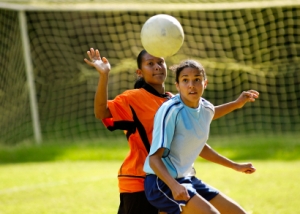
iStock_minority girls soccer_XSmallWhen I’m not writing about gender, the other part of my research, teaching and outreach pertains to youth sport—mainly studying and trying to improve sport parent sideline behavior, and helping coaches be more effective. When a story broke last week about a Minnesota club soccer team, many of my colleagues and former students forwarded the story link to me which got quite a bit of press here in Minnesota and around the country.

In short, two of the Minnesota Thunder Academy (MTA) teams played each other in the State Cup final to see who would advance to the Regionals—it was the 12-and-under girls v. the 13-and-under girls. The game ended with penalty kicks, when Coach Abboud asked the younger girls to pass the ball nicely to the opposing keeper, in essence throwing the game to the older U-13 team, instead of taking the penalty kicks to win the game. Chaos, tears, frustration, confusion, emergency meetings at all levels, commentary, opinions, anger, a public apology from Abboud, and parental support for the coach ensued. To read all the details go to, the Inside Minnesota Soccer article, the Star Tribune article, and Coach Mark Abboud’s own contrition on his blog.

Let me put this incident into a broader context of youth sport trends. The MTA is one of the most elite of soccer clubs, for “serious soccer players”, meaning they hand pick the best kids from other clubs around the state. In fact, the MTA girls recently joined the inaugural Eilte Clubs National League…yes, “national” league for 13-year-olds.

Winning_iStock_000005893466XSmallSome would argue this type of sport club is the poster child for everything that is wrong with youth sports-specialization, not developmentally appropriate, a win at all cost philosophy, year-round training, privatization, overuse injuries, burnout due to high stress and anxiety, dropout, overzealous parents, highly paid coaches with big egos, treating children like “mini-professional” athletes, and highly structured and governed adult-run clubs and organizations (to name a few).

red card_iStock_000003976608XSmallSport provides many “teachable moments”. Good coaches teach athletes to give full effort, focus on what they can control, treat opponents with respect regardless of the situation, and accept the outcome with grace. One decision by a coach does have an impact on everyone involved, and this is a cautionary tale of how not to coach because, simply put, it taught the wrong lessons. In soccer terms, this coach deserves a red card, and possibly more severe sanctions.

P.S.-A critical gender note. Notice the Minnesota Thunder Academy that houses both boys’ and girls’ teams is the namesake of the men’s team (the Thunder), and not the women’s team (the Lightening).thunderightning

Why Mothers Coach

iStock__mom coach soccer_XSmallIn a study where we interviewed mothers who were also youth sport coaches, we wanted to know why they were coaching. A majority of the time the primary focus, including my recent posts on female youth sport coaches, is on the barriers that limit or prevent mothers, and females in general, from coaching. So, in honor of all the mothers everywhere who spend their time and energy coaching their own and other people’s children—Happy Mother’s Day and thank you!

A major reason many mothers coach is because it provides time for them to spend with their child(ren). One mom said, “You know it gave us another chance to spend time together in a different way other than just being at home or being in a social situation, and so I really enjoyed it and she did, too. Even though she was the coach’s daughter it worked out.”

Mothers in our study coached because they saw a need for female coaches and good coaches in general, and felt coaching provided an outlet to share their experience, passion for sport and sport knowledge with their children. Mothers discussed the importance of providing positive role models—particularly for girls—and felt coaching was fun and rewarding.

Thanks to the many women—mothers and non-mothers alike—who coach our children and youth! You are the missing piece of the youth sport puzzle.