
Silent Sidelines: A Band Aid Approach To Controlling Youth Sport Parents

sideline parents arm around_iStock_000002126386XSmallMany strategies are commonly discussed to help change parental behavior on youth sport sidelines. Such strategies include: developing and enforcing a code of conduct; appointing a volunteer sideline monitor; leveling fines for inappropriate spectator behaviors; restricting spectator interaction with athletes (e.g., fans are required to sit on the opposite side of the soccer field from the coaches and team); restricting attendance (e.g., parents are not allowed to attend competitions or practices), and/or encouraging parents to suck on a lollipop if they feel like screaming at the referee or coaching from the sidelines.

Another strategy that gets quite a bit of attention is restricting spectator behaviors—i.e., “Silent Sidelines” or “Silent Sundays” (see the 2009 Toronto Star article or the 2004 NYT article). After reading yet another article lauding Silent Sidelines I felt compelled to give a critique of this and other strategies. In short, putative parental strategies are a terrible idea and provide a Band Aid solution to a deeper internal, chronic wound—the problems which arise on sidelines as youth sport becomes increasingly professionalized (Note: poor sport behavior of parents is not a new phenomena. For a balanced historical account, read Until It Hurts: America’s Obsession With Youth Sports by Mark Hyman and read his blog on youth sport parents). While reversing the professionalization of youth sport is beyond my capabilities (for now at least!), changing parental sideline behaviors IS possible.

BandAidsMany of these Band Aid strategies are employed without any research-based evidence of effectiveness or consultation from the sport science community. For example, barring parents from competition is not an optimal or effective solution because research indicates that a majority of children and adolescents enjoy when parents attend and watch competitions and parents are a vital source of support for children. The mere act of signing a “code of conduct” does not change behavior because it does not address the underlying or preceding feelings or thoughts of parents. To change behavior, parents must be provided with evidence of how their sideline behaviors—what a colleague and I call “background anger”—affects not only their child, but everyone else in the sport landscape. This information can provide motivation that increases the likelihood of behavioral change. Research seems to indicate that potential negative outcomes from exposure to youth sport background anger may include—anxiety, stress, decreased performance, loss of focus due to distraction by parents, confusion, embarrassment, frustration, less enjoyment, burnout and perhaps even dropout of sport altogether.

The important point here is that a Band Aid approach to changing the climate of youth sport sidelines addresses only the behavior (i.e., don’t yell = complete silence or silence by lollipop). An effective strategy promotes change through education and provides parents with research-based information as to what triggers angry parental responses, why it is important for example, not to yell on the sidelines, and how this behavior can affect everyone. For an exemplar educational program visit the University of Notre Dame’s Play Like a Champion Educational Series website and stay tuned for new research on the emotional experiences of sport parents and background anger from myself and colleagues of the Minnesota Youth Sport Research Consortium.


Women Coaching Sports: A New Educational Series

Currently I am working on developing the first Women Coaching Sports workshop. Research shows female athletes who have never been coached by a female often believe that male coaches are more competent than female coaches. In the absence of female coaches and role models, female athletes may devalue their own abilities, accept negative stereotypes, fail to realize their potential, or consider coaching as a viable career path. In addition, research indicates that coaches cite formalized mentoring as the most important factor in their acquisition and development of coaching knowledge and expertise. Less than 20% of all youth sport coaches are female, and many female coaches face personal, familial and structural barriers that prevent or impede them from entering and remaining in coaching.

U of M coachTo help address these barriers, I’m developing an educational series for women who coach sports at the youth and interscholastic levels. Some of the curriculum utilizes ideas from youth sport mother-coaches I interviewed as part of a research initiative. The series mirrors the NACWAA/HERS Institute for collegiate coaches and administrators.

The purpose of the Women Coaching Sports workshop series is threefold:
1. To provide cutting-edge, research-based educational workshops for females who coach at the interscholastic and youth levels
2. To provide an opportunity for female coaches to build community, network, and develop on-going support for each other throughout their coaching tenures
3. To attract, develop, retain and empower diverse female coaches

The series is a collaborative outreach project of two entities at the University of Minnesota—the Tucker Center for Research on Girls & Women in Sport and the Minnesota Youth Sport Research Consortium.

I would love to hear your ideas about content to include in the workshop series or ideas you may have. Stay tuned for more information about this exciting venture!

A Good Built Environment Increases Children’s Physical Activity

baseball in a small townThe American Academy of Pediatrics recently released a policy statement about the role of the built environment on children’s health. The built environment is overall structure of the physical environment of a child’s community (e.g., safe sidewalks, accessible parks, existence of bike paths) including spaces such as buildings and streets that are deliberately constructed as well as outdoor spaces that are altered in some way by human activity.

Emerging research indicates that the built environment limits or promotes opportunities for physical activity, in turn affecting child health—including obesity. A July 2009 report “F is for Fat: How Obesity Policies are Failing in America” released by the Robert Wood Johnson Foundation and the Trust for America’s Health indicated that in 30 states the percentage of obese and overweight children is at or above 30 percent. Obesity is a gendered and racialized issue as it is more prevalent in girls than boys, and girls of color have higher rates of overweight and obesity than do their White peers. (Note that the sign indicates “baseball diamond”… a game that girls have historically been excluded from. The sign does not say “ball fields” which could perhaps include softball assuming a softball field exists. To read more about girls and baseball read Jennifer Ring’s 2009 book Stolen Bases: Why American Girls Don’t Play Baseball)

In many communities across the US, the built environment unfortunately does not reflect the image depicted here…the existence of a safe community baseball field that youth can easily find, have access to, and may perhaps walk or bike to and from. The American Academy of Pediatrics report published in Pediatrics outlines a number of policies that can help create and increase the existence of health-promoting built environments.

The Role of Fathers in the Lives of Youth Athletes

DAd & Son golfers_iStock_000004230306XSmallA great deal of research outlines how important father’s are in the lives of their child athletes. Here is a quick summary five positive findings (there are many more of course!):

1. Fathers typically take on the direct and active roles in sport-i.e. “the coach”. Fathers are the majority of coaches in youth sport and by most recent estimates, fathers comprise 80% of more of all youth sport coaches.
2. Fathers can be important active role models for their children. Active dads increase the likelihood of active kids.
3. Fathers’ values, beliefs, & expectations greatly influence the actives lives of their children. For example, children’s perceptions of their father’s beliefs in their sport ability can predict the child’s belief in their own abilities. This is important because children who feel competent and perceive they are good at sport, are more likely to keep playing!
4. When fathers focus on the learning and enjoyment inherent in (most) youth sport, children are more likely to stay in sport, demonstrate better sportsmanship, worry less, and have more fun.
5. Most of all sport provides a meaningful opportunity for fathers to spend quality time with their children in a context most children love and enjoy!

For some great information about the role of fathers in the lives of their children, check out The Dad Man-a.k.a Joe Kelly-who also writes a blog called Dads & Daughters. TCRR-Cover-cover

For a summary of research on the influence of sport parents in the lives of girls, including fathers, you can download a free copy of The 2007 Tucker Center Research Report: Developing Physically Active Girls (see pages 26-28).

Happy Father’s Day and thanks to all the dads who positively influence their own and other people’s children in youth sport contexts.

New Twitter research: Help in marketing women’s sport?

A new study from Harvard provides information to those banking on Twitter to help market, promote, and sustain women’s sports. Here are some snippets if you don’t want to read the entire article or the post on Harvard Business Publishing:
1. “Just 10% of Twitter users generate more than 90% of the content”…superchirpthese people are called “super users”. Super Users can now make money through a just launched service called Super Chirp

2. “…very, very few people tweet and the Nielsen data says very, very few people listen consistently.”

3. “Among Twitter users, the median number of lifetime tweets per user is one”

and my favorite bit….Tweet bird

4. “…an average man was almost twice as likely to follow another man than a woman, despite the reverse being true on other social networks. The sort of content that drives men to look at women on other social networks does not exist on Twitter,” said Mr. Heil (one of the researchers). “By that I mean pictures, extended articles and biographical information.”

Twitter may be reaching a certain audience, but probably not males who don’t opt in and follow women’s sport.

Take home message for female athletes and women’s professional sport leagues: Use sexy pictures you download onto TwitPic to garner millions of followers (given the stack of research on how female athletes are sexualized in the sport media, such a picture shouldn’t be hard to find), then start charging your followers money to follow your Tweets. Voila!...instant revenue!

Given Heil’s findings, this may unfortunately lend some credence to the “sex sells” women’s sport debate (for more on this debate click here and here). But… I still contend that sex sells sex, not women’s sport.

How Not to Coach Soccer: A Lesson From Minnesota

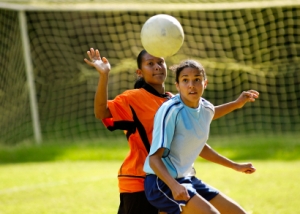
iStock_minority girls soccer_XSmallWhen I’m not writing about gender, the other part of my research, teaching and outreach pertains to youth sport—mainly studying and trying to improve sport parent sideline behavior, and helping coaches be more effective. When a story broke last week about a Minnesota club soccer team, many of my colleagues and former students forwarded the story link to me which got quite a bit of press here in Minnesota and around the country.

In short, two of the Minnesota Thunder Academy (MTA) teams played each other in the State Cup final to see who would advance to the Regionals—it was the 12-and-under girls v. the 13-and-under girls. The game ended with penalty kicks, when Coach Abboud asked the younger girls to pass the ball nicely to the opposing keeper, in essence throwing the game to the older U-13 team, instead of taking the penalty kicks to win the game. Chaos, tears, frustration, confusion, emergency meetings at all levels, commentary, opinions, anger, a public apology from Abboud, and parental support for the coach ensued. To read all the details go to, the Inside Minnesota Soccer article, the Star Tribune article, and Coach Mark Abboud’s own contrition on his blog.

Let me put this incident into a broader context of youth sport trends. The MTA is one of the most elite of soccer clubs, for “serious soccer players”, meaning they hand pick the best kids from other clubs around the state. In fact, the MTA girls recently joined the inaugural Eilte Clubs National League…yes, “national” league for 13-year-olds.

Winning_iStock_000005893466XSmallSome would argue this type of sport club is the poster child for everything that is wrong with youth sports-specialization, not developmentally appropriate, a win at all cost philosophy, year-round training, privatization, overuse injuries, burnout due to high stress and anxiety, dropout, overzealous parents, highly paid coaches with big egos, treating children like “mini-professional” athletes, and highly structured and governed adult-run clubs and organizations (to name a few).

red card_iStock_000003976608XSmallSport provides many “teachable moments”. Good coaches teach athletes to give full effort, focus on what they can control, treat opponents with respect regardless of the situation, and accept the outcome with grace. One decision by a coach does have an impact on everyone involved, and this is a cautionary tale of how not to coach because, simply put, it taught the wrong lessons. In soccer terms, this coach deserves a red card, and possibly more severe sanctions.

P.S.-A critical gender note. Notice the Minnesota Thunder Academy that houses both boys’ and girls’ teams is the namesake of the men’s team (the Thunder), and not the women’s team (the Lightening).thunderightning

Does Sex Sell Women’s Sport?

I’ve been wanting to write a blog about this topic for awhile and a recent interview given by my colleague and the Director of the Tucker Center for Research on Girls & Women in Sport Professor Mary Jo Kane on the Edge of Sports Radio with Dave Zirin provided me with a perfect opportunity!

In the interview with Zirin she discusses research, conducted with Heather Maxwell (Ph.D.), in which their findings refute the idea that sex sells women’s sports. Kane also discusses how the notion of “sex sells” is related to depictions of motherhood and female athletes—like the magazine covers of Sheryl Swoopes and Candace Parker pictured here, homophobia and Pat Griffin’s idea of The Glass Closet, and her thoughts on the Women’s Final Four sport media coverage. (Note: Motherhood and elite female athletes is a popular blog topic lately..see Maria Hardin’s blog and the Pretty Tough blog)Swoopes and Parker_pregnant

I also think Kane’s interview helps us think through why some female athletes feel it is important to “have it all” (i.e., be sexy, feminine, AND athletic)…which I’ve touched upon in a previous blog about social media.

The interview is less than 5 minutes and well worth your while to hear one of the leading experts on sport media, Title IX, gender, and women’s sports talk critically and share cutting edge research. In the end, as Zirin says, “Sex sells sex“. Sex does NOT sell women’s sports.

Why Mothers Coach

iStock__mom coach soccer_XSmallIn a study where we interviewed mothers who were also youth sport coaches, we wanted to know why they were coaching. A majority of the time the primary focus, including my recent posts on female youth sport coaches, is on the barriers that limit or prevent mothers, and females in general, from coaching. So, in honor of all the mothers everywhere who spend their time and energy coaching their own and other people’s children—Happy Mother’s Day and thank you!

A major reason many mothers coach is because it provides time for them to spend with their child(ren). One mom said, “You know it gave us another chance to spend time together in a different way other than just being at home or being in a social situation, and so I really enjoyed it and she did, too. Even though she was the coach’s daughter it worked out.”

Mothers in our study coached because they saw a need for female coaches and good coaches in general, and felt coaching provided an outlet to share their experience, passion for sport and sport knowledge with their children. Mothers discussed the importance of providing positive role models—particularly for girls—and felt coaching was fun and rewarding.

Thanks to the many women—mothers and non-mothers alike—who coach our children and youth! You are the missing piece of the youth sport puzzle.

The “success” of Twitter in promoting women’s sports: ‘Show me the money!’

tweet-birdThere seems to be much discussion over Twitter and how it might be “the answer” to successfully marketing and promoting women’s sports. Jayda Evans (Seattle Times columnist & Twitter-er) wrote about it, the Women’s Professional Soccer League is using it, and Megan Hueter, Co-founder of Women Talk Sports, has two recent blogs about the importance of social media for women’s sport (A recent blog is about Twitter and an earlier blog was about Facebook). I responded to Megan’s blog, and she responded back (scroll down on her blog about Facebook to see our exchange). I enjoyed this dialogue and have been thinking about this issue ever since.

I get that social media is a platform to market women’s sports in a saturated market, and it is accessible, current, relevant, provides athlete-generated content etc…I got it. I love social media, really I do, so this is not a critique of social media or those that love it, promote it, and live for it. I have a Blog (obviously), a Facebook page, am connected to colleagues through LinkedIn, and recently conquered my Twitter fascination. However, even with my love for social media I’m reluctant to make claims about the effectiveness of it in promoting female athletes and women’s sports. It is the researcher in me—I’m critical and skeptical until I see the proof (i.e., empirical data).

I have seen ZERO research that demonstrates if, and how, social media tangibly and effectively promotes and markets women’s sports. I queried one of our very smart graduate students who is immersed in this research, and she didn’t know of any either. We will stand corrected if it exists. Just because everyone is all atwitter about Twitter doesn’t mean it “works” or will “save” women’s sports.
twitter-image1Here is what we generally DO know about Twitter and sport:
1. Twitter exists and is rapidly growing in popularity
2. Some people, but not many (~5% of the population), are currently using Twitter
3. Some professional athletes are included in that 5%
4. Many professional sport leagues have a Twitter presence

Here is the $1,000,000 question: Has Twitter lead to an increase in—attendance, ticket sales, merchandise sales, sponsorships, media coverage in mainstream sport media, number of teams in women’s professional leagues, or any measurable interest in or consumption of women’s sports? Right now, Twitter is a good listening tool and provides a way to listen to brand champions of women’s sport (i.e., the core, loyal consumer). But other than that, show me the data. It might be doing some good, but has anyone thought about the flip side?…. that social media might not be good for female athletes or women’s sports? So how might Twitter and other social media (including those not invented yet) be “bad” you ask? Well here are a few things to ponder.

It is a well known fact that female athletes receive only 6-8% of coverage in traditional sport media. This statistic has remained consistent over the last 20 years, despite increases in girls and women participation in sport. When female athletes are covered in traditional sport media, they are often portrayed in ways that marginalize or minimize athletic competence and highlight sexy, hetero, feminine aspects of the female body or identity.

A perfect example of this is the March 23, 2009 ESPN magazine cover of pregnant WNBA Rookie of the Year Candace Parker in which the opening sentence discusses that Parker “…is beautiful. Breathtaking, really, with flawless skin, endless legs and a C cup…” If you want a thorough, and I think well done, sociological critique of this article read this blog which appears in Contexts. I did a little mini investigation after I saw the Parker cover and found: In five years (2004- March 2009) females athletes have appeared on 5 of 168 ESPN covers (3.6%…less than the average) and when they do….well see for yourself.espn-mag-women-covers-5-yrs

While social media is changing the role of sport journalists, sport media scholar Marie Hardin argues this is both good an bad. I add it is good if it changes coverage patterns of female athletes, but I would add it is bad if it becomes expected that female athletes have to be partially or largely responsible for promoting themselves as well-rounded “girls next door” through social media as a way to “save” their leagues or bolster their own “brand”. Why isn’t it just enough for Candace Parker to play basketball to the best of her abilities? The NBA doesn’t ask Kobe Bryant to be more than a great basketball player do they?

Could it be possible that social media, including Twitter, is just another means to replicate the ways in which traditional sport media marginalizes and sexualizes female athletes? Twitter’s existence does nothing to challenge the status quo or existing structural inequalities between men’s and women’s sports…especially since it is an “opt in” platform.

Another point to ponder: How are female athletes and professional leagues presenting themselves on Twitter? Stay tuned for results on cutting edge research two of our graduate students are just completing on this very question—this is cool stuff! In the meantime, I’ll give you one example that occurred on the 2009 WNBA draft day which caught my eye and highlights my previous point. I saved three (of many) Tweets written by draftees, the WNBA, and other attendees who were collectively discussing “how we look and what to wear” rather than “how we play” on Draft Day 2009. 2wnbadraft-day

What everyone should do who cares about this issue and the cause of women’s sport, is think less about hyping social media and more about how social media can be used to create real social change and lead to sustainability (meaning…show me not only the data, but the $$$$) of women’s professional sport leagues…and more importantly, how can we prove and measure “success”?